.jpeg)
.jpg)





.svg)
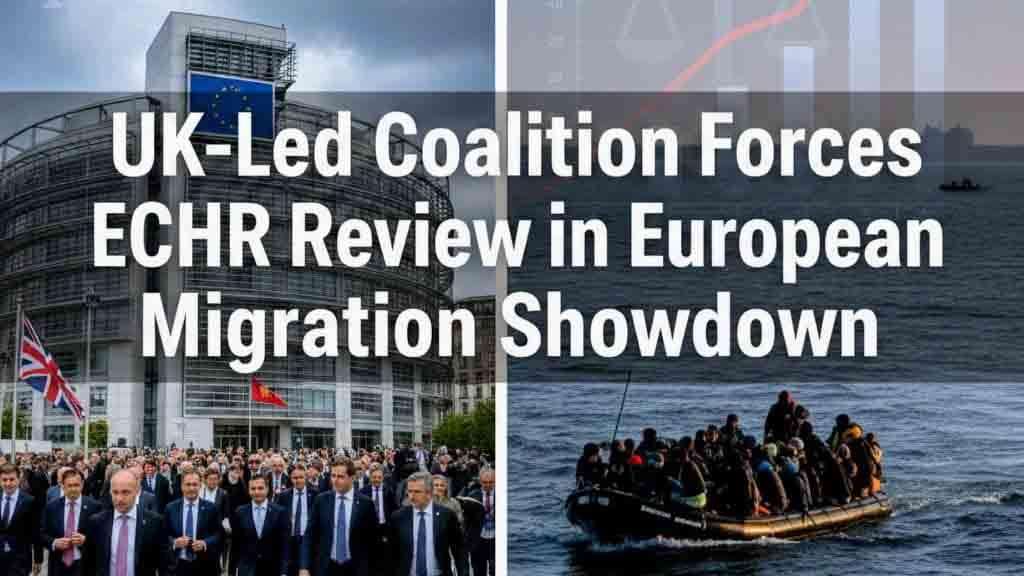
In a dramatic push to curb surging irregular migration across Europe, including the UK’s escalating small boat crisis, the British government has aligned with a significant bloc of European nations to formally demand a recalibration of the European Convention on Human Rights (ECHR). This concerted diplomatic effort, led by Deputy Prime Minister and Justice Secretary David Lammy at a crucial Council of Europe meeting, aims to redefine key human rights clauses that governments argue are being exploited to block deportations and overwhelm national asylum systems.
The unprecedented move saw 27 of the 46 Council of Europe member states—a decisive majority—sign a joint statement urging a “modernisation of the interpretation” of the ECHR. The coalition, which includes hard-line migration proponents like Denmark, Italy, Hungary, Ireland, and the Netherlands, explicitly called for the convention to be interpreted in a manner that does not prevent states from taking "proportionate decisions" on migrant removals and the expulsion of foreign criminals.
The Core Conflict: Articles 3 and 8 in the Crosshairs
The statement targets two specific articles seen as primary legal barriers to effective border control:
- Article 8 (Right to Family and Private Life): The signatories demand an adjustment to the balance test in Article 8 cases, advocating for more weight to be placed on the "nature and seriousness of the offence committed" by foreign criminals and less on their private or family ties to the host country. This directly addresses the UK’s challenge of deporting serious offenders who successfully appeal on the grounds of family life established during their time in the country. The UK’s forthcoming domestic legislation, which seeks to narrow the definition of "family" to primarily cover only a spouse and minor children in deportation cases, is a direct domestic parallel to this European-level demand.
- Article 3 (Prohibition of Inhuman or Degrading Treatment): The bloc insists this absolute right must be “constrained to the most serious issues.” This move is designed to prevent the ‘mission creep’ that has seen Article 3 successfully invoked in removal cases based on arguments of limited access to healthcare, better prison conditions, or general poor conditions in a person's home country—claims the UK and its allies view as unwarranted expansions of the clause.
A Pathway for ‘Third Country’ Deals and UK’s Rwanda Legacy
Perhaps the most potent element of the joint declaration is the clear, unambiguous support for "innovative and durable solutions" to migration, including cooperation with "third countries regarding asylum and return procedures," provided human rights are preserved.
This collective European backing explicitly sanctions the core principle behind controversial schemes like the previous UK government’s Rwanda plan and Italy’s deal to process asylum claims in Albania. For UK Prime Minister Sir Keir Starmer’s government, which previously scrapped the Rwanda scheme but has since adopted a significantly tougher stance on migration, this inter-European consensus provides a crucial political and legal shield. It establishes an international mandate for such deals, strengthening the argument that "third country" processing hubs are a legitimate, necessary tool for managing modern, mass irregular migration—a phenomenon Starmer and Danish Prime Minister Mette Frederiksen jointly warned in The Guardian is straining communities and driving voters towards populist extremes.
The Dividing Line: France and Germany Refuse to Sign
The push for reform, however, is not a unified European front. The joint statement was only signed by 27 nations, highlighting a deep ideological split. Critically, major EU powers including France, Spain, and Germany declined to support the 'breakaway' declaration. They instead put their names to a separate, official declaration backed by all 46 governments, which reaffirmed a commitment to the ECHR but was less explicit on the need for constrained interpretation.
This refusal from key European partners introduces a significant hurdle, which critics, including the Shadow Justice Secretary Robert Jenrick, have seized upon, calling the UK’s reform efforts a "political trick" that is "doomed" without the consensus of France and Germany. Despite this division, the fact that a clear majority of Council of Europe members chose to sign the UK-backed statement indicates a powerful shift in the political landscape, reflecting mounting public and governmental pressure across the continent to find practical solutions to the small boat crisis and border control.
The goal for the new bloc is a political declaration next spring, which would not formally amend the ECHR treaty but would serve as binding interpretive guidance for the European Court of Human Rights (ECtHR) in Strasbourg. Securing this agreement is seen by ministers as the only way to give domestic legislative changes—such as the Home Office's planned tightening of Article 8 in UK courts—the necessary legal authority to withstand challenges from the ECtHR. Without this international re-interpretation, Strasbourg rulings could continue to block UK deportations, perpetuating the legal headache the government is desperate to resolve.