





.svg)
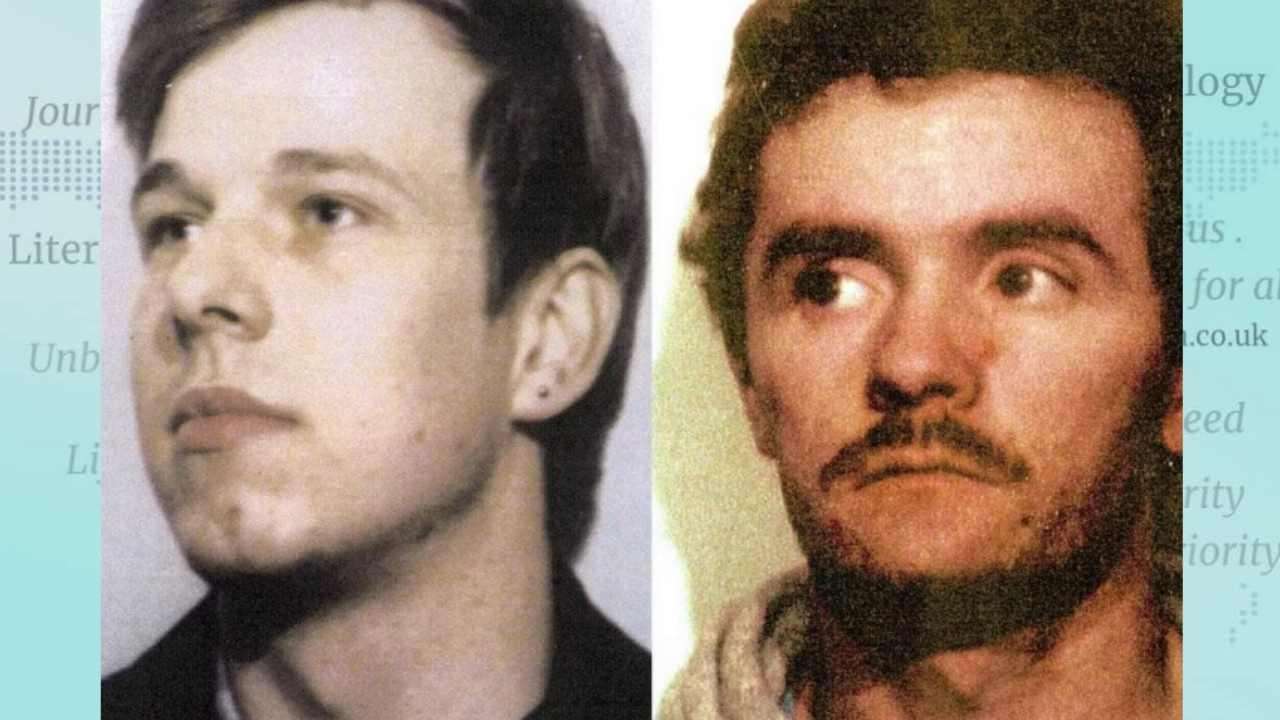
Few crimes are as disturbing, brutal, and deeply unsettling as those committed by the notorious “Railway Killers.” John Francis Duffy and David Mulcahy, born in 1958 and 1959, are remembered as two of Britain’s most sadistic serial rapists and murderers, who preyed on women and children near railway stations across southern England during the 1980s.
The two men had known each other since childhood, forming a close bond while attending Haverstock School in Chalk Farm, north London. Their friendship was rooted in shared violent and deviant fantasies, long before their crimes against people began. While still at school, they were once caught laughing and covered in blood after brutally killing a hedgehog, which they had used as a makeshift cricket ball.
Psychologists later noted that such cruelty toward animals at a young age—particularly when accompanied by a lack of empathy—is often associated with individuals who go on to commit violent crimes against humans. This pattern proved tragically accurate in the case of the Railway Killers. Among the two, Mulcahy was later assessed as having the more aggressive and violent personality.
After leaving school, their disturbing behaviour appeared to subside. Both men married within a year of each other and held steady jobs. Mulcahy worked as a plasterer and builder, while Duffy trained as a carpenter and eventually secured a position with British Rail. That role gave Duffy intimate knowledge of railway stations—information that would later play a key role in their crimes.
Their first recorded rape took place in 1982 in north London, with accounts suggesting the attack occurred near either Kilburn Station or Hampstead Heath. A 22-year-old woman returning home from a party was abducted, dragged into a shed, blindfolded, stripped, and raped.
Over the next year, the pair carried out a series of savage sexual assaults across London and nearby areas. At least 18 women are known to have been raped during this period, most of the attacks occurring in or around isolated railway stations.
The assaults appear to have paused briefly in 1983, possibly due to Duffy’s separation from his wife, but resumed in 1984. In 1985, three women were raped in a single night in Hendon, prompting West London police to launch “Operation Hart.” Victims described the attackers as a short, ginger-haired man accompanied by a larger partner.
On December 29, 1985, the duo escalated their violence and committed their first murder. Nineteen-year-old Alison Day was abducted near Hackney Wick station. She was threatened with a knife and raped by both men before being forced to walk across live railway tracks to a bridge, where she was pushed into a canal.
Alison initially managed to escape and swim to safety, but Duffy and Mulcahy were waiting. They dragged her onto wasteland and strangled her using a tourniquet made from her blouse. Her bound and gagged body was discovered 17 days later in the River Lea, weighed down with stones, prompting a separate investigation known as “Operation Lea.”
In April 1986, the pair murdered their second victim, 15-year-old Maartje Tamboezer in Surrey. Using a fishing line, they caused her to fall from her bicycle, sexually assaulted her, and then Mulcahy strangled her with her own belt. Her body was later set on fire in an attempt to destroy evidence.
The third and final murder occurred in May 1986 in Hertfordshire. The victim was 29-year-old Anne Locke, a newly married secretary employed by London Weekend Television. This killing led to the launch of “Operation Trinity,” the first murder investigation involving multiple police forces since the Yorkshire Ripper case of the 1970s.
Altogether, Duffy and Mulcahy were responsible for up to 40 rapes and three murders. Their crimes prompted Britain’s first major use of psychological offender profiling, as DNA technology was not yet advanced enough to assist investigators.
Professor David Canter, a leading behavioural scientist, produced a detailed profile of the offender. Of the 17 characteristics identified, 13 closely matched Duffy, a breakthrough that helped establish offender profiling as a standard policing tool, according to reports by the Mirror.
In February 1988, Duffy was convicted of two murders and four rapes. In the years that followed, he confessed to further offences during police interviews, receiving additional sentences that ensured he would spend the rest of his life in prison.


_1.jpg)