






.svg)
As Bangladesh pivots toward the February 2026 general election, the nation is witnessing more than a standard cycle of alliance-building. It is undergoing a structural transformation in how power is imagined, negotiated, and justified. Positions once defended as moral absolutes are being recast as tactical preferences. Former rivals now stand shoulder-to-shoulder—not because historical grievances have been resolved, but because survival under a new electoral arithmetic demands it.
This represents the most fluid phase of political realignment since the restoration of parliamentary democracy. What distinguishes this moment is the "why" behind the shift. The suspension of the Awami League, the debate over a proportional representation (PR) system, and the looming 2026 deadline have thinned ideological veneers, allowing cold mathematics to take the lead.
The Proportional Logic: Arithmetic Over Ideology
Behind the scenes of these burgeoning alliances sits a calculated wager. If Bangladesh adopts even a partial proportional representation system—as proposed in the "July Charter" reforms—the logic of the "First Past the Post" system vanishes. In a PR framework, aggregate vote share becomes more valuable than local constituency dominance. For smaller parties long marginalized by the BNP-Awami League duopoly, these alliances are a strategic hedge against permanent irrelevance.
Oli Ahmed and the Sacrifice of Consistency
Colonel (Retd.) Oli Ahmed, a liberation war hero and former sector commander, serves as the most striking symbol of this transition. When he broke from the BNP years ago, he framed it as a moral stand against the BNP-Jamaat coalition, citing Jamaat’s role in 1971.
Two decades later, Ahmed’s Liberal Democratic Party (LDP) has formally joined a Jamaat-centered bloc. This is no quiet adjustment; it is a public, pragmatic pivot. What changed was not the history of 1971, but the system Ahmed believes he must contest. In a crowded field where "isolated moral posturing" yields no power, alliances—however uncomfortable—have become essential insurance policies.
Jamaat-e-Islami: From Outcast to Anchor
Jamaat-e-Islami has navigated this transition with clinical precision. Eschewing its former role as an ideological provocateur, it has repositioned itself as an organizational anchor. The rhetoric is calmer, the posture transactional. The message to the electorate is clear: Jamaat is ready to govern, cooperate, and be counted.
In a system rewarding aggregate votes, Jamaat does not need to dominate its partners; it only needs to be the indispensable core of a viable bloc. For smaller parties, Jamaat offers the one thing they lack: a disciplined, guaranteed base that translates directly into bargaining power under a PR system.
The BNP’s Recalibration
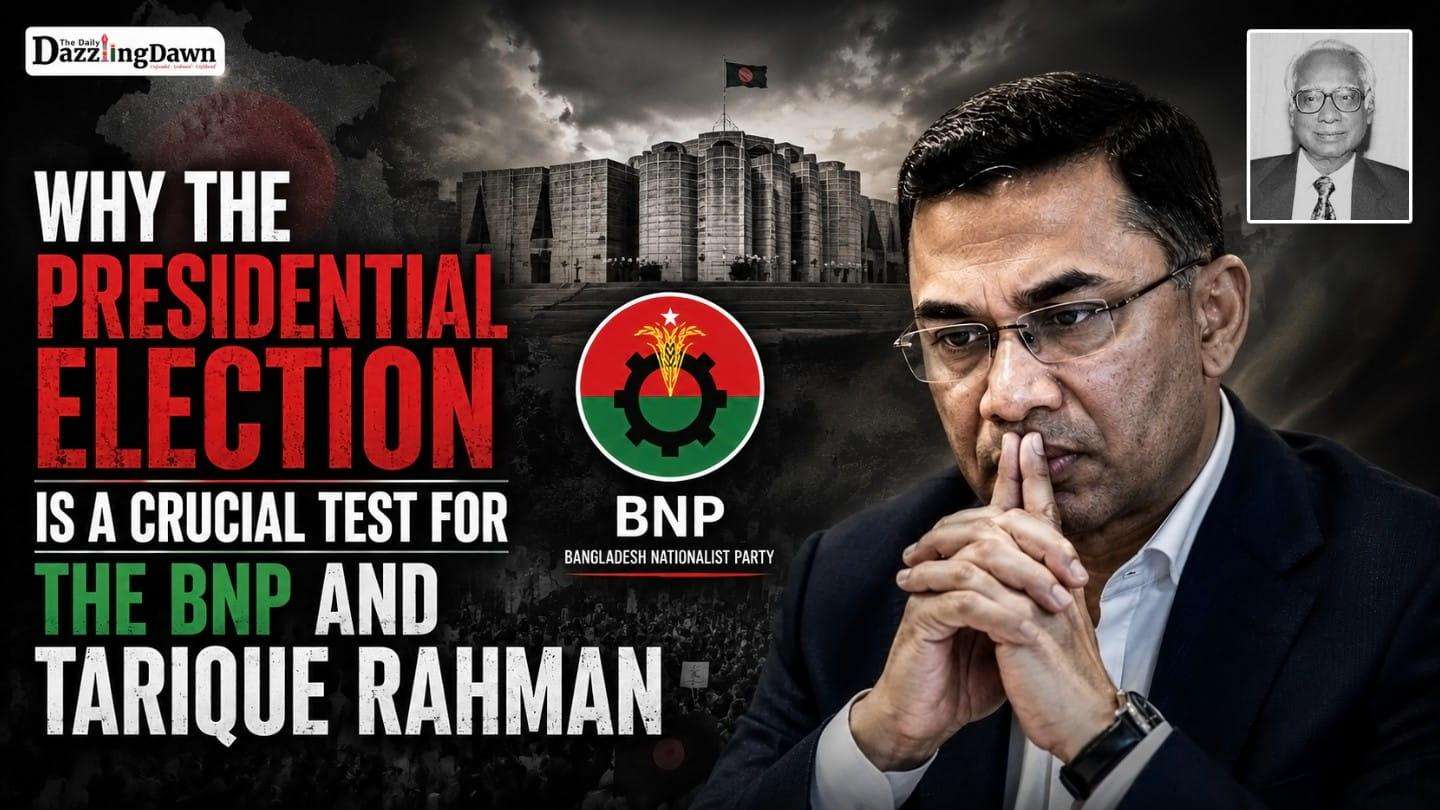
The Bangladesh Nationalist Party (BNP) has responded with its own consolidation. With Tarique Rahman’s active leadership, the party is preparing for governance rather than mere agitation. However, this renewed confidence has created a "squeeze" effect. Smaller parties now realize the BNP may not need them as it once did. As seat negotiations tighten, parties that once orbited the BNP are drifting toward Jamaat’s expanding network—not necessarily out of affinity, but as a response to the BNP’s tightening circle.
The NCP and the "July Spirit" Contradiction
The National Citizen Party (NCP) exposes the most painful friction of this era. Born from the July 2024 uprising, the NCP was the vessel for the "July Spirit"—the belief that politics could be morally reset. Its recent decision to align with Jamaat has sparked a wave of resignations, particularly among women leaders and reformists who view the move as a betrayal of the movement's secular and inclusive roots.
From a journalistic lens, the NCP’s dilemma is the central tragedy of Bangladeshi reformism: the collision of revolutionary ethics with electoral reality. To survive the ballot box in 129 million-voter landscape, the NCP chose scale over purity.
The Islamist Consolidation: Chormonai and Khelafat Majlis
The shift is further evidenced by the behavior of Chormonai’s Islami Andolon and Khelafat Majlis. Chormonai once maintained a strict rhetorical distance from Jamaat, citing 1971. Today, that distance has largely collapsed into practical seat-sharing negotiations. Once a party becomes a negotiating partner rather than a "red line," the distinction survives only in sermons, not in the secretariat.
Conclusion: A New Political Geometry
The absence of the Awami League has dismantled the binary that disciplined Bangladeshi politics for thirty years. Without a common "enemy" to organize against, red lines have softened. 1971 is increasingly treated as a historical reference to be managed rather than a boundary to be enforced.
As the "Great Reshuffle" concludes, a new geometry is emerging. Bangladesh is moving away from the AL-vs-BNP framework toward a new divide: a consolidated BNP seeking to inherit the state on one side, and a coordinated Islamist-reformist bloc on the other. The 2026 election will not just decide the next parliament; it will define the moral and structural boundaries of the nation for a generation.
--
By Salahuddin Ahmed, FCCA
Business and Financial Analyst, City of London


.jpg)