




.svg)
The UK’s private hire landscape is facing a seismic shift as the Treasury moves to close the "Tour Operators Margin Scheme" (TOMS) loophole, a decision that ripples far beyond corporate boardrooms and into the heart of British South Asian communities. While Chancellor Rachel Reeves frames the reform as a crackdown on tax avoidance by global ride-hailing giants, the human cost is being measured in the kitchens of British Pakistani, Bangladeshi, and Indian households. For decades, the private hire sector has served as a vital economic engine for South Asian families, with recent data suggesting that nearly 40% of the UK’s 380,000 licensed drivers identify as Asian or Asian British. This legislative change, set to take full effect by January 2, 2026, represents more than just a fiscal adjustment; it is a fundamental reconfiguration of a sector that supports hundreds of thousands of first- and second-generation immigrant families, Daily Dazzling Dawn realized.
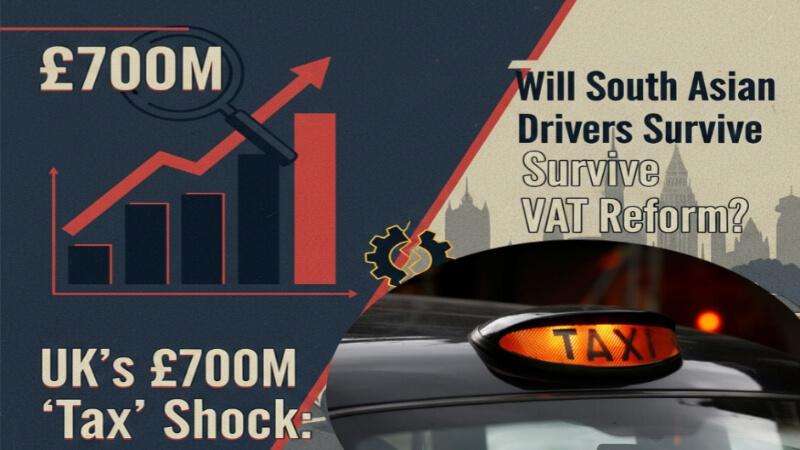
A Community Under Pressure-The removal of the TOMS benefit, which previously allowed firms like Uber to pay an effective VAT rate of just 4% by treating car rides as "travel packages," is expected to generate £700 million annually for the government. However, for the estimated 110,000 South Asian drivers across England and Wales, the "leveling of the playing field" comes at a precarious time. Industry analysts point out that British Pakistani and Bangladeshi drivers are disproportionately represented in the private hire vehicle (PHV) sector compared to the traditional "Black Cab" trade. While the Licensed Taxi Drivers Association (LTDA) celebrates the end of what they call "unfair competition," many PHV drivers fear a contraction in demand. As VAT shifts to the full 20% on fares, the resulting price hikes for passengers could lead to a significant drop in bookings, directly squeezing the margins of drivers who are already grappling with high fuel costs and rising vehicle insurance premiums.
The Economic Ripple Effect on Families-To understand the impact of this "Taxi Tax," one must look at the dependency ratios within these communities. In many British South Asian households, a single private hire driver often supports an extended family, including elderly parents and children in higher education. With the Treasury’s new mandate, the concern is no longer just about corporate tax compliance but about the viability of self-employment for those who have used the PHV sector as a ladder for social mobility. The government’s decision to apply 20% VAT to all private hire journeys—unless they are part of a genuine holiday package—threatens to turn a flexible, accessible profession into one with diminishing returns. For a driver in a city like Bradford, Birmingham, or East London, where the density of South Asian operators is highest, a 15% to 20% increase in consumer prices could mean the difference between a sustainable income and falling below the poverty line.
Seeking a Fairer Path Forward-The path to a better outcome lies in more than just closing loopholes; it requires a nuanced approach to VAT thresholds that protects the "everyday cabbies" the Chancellor claims to champion. Experts suggest that the government could mitigate the blow by introducing a tiered VAT system or increasing the VAT registration threshold specifically for individual small-scale operators. Furthermore, providing targeted grants for the transition to electric vehicles (EVs) could help South Asian drivers offset the new tax burdens by reducing long-term operational costs. Better integration of private hire services into the national transport strategy, treating them as a "lifeline" for rural and elderly populations rather than a luxury, would ensure that the sector remains robust. By recognizing the cultural and economic significance of the South Asian workforce in the UK’s transport web, the government could transform a purely fiscal measure into a progressive policy that supports both the Treasury and the hardworking families who keep the country moving.