
.jpg)





.svg)
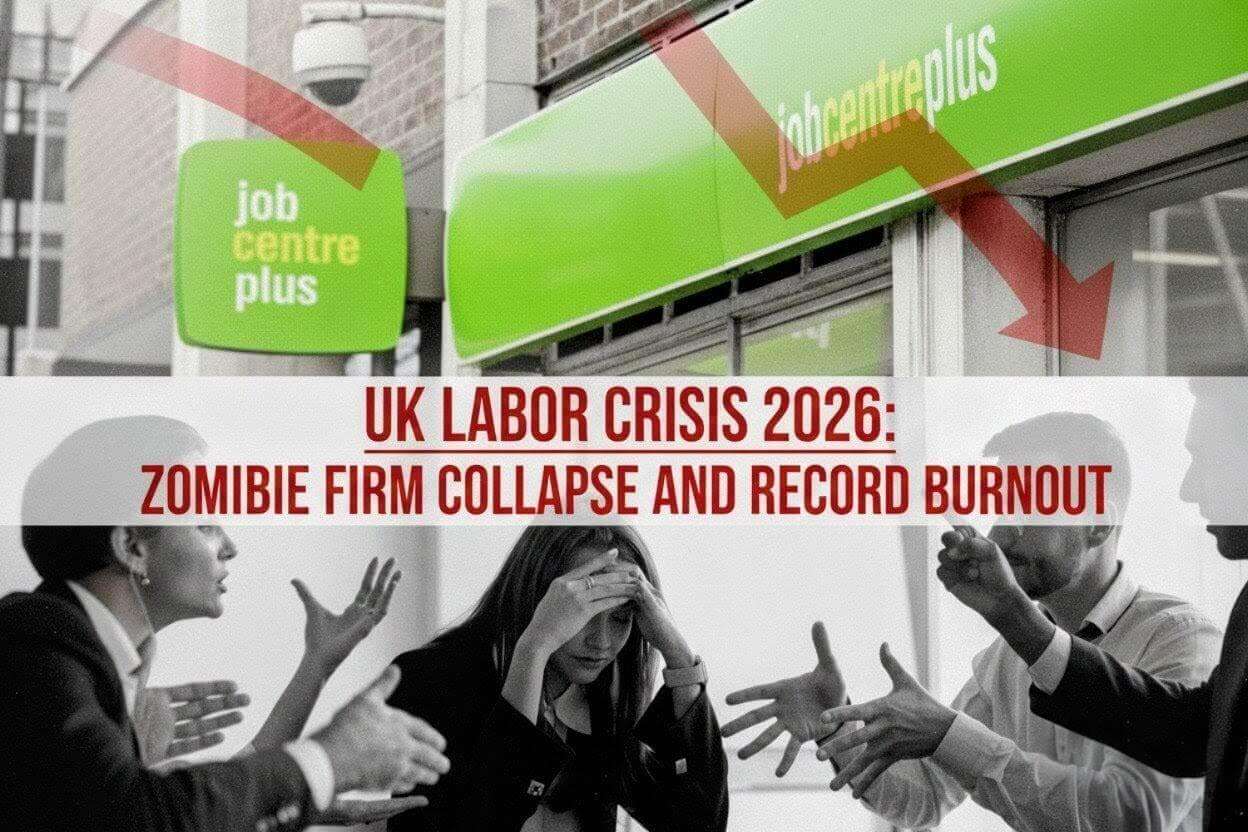
The UK labor market has entered a volatile new era in 2026, defined by a brutal paradox: the long-awaited death of unproductive "zombie" companies is finally occurring, but it is leaving a trail of soaring unemployment and a mental health epidemic in its wake. As the new year begins, the intersection of corporate insolvency and a "national crisis" of work-related stress has created a perfect storm for the British workforce. For decades, the UK economy has been artificially propped up by low interest rates, allowing debt-laden, underperforming firms to survive on the margins. However, the cumulative impact of high energy costs, increased minimum wages, and the lag effect of previous interest rate hikes has finally triggered a "mild zombie apocalypse," according to the latest data from the Resolution Foundation, Daily Dazzling Dawn realized.
This economic thinning of the herd, while theoretically beneficial for long-term productivity, is manifesting as a localized disaster for the modern professional. The collapse of these firms is not happening in a vacuum; it is placing unprecedented pressure on the remaining workforce. As companies struggle to stay afloat or consolidate, the "triple whammy" of rising operational costs is being passed directly onto employees in the form of impossible workloads. This shift has forced the Trades Union Congress (TUC) to declare work-related stress a national emergency. A landmark study of 2,700 safety representatives reveals that four out of five workers now cite stress as their primary workplace hazard, with many reporting that the fear of redundancy and the intensity of "lean" operations are driving them to the point of total burnout.
The Survival of the Fittest and the Human Cost of Productivity-The economic narrative of 2026 is increasingly focused on "creative destruction"—the process by which inefficient firms are replaced by more innovative, AI-integrated entities. While economists argue this is the only way to reverse the UK's stagnant productivity, the human reality is a headline unemployment rate that has climbed to 5.1%, the highest level in a decade outside of the pandemic. For the individuals left behind in struggling firms, the environment has become toxic. Business confidence has plummeted to a three-year low, according to the British Chambers of Commerce (BCC), and this lack of optimism is translating into a culture of fear. Employers, desperate to avoid the "zombie" label, are frequently bypassing health and safety laws and failing to conduct mandatory stress risk assessments in a frantic bid to maintain turnover.
TUC General Secretary Paul Nowak has warned that the current trajectory is unsustainable, noting that workers are "paying with their health" for the management failures of the past decade. The crisis is compounded by the fact that even as the Bank of England has lowered the base rate to 3.75% from its 5.25% peak, the cost of doing business remains significantly higher than pre-pandemic levels. This financial friction means that even "healthy" companies are operating with minimal staff, leading to the "impossible workloads" highlighted in recent union findings. The result is a workforce that is simultaneously more productive on paper but more fragile in practice, creating a looming public health crisis that could offset any gains made in GDP.
A Turning Point for Labor Policy and Corporate Governance-As we move further into 2026, the government faces mounting pressure to enforce stricter labor laws to prevent a total collapse of employee wellbeing. The BCC reports that fewer than half of UK firms expect turnover to increase this year, and investment remains stagnant as tax concerns weigh heavily on SMEs. This suggests that the "zombie" purge is far from over. Policymakers are now caught between the need to let unproductive firms fail to modernize the economy and the urgent requirement to protect citizens from the resulting job displacement and mental health fallout.
The resolution of this crisis will likely require a fundamental shift in how "economic health" is measured in Britain. With disposable income growth remaining mediocre and the threat of redundancy looming over millions, the focus must shift from mere corporate survival to sustainable employment practices. Without intervention to curb excessive workloads and a renewed commitment to workplace mental health, the "turning point" of 2026 may be remembered not for an economic rebirth, but as the year the British workforce reached its absolute limit. The challenge for the Starmer administration and business leaders alike is to ensure that the transition to a high-productivity economy does not come at the cost of a broken society.