

.svg)
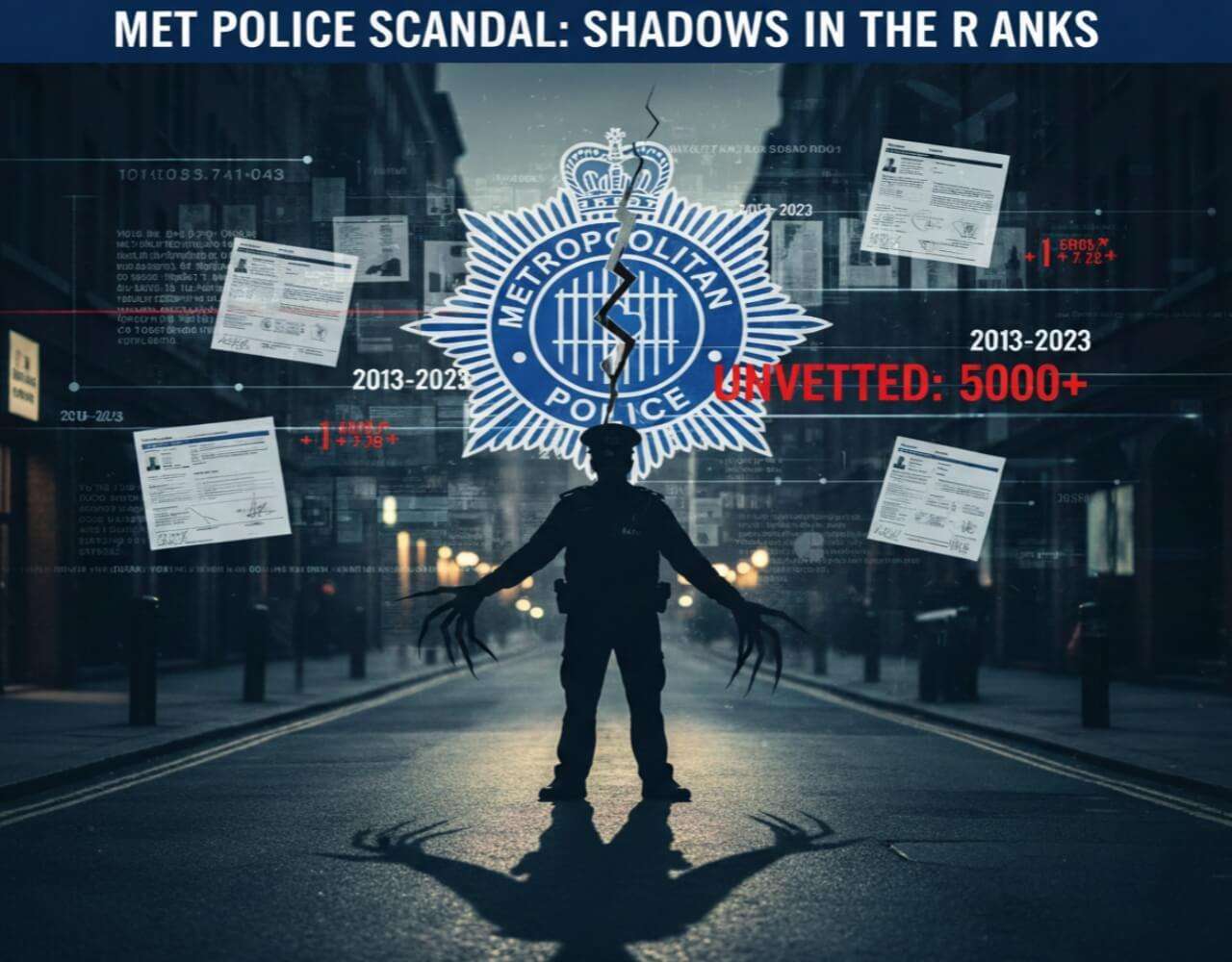
The Metropolitan Police is currently grappling with the devastating fallout of a decade-long collapse in security protocols, revealing that thousands of officers were integrated into the force without adequate background checks. Between 2013 and 2023, an era defined by intense political pressure to bolster officer numbers, the Met effectively lowered its defensive shield, allowing individuals with criminal histories—including serial rapists and violent offenders—to wield the power of the warrant card. This systemic failure has not only compromised public safety but has sparked a fundamental crisis of legitimacy for British policing, Daily Dazzling Dawn realised.
The Cost of Speed Over Security-The internal audit into the Met’s recruitment practices paints a harrowing picture of institutional negligence driven by the "Police Uplift" program. Under pressure to meet the previous government’s target of 20,000 new officers, the force prioritized recruitment speed over rigorous scrutiny. The Home Office has now confirmed that more than 5,000 officers and staff were brought into the service without the requisite vetting. Even more concerning is the "black hole" of data regarding 17,000 personnel for whom the force cannot confirm whether pre-employment checks were ever completed. This environment of relaxed safeguards created a vacuum that was exploited by some of the most dangerous predators in modern legal history.
From Vetting Failures to Violent Crime-The human cost of these administrative shortcuts is exemplified by the cases of David Carrick and Cliff Mitchell. Carrick, one of the UK’s most prolific sex offenders, was remarkably cleared through re-vetting in 2017 despite a growing history of complaints against him. Similarly, Cliff Mitchell was recruited despite an existing allegation of child rape; he was later convicted of ten counts of rape, including the victimization of a child under 13. The Met’s own report admits that 1,400 officers who should have been flagged by standard vetting were instead granted full police powers. This dereliction of duty resulted in at least 131 officers committing serious offenses ranging from drug trafficking and hate crimes to sexual violence while actively serving the public.
A National Crisis Beyond London-While the Metropolitan Police remains the focal point of the scandal, the rot appears to extend beyond the capital’s borders. Inquiries have established that at least five other police forces across England and Wales succumbed to similar vetting errors during the rush to fill vacancies. Home Secretary Shabana Mahmood has responded to the crisis by commissioning HM Chief Inspector of Constabulary to launch a comprehensive inspection of all recruitment practices. The government’s stance is clear: the abandonment of vetting was a fundamental failure of the Met's duty to protect Londoners, trading the safety of the vulnerable for the achievement of political recruitment quotas.
The Long Road to Reform and Restoration-Under the leadership of Commissioner Sir Mark Rowley, the Met has initiated an aggressive "cleansing" of the ranks, with approximately 1,500 individuals removed from the force since 2022. Assistant Commissioner Rachel Williams has emphasized that while historical practices were deficient, the force has now "fixed" these vulnerabilities and implemented significantly higher hiring standards. However, the damage to public trust remains profound. As the force moves to implement more robust professional standards, the focus shifts to whether the institutional culture that allowed "tolerable deviations" in security can truly be dismantled, or if the ghost of the 2013–2023 vetting era will continue to haunt the streets of London for years to come.