





.svg)
The UK is on the brink of its most significant immigration overhaul in decades as the Home Office moves to replace the standard five-year residency requirement with a "time adjustment" model. The proposal, titled "A Fairer Pathway to Settlement," suggests a baseline of 10 years for Indefinite Leave to Remain (ILR). While the government claims this will ensure migrants "earn" their place through integration and contribution, critics argue it creates an expensive and exhausting barrier for the very workers the UK economy relies upon.
A Transactional Approach to Belonging
The new framework introduces a tiered system where residency speed is tied directly to wealth. High earners with salaries exceeding £125,140 could fast-track to settlement in just three years, while those on standard skilled worker visas may see their wait doubled. This shift transforms British residency into a luxury commodity, effectively penalizing essential workers in healthcare, education, and research who do not meet the elite pay brackets but provide the backbone of national services.
Rising Ethno-Nationalism and Identity
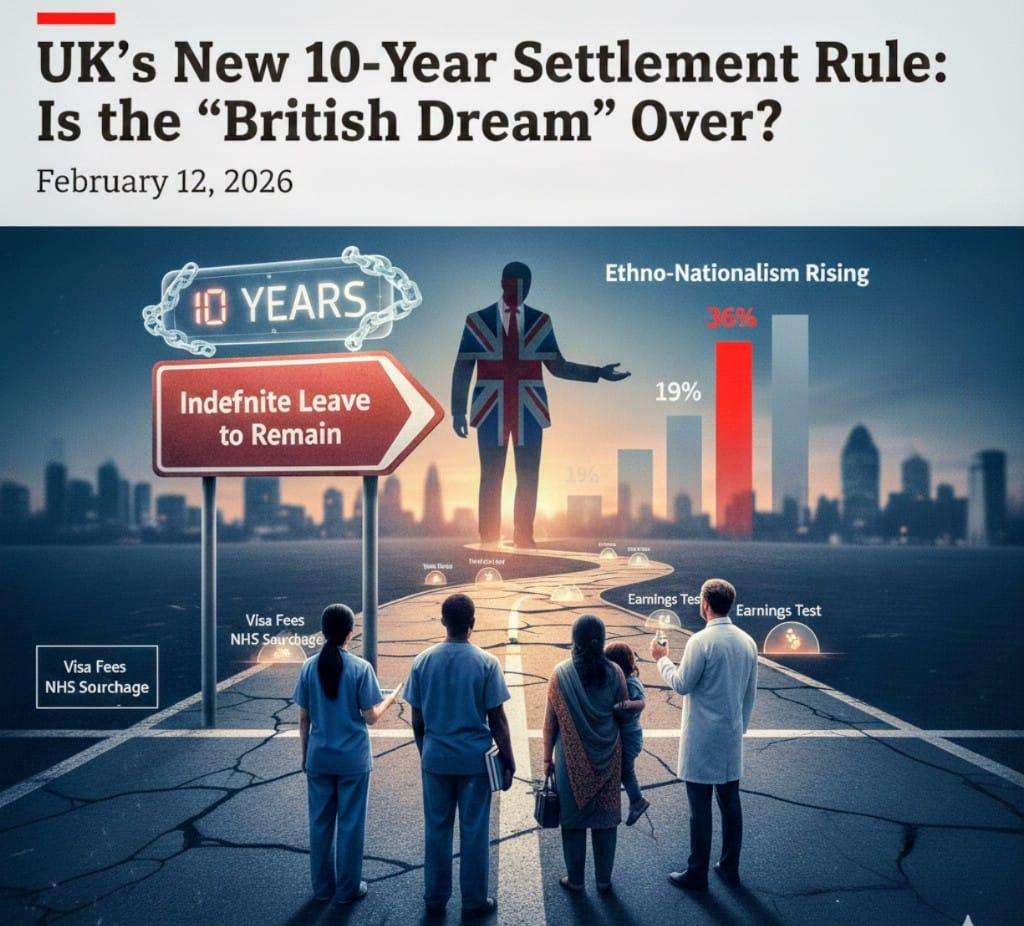
This policy shift is supported by a startling change in public sentiment. According to research by the Institute for Public Policy Research (IPPR) released in late 2025, the number of people who believe being "truly British" requires being born in the UK has surged from 19% in 2023 to 36% in 2026. This trend toward ethno-nationalism suggests that the government's proposals are less about economic management and more about appeasing a hardening public stance on national identity.
The Human Cost of Uncertainty
For the 1.6 million migrants who have arrived since 2021, the retrospective nature of these changes is a source of deep anxiety. Families who have already invested thousands of pounds in visa fees and NHS surcharges find the rules changing mid-journey. The prospect of an additional five years of "visa limbo" means prolonged instability, restricted rights, and an impossible choice for full-time caregivers who may fail new, rigorous earnings tests.
A Call to Action Before the Deadline
The public consultation for these proposals remains open until February 12, 2026. Advocacy groups are urging UK citizens and residents to stand with their migrant neighbors—the doctors, teachers, and researchers who keep the country running. The outcome of this consultation will decide whether Britain remains an inclusive nation or moves toward a system where dignity and stability are reserved only for the highest bidders.