


.svg)
The multifaceted realities preceding the 2024 General Election caused a profound fracture in the century-long political relationship between the British Muslim community and the Labour Party. For the first time in history, a tidal wave of resentment—fueled by the Gaza conflict and a sense of internal neglect—swept four independent Muslim MPs into Westminster.
Today, two years later, this ‘Independent Alliance,’ born from a demand for international justice, faces a harsh reality. While these leaders, elected on a Muslim identity by leveraging the Gaza issue, have been vocal on international matters in Parliament, critics argue they have failed to trigger any tangible policy shifts regarding local housing crises, Islamophobia, or the soaring cost of living. In fact, they have not even been seen delivering standout speeches on these domestic issues within the British Parliament. Consequently, as the 2026 local elections approach, a sense of ‘voters' remorse’ is brewing among Muslim constituents, driven by the widening gap between expectations and achievements.
The Three-Way Bangladeshi Schism in Tower Hamlets
At least 1.5 million British Bangladeshis, spanning three generations, have resided in Britain for over a century. Yet, compared to British Indians or British Pakistanis who started their journey at the same time, the influence of British Bangladeshis in mainstream politics remains less than one-third. Outside of two parliamentary seats in East London, Bangladeshis have yet to become a decisive factor in the voting equations of major parties or government policy levels. Of the four current British Bangladeshi MPs—all from the Labour Party—some have faced suspensions, while others resigned from ministerial posts amidst controversy. Even with their party in power, they have failed to build or maintain a significant position within the party’s or government’s decision-making echelons.
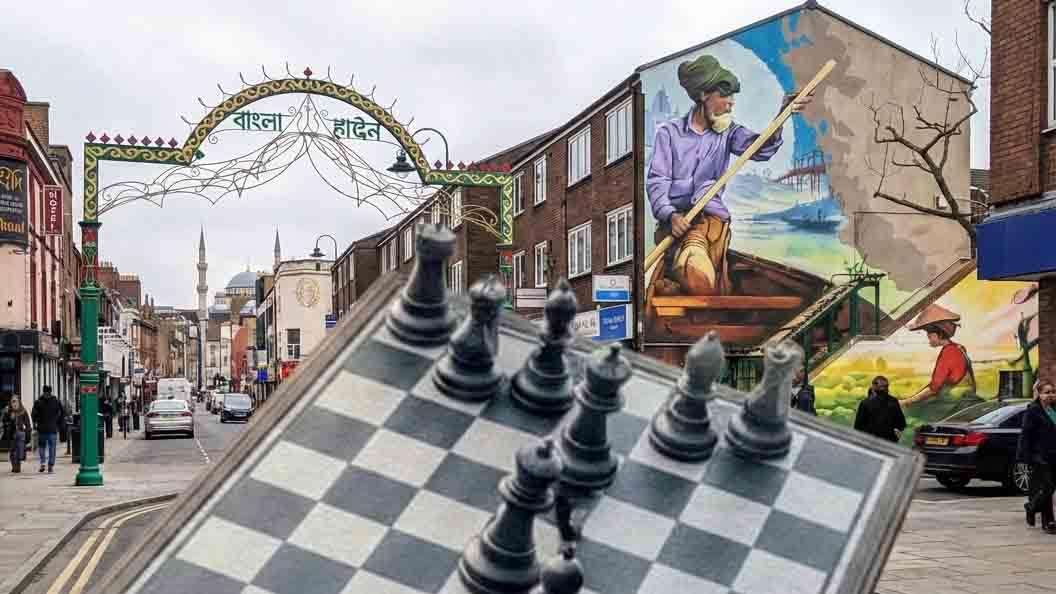
In British parliamentary or local elections, Bangladeshis are generally not the primary force or determinant of victory, except in Tower Hamlets. This is the only place where elections are a focal point of community discussion, and British Bangladeshi candidates play the leading role in creating a vibrant, competitive environment.
However, no such competitive atmosphere has emerged for the upcoming elections in this borough. Instead, in the political heart of British Bangladeshis, Tower Hamlets, long-standing "Bangladesh-style" ugly power struggles and personal vendettas have surfaced. With the upcoming Mayoral election in mind, a faction of the current Mayor Lutfur Rahman’s Aspire Party formed a new political group last week called the ‘Independent Party,’ alleging rampant authoritarianism and broken promises. Their goal is to challenge the highly discussed and controversial Lutfur Rahman.
On the other hand, veteran Labour candidate Sirajul Islam is also desperate for a win. If the 38% Bangladeshi vote share in Tower Hamlets is eventually split between Lutfur Rahman, Sirajul Islam, and the new independent candidate, the result could be catastrophic for the community. This division might ultimately hand the keys of power to a candidate from the white community. If that fear materializes, Bangladeshis may finally lose their long-held control over their UK "nerve center." The word ‘Independent,’ once a symbol of unity for Bangladeshis against the conspiracy of major parties to suppress them since the 90s, has now turned into a grotesque symbol of division. Many blame this split on Lutfur Rahman’s failure of leadership, lack of liberal values, and tendency to monopolize power.
Reform UK’s ‘Muslim Card’
The staunchly anti-immigration party ‘Reform UK’ has entered the field with clever strategies to exploit this lack of unity. In the upcoming London Mayoral race, they have played the ‘Muslim Card’ by fielding Laila Cunningham, a Muslim woman of Egyptian descent. Cunningham has sparked planned controversies by advocating for a ban on the burqa, calling it ‘incompatible with British values.’
Laila has directly attacked London's pluralistic culture, claiming parts of the city now feel like ‘Muslim towns’ where bilingual signboards in different languages are seen everywhere and burqas are sold in markets. She has specifically tried to portray bilingual signs—including Bengali—in areas like Tower Hamlets as contrary to British culture, which is an extreme insult to the long history and heritage of Bangladeshis in Britain. She has openly declared plans to identify Muslim women as criminals by proposing ‘Stop and Search’ powers for police over women wearing burqas.
Political analysts believe fielding her is not an attempt to win Muslim votes, but a tactic to wash away the ‘Islamophobic’ label attached to Reform UK. By using a candidate with a Muslim identity to speak against Muslim customs through a far-right narrative, the party is re-fanning the flames of old prejudice and hatred. Beyond London, across Britain, the party is employing various tactics to pull right-wing and far-right votes into their boxes amidst the battle between Labour, Green, and Independent candidates. To hide its negative identity as anti-Muslim, Reform UK is recruiting marginalized Muslim leaders into its fold, following the footsteps of right-wing Conservative figures like Nadhim Zahawi. Some opportunistic Bangladeshis have already joined their ranks alongside Indians and Pakistanis.
Conversely, the effort for unity remains strikingly absent within the British Muslim community, including Bangladeshis. In the face of this rising far-right surge, center-right and left-wing politics appear lackluster. As a new left-leaning force, Jeremy Corbyn’s party initially sparked hope for anti-racist politics, but the leadership conflict between Corbyn and Zarah Sultana has deeply dampened those hopes. The Green Party is now gaining fresh support from immigrants and Muslims in the vacuum left by this failure, as evidenced by recent opinion polls. To stop far-right Nigel Farage and maintain their political standing, a larger political alliance between the Green, York, and Labour parties seems likely in the next election.
The £70 Billion Paradox: Contribution vs. Deprivation
In 2026, the economic picture of 4.4 million British Muslims proves a reality of extreme disparity. On one hand, the community contributes over £70 billion annually to the British economy, with a rapidly growing highly educated and professional class. On the flip side of this success lies extreme poverty. According to 2025-26 data, 39% of British Muslims still live in the 10% most deprived areas of England and Wales. ‘Muslim families’ are in crisis, as 68% of this community lives in areas of high unemployment. This economic inequality is pushing the younger generation away from mainstream politics toward ‘independent’ movements—a trend exploited by opportunistic politicians to build their own careers.
Identity Crisis and the New Definition of Islamophobia
Deep dissatisfaction has arisen among Muslims regarding the British government’s new definition of ‘anti-Muslim hatred.’ By choosing the term ‘anti-Muslim hostility’ over the proposed word ‘Islamophobia,’ many feel insecure. Since this definition does not include ‘racism’ or ‘racialization,’ it has become harder for those attacked for wearing a skullcap, beard, or hijab to receive legal protection. In the past year, attacks on mosques have increased by 20%.
The British version of Trump—a global leader of capitalism—has already shown the ability to purchase necessary popularity in the UK. In this era of British politics leaning heavily to the right, internal disunity significantly increases the risk for British Muslims and Bangladeshis. Instead of becoming ‘Kingmakers,’ they face the danger of remaining a divided, deprived, and neglected demographic group, abandoned once their utility is exhausted
---
Author: Munzer Ahmed Chowdhury, Originator & Publisher of Daily Dazzling Dawn