





.svg)
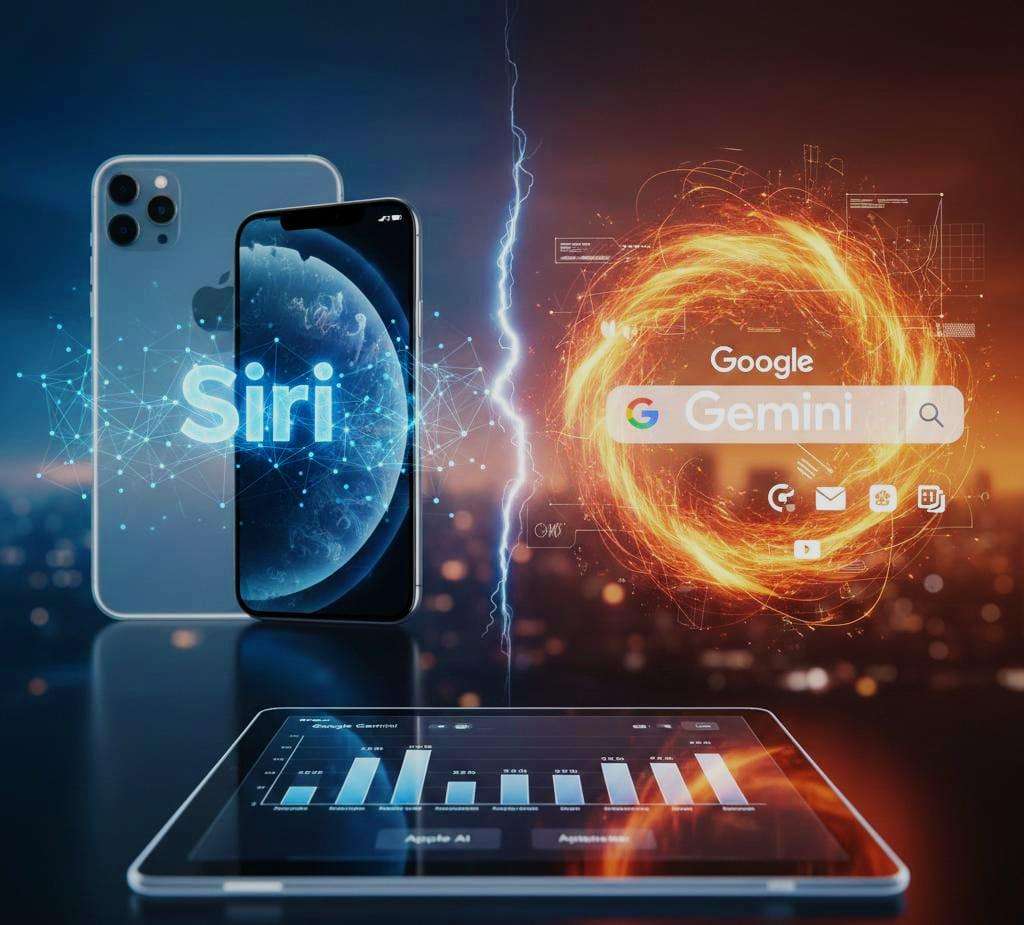
The tech landscape shifted beneath Apple’s feet this week as leaks regarding iOS 27 revealed a frantic effort to transform Siri from a basic voice assistant into a fully integrated chatbot. While the Cupertino giant aims to fend off the encroaching influence of OpenAI, the move has inadvertently highlighted a much larger problem for the iPhone maker. The reality is that Google Gemini has already established a level of sophisticated, cross-platform dominance that makes Apple’s upcoming "revamp" look like a reactive game of catch-up rather than a proactive innovation.
The Architecture of a Latecomer
Apple’s plan to bake a Large Language Model directly into the core of the iPhone and Mac hardware is a fundamental admission that the current iteration of Siri is obsolete. For years, Siri has relied on rigid, intent-based programming that struggled with context and conversational nuance. By pivoting to a built-in chatbot model, Apple is attempting to replicate the fluid, generative experience that Google Gemini users have enjoyed for months. However, industry data suggests that Apple’s commitment to "on-device" processing, while excellent for privacy, creates a significant bottleneck in computational power. Google Gemini utilizes a hybrid approach, leveraging massive cloud-based Tensor Processing Units to handle complex reasoning that a handheld device simply cannot match without draining its battery or overheating.
Why Google Gemini Remains the Unbeaten Titan
When performing a deep analysis of the two ecosystems, Google Gemini holds a decisive lead in multimodal capabilities. Gemini was built from the ground up to understand video, audio, and code simultaneously, whereas Apple is still struggling to make Siri understand basic follow-up questions. Google’s integration with its Workspace suite—Docs, Gmail, and Drive—allows Gemini to act as a genuine digital brain with access to a decade of user data. Apple’s siloed approach to apps means Siri often hits a "wall" when trying to perform cross-app tasks, a friction point that Google has already smoothed over with its sophisticated API extensions. Furthermore, Gemini’s latency statistics consistently outperform Apple’s current generative prototypes, providing near-instantaneous responses that feel human, rather than mechanical.
The Innovation Gap in Real Time Data
One of the most glaring advantages for Google is the marriage of Gemini with Google Search. While Apple is attempting to build a closed-loop chatbot, Google Gemini possesses the unique ability to verify facts and pull real-time information from the live web with surgical precision. Apple’s reliance on third-party partnerships, such as its tentative deal with OpenAI, exposes a lack of internal AI infrastructure. By relying on external models to bolster Siri, Apple risks losing its "walled garden" identity, whereas Google owns every layer of the stack from the hardware to the model to the search index. This vertical integration allows Gemini to be more predictive and contextually aware of global events as they happen, leaving Siri to rely on data that is often minutes or hours behind the curve.
The Verdict for the Next Generation of Users
As we approach the release of iOS 27, the narrative is no longer about whether Apple can build a chatbot, but whether anyone will care by the time they do. Google Gemini has already achieved a 40% higher engagement rate among power users compared to traditional voice assistants. The sheer scale of Google’s data training sets—derived from billions of web pages—gives Gemini a linguistic versatility that Apple’s privacy-restricted training methods simply cannot replicate. For the modern consumer who demands a proactive AI that can write code, plan travel, and summarize complex legal documents in seconds, the choice remains clear. Apple is building a better assistant for today, but Google has already built the intelligence for tomorrow.