





.svg)
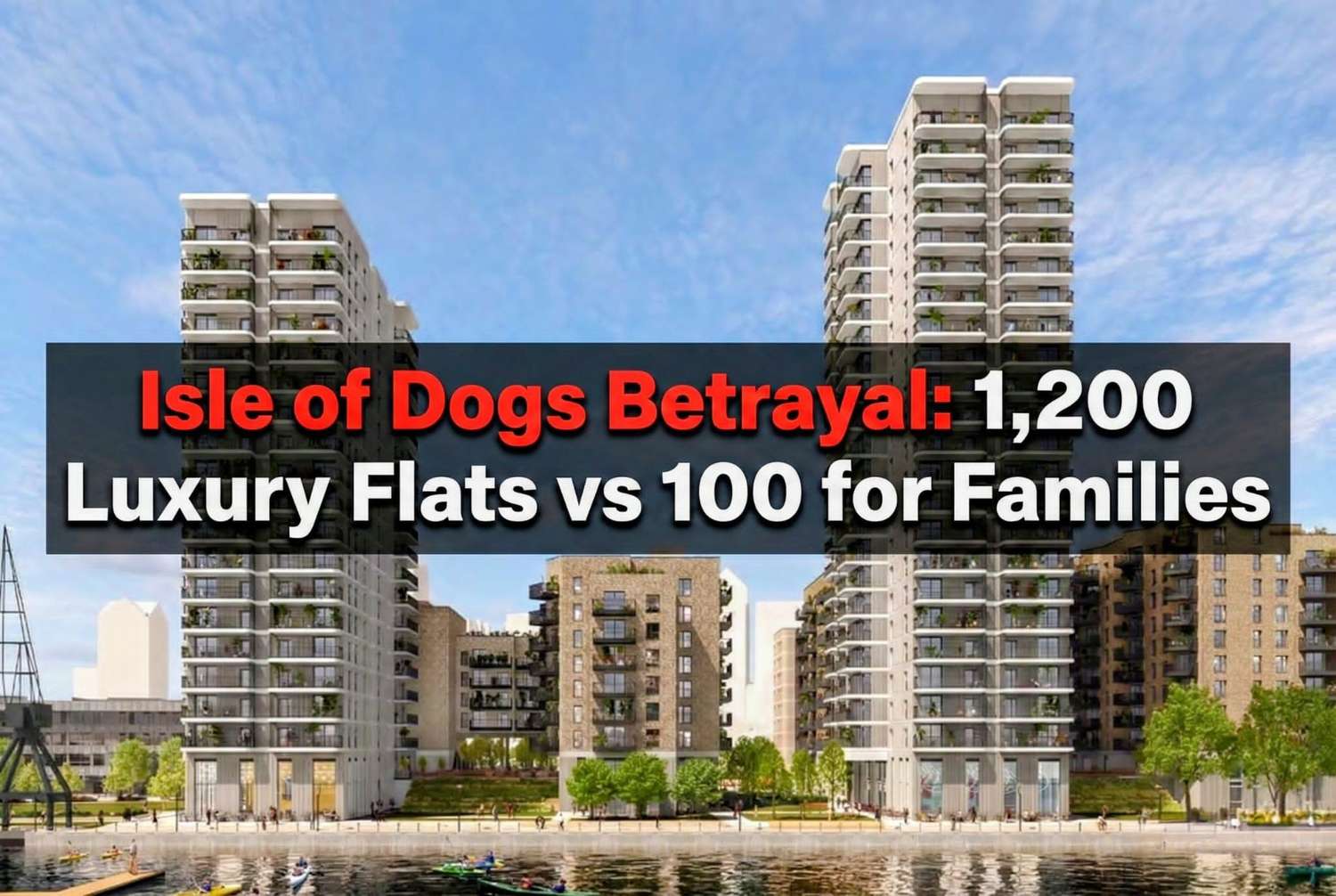
In a move that housing campaigners are calling a "catastrophic betrayal" of East London’s working-class communities, the billionaire-backed developers behind the Westferry Printworks scheme have applied to slash their affordable housing promise by more than 70 per cent. While the glass towers rise on the Isle of Dogs, the hope for local families is crumbling. The revised application, submitted to Tower Hamlets Council this week, proposes a luxury waterfront playground where only a tiny fraction of residents—just 10 per cent—will be from the community that desperately needs homes.
For the nearly 30,000 households currently languishing on the Tower Hamlets housing register, this news is a bitter pill. As of January 2026, the borough remains the most densely populated in England, with nearly half of all children living in poverty and thousands of families trapped in overcrowded, temporary accommodation. The Westferry development, once touted as a regeneration miracle that would deliver nearly 500 affordable homes, now promises just 100. The remaining 1,258 units will be sold on the private market, likely out of reach for the teachers, nurses, and service workers who keep the borough running.
The 'Viability' Loophole: Profits Over People
The developers, Northern & Shell—owned by media tycoon Richard Desmond—have justified this dramatic reduction through a "viability assessment." This technical mechanism allows developers to bypass council targets if they can prove that building affordable homes would eat too deeply into their profit margins. The firm cites a "perfect storm" of economic headwinds: spiraling construction inflation, the stagnating value of flats in the area, and the significant costs of retrofitting the design with second staircases to meet the new Building Safety Act requirements.
However, critics argue that the "viability" defence is a smokescreen for preserving profit at the expense of social responsibility. The project, valued at over £1 billion, sits on prime waterfront land that has been the subject of fierce political controversy for a decade. The slashing of affordable units from an agreed 35 per cent down to a pitiful 10 per cent suggests that the financial risks of the project are being offloaded entirely onto the borough’s most vulnerable residents. While the developers protect their bottom line, the council is left with a site that consumes vast local resources while giving almost nothing back to the community it inhabits.
Regulatory Chaos and the Race to the Bottom
This latest twist in the Westferry saga exposes the fragility of London’s planning system in 2026. The submission comes just months after the Greater London Authority (GLA) introduced emergency measures in November 2025, temporarily lowering the affordable housing threshold from 35 per cent to 20 per cent to kickstart stalled construction projects. Yet, the Westferry proposal fails to meet even this lowered "crisis" standard. By offering only 10 per cent, the developers are effectively testing the resolve of local authorities, betting that the desperation to get anything built will override the demand for fair housing.
The history of the site adds salt to the wound. This is the same plot of land involved in the 2020 scandal where former Housing Secretary Robert Jenrick unlawfully approved a previous iteration of the scheme, saving the developer nearly £50 million in community levies. Years later, despite a change in government and repeated promises of reform, the outcome remains the same: the rich get richer, and the poor get pushed further out.
A Council Under Siege
Tower Hamlets Council now faces an impossible decision. A spokesperson confirmed that planning officers will rigorously scrutinise the new viability assessment before it goes to the strategic development committee later this year. But the pressure is immense. If the council rejects the plan, they risk leaving a massive brownfield site derelict for another decade. If they approve it, they signal that affordable housing targets are merely suggestions, not rules.
For the single mother in a moldy B&B in Bethnal Green, or the family of five sharing a one-bedroom flat in Poplar, the intricacies of "viability assessments" mean little. What matters is that the promise of a home is slipping further away. As cranes dominate the skyline, the disconnect between the gleaming towers of the Isle of Dogs and the reality of the streets below has never been starker. This is not just a planning dispute; it is a battle for the soul of East London.