



.svg)
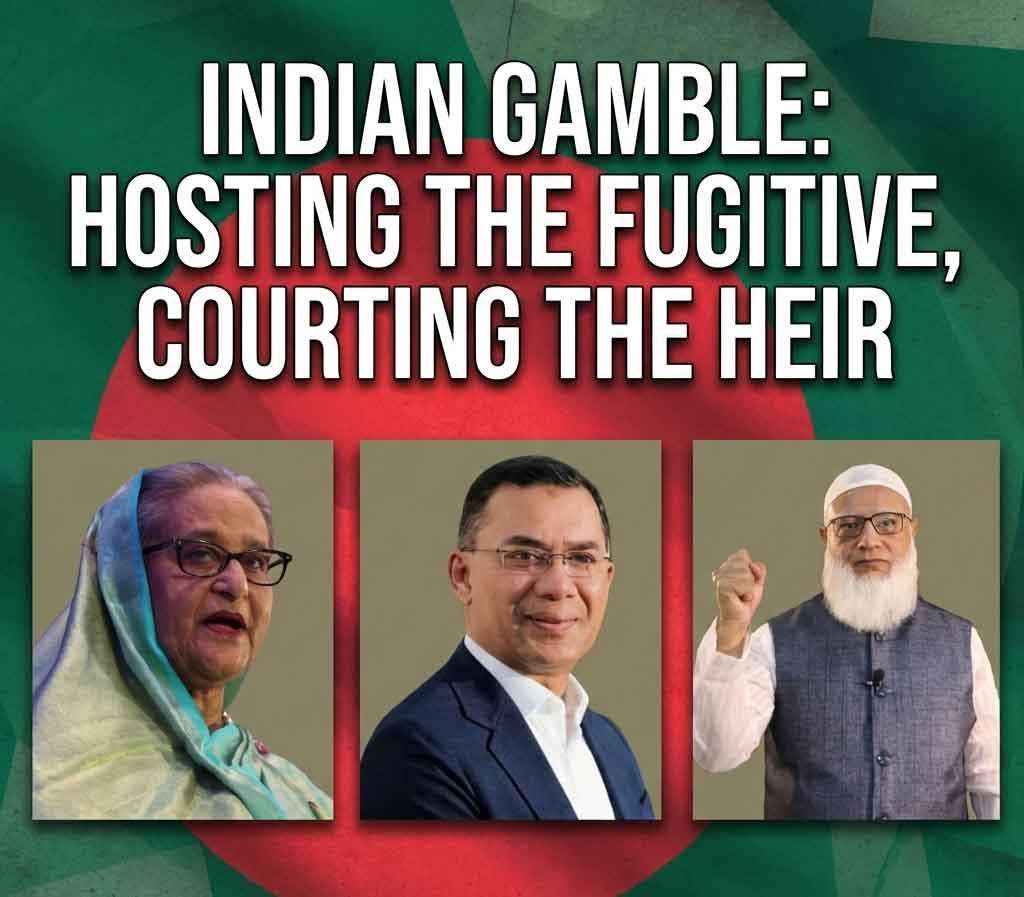
In a masterclass of diplomatic ambiguity that has left observers in Washington and Dhaka breathless, India appears to be executing a high-stakes "dual game" regarding the future of Bangladesh. The political theatre in South Asia reached a fever pitch this week as two contradictory images emerged from the Indian capital: the defiant voice of a fugitive Sheikh Hasina reverberating through the Foreign Correspondents’ Club, and the solemn, startling presence of Indian External Affairs Minister S. Jaishankar paying respects at the funeral of Khaleda Zia, followed by a closed-door meeting with her heir, Tarique Rahman.
The Open Bet: Resurrecting the Iron Lady
The silence of exile was shattered on Friday when former Prime Minister Sheikh Hasina, now 78, delivered her first public address since the student-led uprising toppled her regime in 2024. Speaking virtually to a packed hall in New Delhi, an event that could not have proceeded without the tacit approval of the South Block, Hasina unleashed a blistering attack on the interim government. She branded Chief Advisor Muhammad Yunus a "murderous fascist" and issued what Dhaka has termed "hate speech," calling on her loyalists to rise.
This move by New Delhi is calculated and brazen. By allowing Hasina a platform to delegitimize the upcoming February 12 election, India is signaling that it retains a potent lever of influence. The Awami League may be banned in Dhaka, with its registration suspended and its leader sentenced to death in absentia for the massacre of 1,400 people, but in New Delhi, the party remains a strategic asset. Intelligence reports confirm that Awami League leaders, previously scattered across the UK, USA, and Europe, are now congregating in India, regrouping under the protective umbrella of the Indian security establishment. This consolidation suggests India is keeping the "Hasina option" alive, not necessarily to reinstall her immediately, but to loom as a constant threat over any incoming hostile government.
The Shadow Play: Wooing the BNP
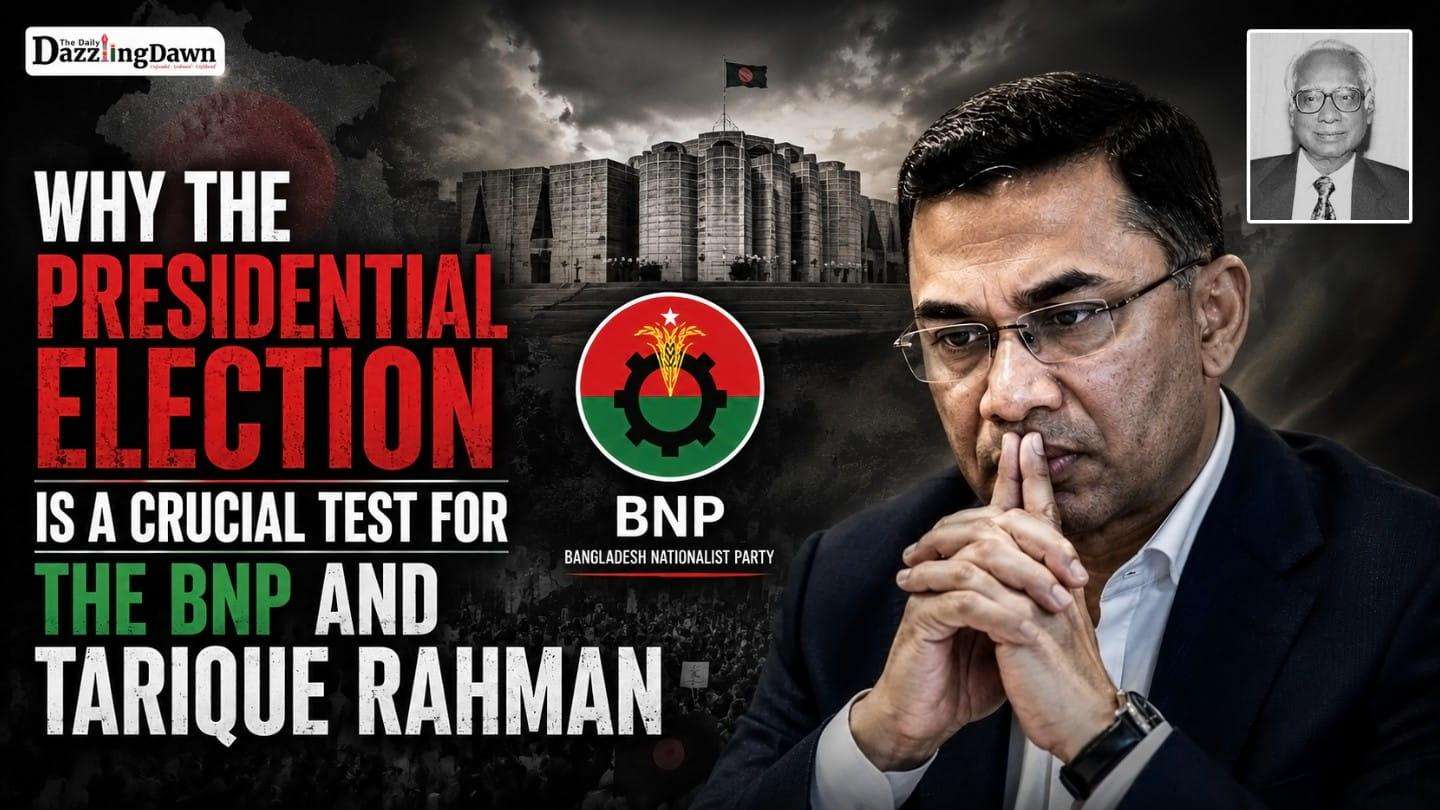
However, the true depth of India's strategy lies in what happened away from the cameras. The unprecedented appearance of S. Jaishankar at the funeral of Khaleda Zia—India's historical arch-nemesis—marks a seismic shift in foreign policy. For decades, the BNP was viewed by Delhi as a proxy for anti-Indian interests. Yet, Jaishankar’s subsequent meeting with Tarique Rahman, the acting chairman of the BNP, confirms that India is hedging its bets.
Diplomatic insiders suggest New Delhi has accepted the ground reality: the Awami League is electorally dead for the immediate future. To prevent Bangladesh from slipping entirely into the orbit of China or becoming a radical Islamist state, India is forced to engage with the likely victors. This is the "Dual Game." They support Hasina openly to pressure the BNP, essentially saying, "Keep our security interests in mind, or we keep the unrest alive." Simultaneously, they engage Tarique Rahman to ensure that if he takes power, he does not pivot solely to Beijing or Islamabad. It is a precarious balancing act of intimidation and engagement.
The Jamaat Factor and the Middle Eastern Axis
While the BNP attempts to rebrand itself as a centrist democratic force acceptable to the West and India, the elephant in the room remains Jamaat-e-Islami. As the largest Islamist party and a key coalition partner, Jamaat is the primary source of anxiety for New Delhi. The question of who pulls the strings of Jamaat is no longer a mystery.
Intelligence suggests that the patronage for Jamaat-e-Islami has consolidated under a Turkey-Saudi Arabia axis. Turkey, seeking to expand its neo-Ottoman influence in South Asia, provides ideological and logistical support, while elements within Saudi Arabia have historically provided the financial bedrock. For India, a BNP government heavily reliant on Jamaat is a red line. This explains the urgency of Jaishankar’s outreach to Rahman—New Delhi aims to fracture the BNP-Jamaat alliance by offering the BNP legitimacy in exchange for distancing themselves from the Turkish-backed Islamists.
The Trump Card: Washington’s Transactional Silence
Looming over this regional volatility is the stance of the United States under President Donald Trump. Unlike the previous administration, which might have prioritized human rights and "free and fair elections" above all else, the Trump White House views Bangladesh through a transactional prism of trade and containment of China.
This creates a unique opening for India. It is highly unlikely that the USA will take a stand completely opposite to India’s security interests. Trump’s "America First" doctrine aligns with strongman politics and regional stability over messy democratic transitions. If New Delhi convinces Washington that a stabilized Bangladesh—even one managed through heavy-handed Indian mediation—is better than a Chinese satellite state, the US will likely step back. Consequently, Dhaka cannot count on Washington to be a counterweight to Indian interference. The Bangladeshi Foreign Ministry’s statement expressing "shock" at Hasina’s speech may fall on deaf ears in a Washington that values alliances against Beijing more than the internal politics of Dhaka.
The Endgame
As February 12 approaches, the atmosphere in Dhaka is toxic. The Foreign Ministry has warned that Hasina’s instigation constitutes a "clear affront" and risks bilateral relations, yet India remains unmoved. New Delhi is playing a game of 3D chess: keeping the Awami League in reserve as a destabilizing force while reluctantly embracing the BNP to salvage its strategic depth. The result is a volatile frontier where the next leader of Bangladesh will not be chosen just by the ballot box, but by the complex negotiation between a fugitive in Delhi, a rising heir, and the silent nod of superpowers.


.jpg)