





.svg)
A Community Priced Out and Locked In
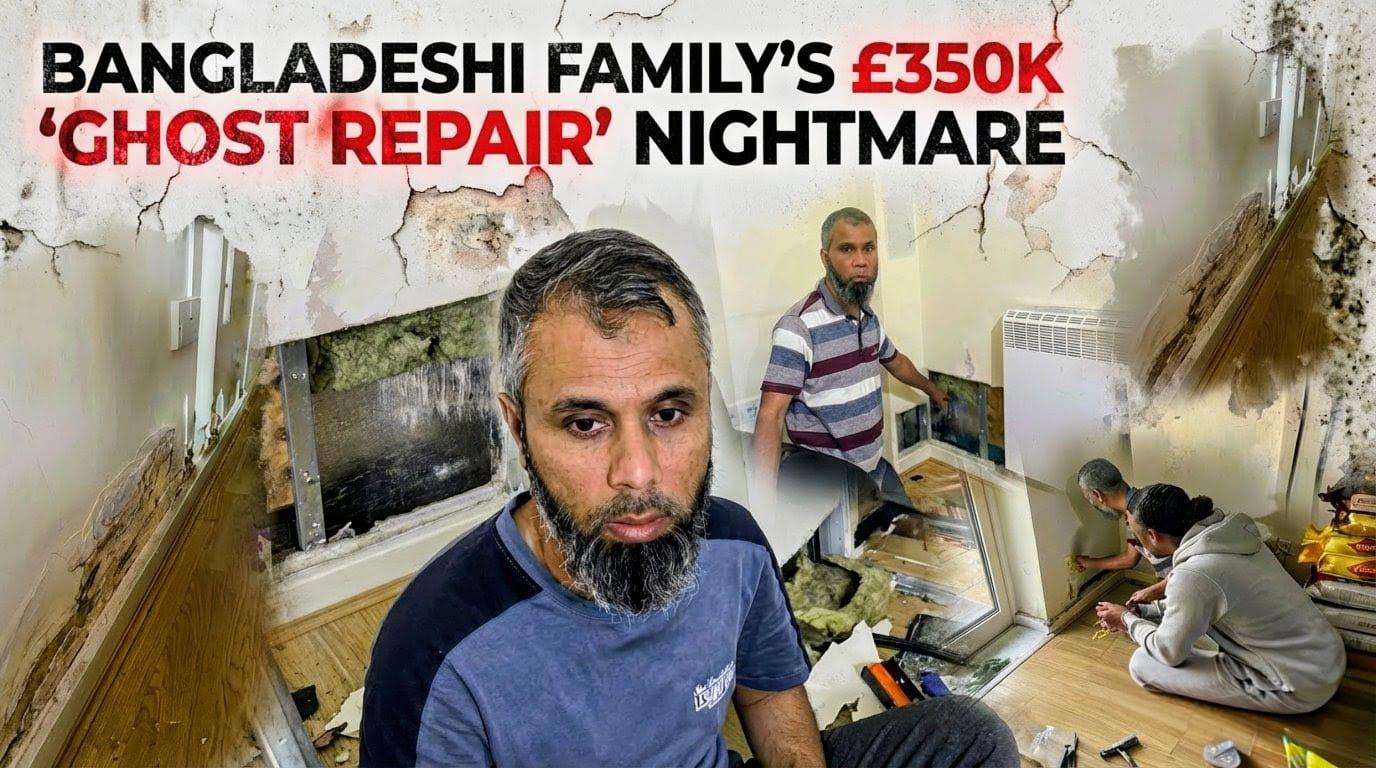
For Syed Alam, 52, the purchase of a flat in Brooklime House, Homerton, was meant to be the culmination of a lifelong struggle against the odds. Like many in the British Bangladeshi community, for whom home ownership is a culturally significant milestone yet statistically elusive, Syed poured his life savings into the property.
However, verified housing data paints a stark picture of why Syed’s nightmare is not an isolated incident but a symptom of a targeted crisis. British Bangladeshi households in London are now statistically the most disadvantaged in the property market, with only 28% owning their own homes compared to 59% of White British Londoners.
For those who do manage to buy, the financial barrier is often steeper due to the "faith penalty." Many practicing Muslims avoid traditional interest-based mortgages due to the prohibition of Riba (usury), forcing them into Sharia-compliant Islamic mortgages. These alternative products frequently demand deposits of up to 20-30%—far higher than the 5% often available to other buyers—and can end up costing thousands of pounds more over the lifetime of the loan. Syed’s entrapment in a defective home is therefore a double tragedy: a hard-won financial victory that has turned into a prison.
Ten Years of 'Ghost Repairs'
The structural reality of Syed’s home contradicts the "new-build" promise sold to him. Since moving in over a decade ago, he and his wife Sahela have raised two sons in conditions that defy modern housing standards. The family lives with gaping holes in their living room walls where contractors abandoned work, forcing Syed to tape flattened cereal boxes over the voids to stop rats from entering and to block the freezing drafts.
Investigative reports from late 2025 by the Housing Ombudsman suggest that the family’s decade of pleas fell on deaf ears due to a scandal known as "ghost repairs." It emerged that Hackney Council operated a bonus scheme that incentivized workers to mark jobs as "complete" to meet targets, even when no effective work had been done. This "perverse incentive" meant that while official records showed Syed’s home was being maintained, the reality was a decaying trap of damp, mould, and vermin.
The Wealth Gap and Systemic Neglect
The impact of this negligence is compounded by the severe wealth inequality facing Syed’s demographic. Research by the Runnymede Trust indicates that for every £1 of wealth held by a White British household, a British Bangladeshi household holds approximately 10 pence. This lack of a financial safety net means families like Syed’s cannot simply "pay to fix" structural defects that are the freeholder’s responsibility, nor can they afford the legal battles required to force action.
Syed has described feeling "trapped" not just by the walls of his home, but by a bureaucracy that exploited his limited leverage. He noted that the "language barrier" and his status as a leaseholder were used against him, with the Council initially dismissing severe damp as a result of "lifestyle"—a gaslighting tactic famously used in the tragic case of Awaab Ishak, a toddler who died from mould exposure in Rochdale.
Awaab's Law: The Turning Point?
The narrative may finally be shifting. With the robust enforcement of Awaab’s Law, social landlords and freeholders are now legally mandated to investigate hazards like damp and mould within 14 days. This legislation was born from the very community suffering the most—British Bangladeshis and Pakistanis are 12 times more likely to live in overcrowded housing than their white counterparts.
Syed Alam and his neighbours at Brooklime House are now mobilizing. No longer willing to accept "ghost repairs," they are threatening to withhold service charges—a bold strike from a community that has historically been marginalized in the housing conversation. For Syed, the fight is no longer just about a warm living room; it is about reclaiming the dignity of a community that worked twice as hard to buy a home, only to be sold a ruin.