




.svg)
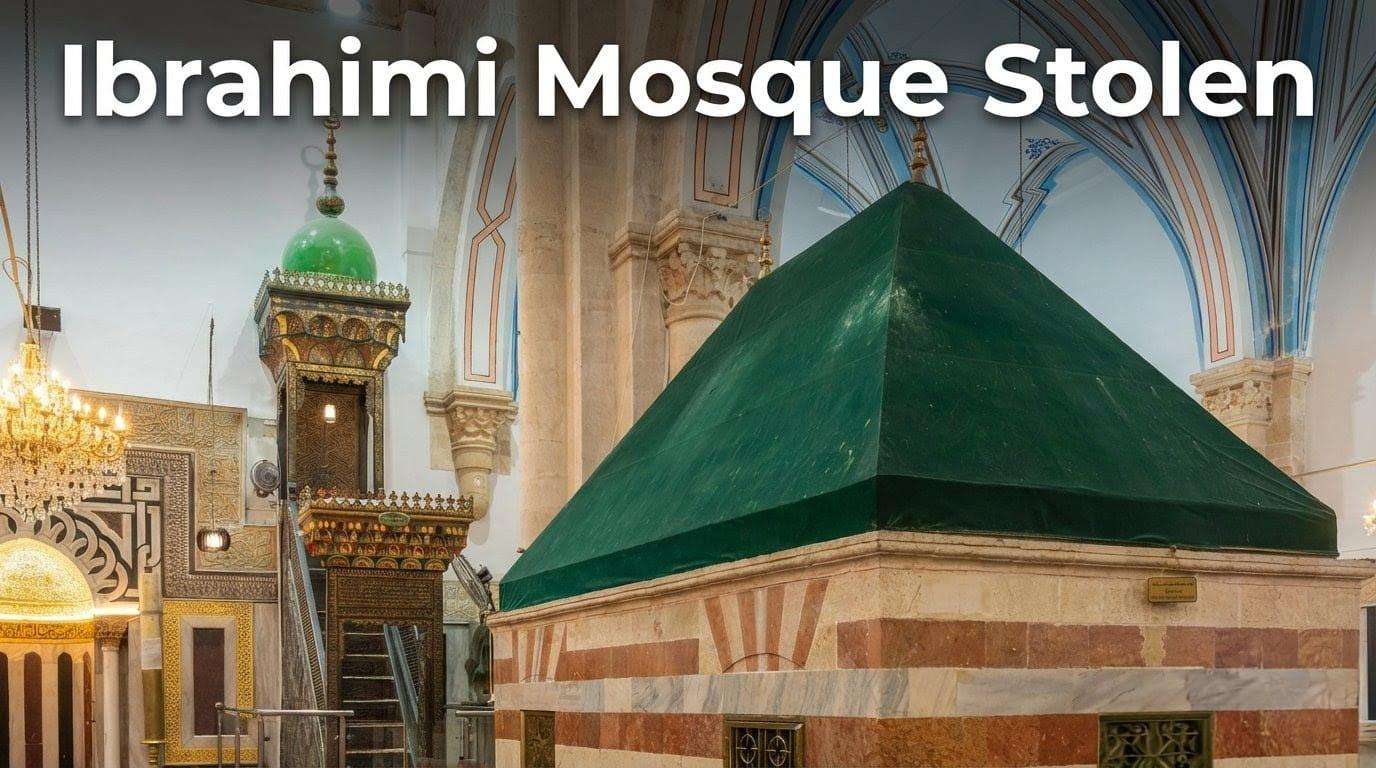
The heart of Al-Khalil is bleeding. While the world watches the devastation in Gaza, a silent but systematic war is being waged against the spiritual identity of the West Bank. The Israeli Civil Administration has unilaterally seized municipal control over the central courtyard of the Ibrahimi Mosque, a flagrant violation of the sanctity of a site that has served as a house of worship for Muslims for over 1,400 years.
This is not merely an administrative change; it is being viewed by Palestinian leaders and religious scholars as a calculated act of "spiritual cleansing." By seizing planning rights, the Occupation has effectively stripped the Palestinian Municipality and the Islamic Waqf of their legal authority to maintain the site. The immediate objective is the construction of a permanent roof over the courtyard, a project fiercely opposed by the Waqf because it fundamentally alters the historic architecture of the mosque and symbolizes the permanent entrenchment of settler control over the holy sanctuary.
Targeting the Guardians of the Faith
The strategy extends beyond physical infrastructure to the very people dedicated to protecting the mosque. In a move to decapitate the religious leadership of Al-Khalil, Occupation authorities have issued bans against the mosque’s director, Sheikh Mu’taz Abu Sneineh, and the site’s custodian, Hammam Abu Murkhiya. Barring them from entering their own place of worship is a tactic designed to leave the mosque vulnerable and leaderless in the face of increasing settler incursions.
This suppression of leadership follows the aggressive arrest of Hebron’s Mayor, Tayseer Abu Sneineh, in late 2025. These actions suggest a coordinated effort to dismantle any Palestinian administrative or religious resistance in the city, paving the way for unchecked settler expansionism.
The Blueprint for Total Control
Statements from settler leaders reveal that these actions are not sporadic but part of a grand design. Eyal Gelman, a leader of the settler enclave in Hebron, has openly declared that the seizure of planning rights is a vital step toward restoring "Jewish control over the entire area," referencing a desire to return to "ancient times." This rhetoric confirms the worst fears of the Muslim community: that the partition of the mosque imposed after the 1994 massacre was only the beginning.
The ultimate goal appears to be the complete erasure of the Islamic presence at the resting place of Prophet Ibrahim. The precedent set by the Hebron Protocol and the post-massacre partition has been weaponized. What began as a temporal division—restricting Muslim prayer during Jewish holidays—is rapidly evolving into a total spatial takeover, where the sound of the Adhan is silenced and the faithful are locked out.
The Legacy of the 1994 Massacre Weaponized
The trauma of the 1994 massacre, where US-born extremist Baruch Goldstein gunned down 29 worshippers in prostration, continues to haunt the stones of the sanctuary. Rather than protecting the victims, the Occupation’s response over the decades has been to punish the survivors with checkpoints, closures, and the segregation of Al-Shuhada Street.
Today, figures who once venerated Goldstein now hold key ministerial positions in the Israeli government, including National Security Minister Itamar Ben Gvir, a resident of the illegal settlement of Kiryat Arba. His presence, and the frequent storming of the mosque by government officials, signals that the extremist fringe has become the state policy. The mosque is no longer just under military occupation; it is being held hostage by an ideology that seeks to rewrite history.
What Comes Next: The Looming Battle for Sovereignty
The situation is rapidly approaching a boiling point. With the "legal" veneer of the Civil Administration’s seizure, the next phase is expected to involve heavy construction that will physically alter the mosque’s status as a World Heritage Site. Palestinian legal teams are petitioning the Supreme Court, citing UNESCO’s 2017 ruling that the site belongs to the State of Palestine, but confidence in the Israeli judicial system is non-existent among the local population.
Furthermore, there are alarming reports regarding an Israeli narrative promoting an "Emirate of Hebron"—a divide-and-conquer strategy aimed at severing Hebron from the rest of the Palestinian national fabric. By isolating local sheikhs and pressuring them to secede from the Palestinian Authority, the Occupation seeks to fracture Palestinian unity and legitimize their hold on the city under the guise of local governance.
The international community, including Qatar, Turkey, and the UAE, has issued condemnations, but without tangible diplomatic pressure or sanctions, the status quo is being obliterated. As the roof is built and the doors are barred to Waqf officials, the Ibrahimi Mosque stands as a testament to resilience, waiting for the global Ummah to move beyond words and act before the keys to Al-Khalil are lost forever.



_2.jpg)