






.svg)
For thousands of Bangladeshi expatriates living in the UK and USA, February is the prime season for a heartwarming homecoming. The winter weather is mild, weddings are in full swing, and the countryside offers a nostalgic escape from the hustle of London or New York. However, a tragedy confirmed by the World Health Organization (WHO) this week has exposed a terrifying hidden danger that specifically threatens visitors seeking a taste of "home."
A woman in the Naogaon district of Rajshahi Division has died after contracting the deadly Nipah virus, a pathogen with a chilling mortality rate of up to 75 percent. The culprit was not a mysterious chemical or a weapon, but Khejur Rash—fresh, raw date palm sap. This sweet, cold delicacy is a winter staple and a massive draw for returning diaspora members who crave the authentic flavors of their childhood. Health experts are now warning that this exact nostalgia is what makes international visitors uniquely vulnerable. While locals may be aware of recent outbreaks, visitors arriving from abroad often lack current immunity context and may consume the sap assuming it is safe, unaware that it may be contaminated with the saliva or urine of infected fruit bats.
A Deadly Homecoming
The victim, aged between 40 and 50, fell ill on January 21 with fever and severe neurological symptoms before passing away. Her death was confirmed as a Nipah infection on January 29, just days after she consumed raw date palm sap. This incident is particularly alarming because it coincides with a similar flare-up across the border in India’s West Bengal, where two healthcare workers were recently infected.
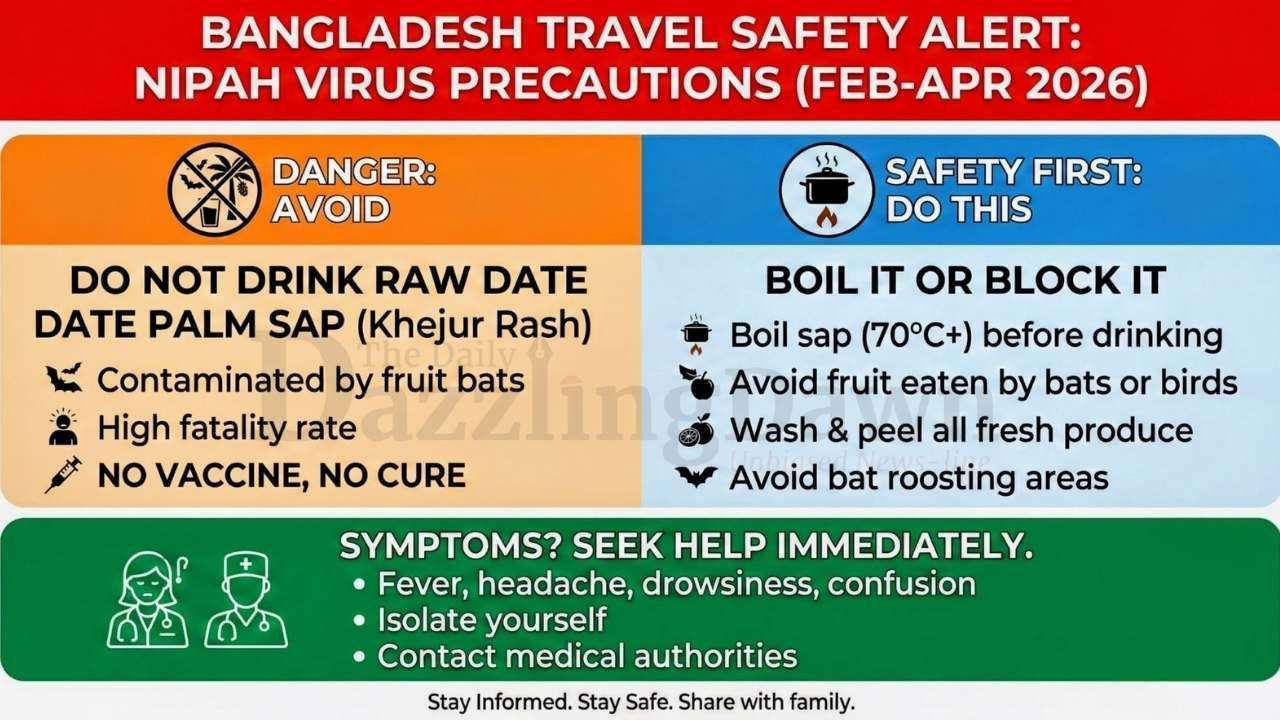
For families travelling from the West, the risk is compounded by a false sense of security. The virus incubates silently for 4 to 14 days, meaning a visitor could contract the disease in a rural village and only show symptoms after boarding a flight back to Manchester or Queens. The WHO has noted that while the global risk remains low, the personal risk to those consuming this specific drink is catastrophic. There is no vaccine and no cure. The only line of defense is total avoidance of the raw sap.
The "Boil It or Block It" Rule
The terrifying reality of the Nipah virus is its transmission route. Fruit bats, which carry the virus without getting sick, roost in date palm trees and drink from the clay pots set up to collect the sap overnight. In doing so, they contaminate the liquid. When humans drink this raw sap the next morning, the virus jumps species with lethal results.
To prevent a tragedy, travelers must adopt a zero-tolerance policy. If you are visiting Bangladesh, do not drink raw date palm sap under any circumstances. The viral threat is neutralized only by heat; the sap must be boiled at temperatures above 70°C to be safe. Furthermore, travelers should avoid eating partially eaten fruits found on the ground and must thoroughly wash and peel all fresh produce. Avoiding areas with heavy bat populations is also critical. If you or a family member develop flu-like symptoms, drowsiness, or confusion after a trip to rural Bangladesh, immediate medical isolation is required.
What Happens Next?
Authorities are currently in a race against time. The "Nipah season" in Bangladesh typically runs from December to April, coinciding with the sap harvest. This means the danger window is still wide open. The WHO and local health officials have traced 35 contacts of the deceased woman, all of whom have tested negative so far, but surveillance has been ramped up across the Rajshahi Division and border regions near India.
For the next two months, the Directorate General of Health Services is expected to enforce stricter monitoring in the "Nipah Belt" districts. Travelers should expect heightened screening and must stay updated on local health advisories. The message is stark but simple: the price of a glass of raw juice could be your life. Until the season ends in April, the safest tradition is the one you decline.