






.svg)
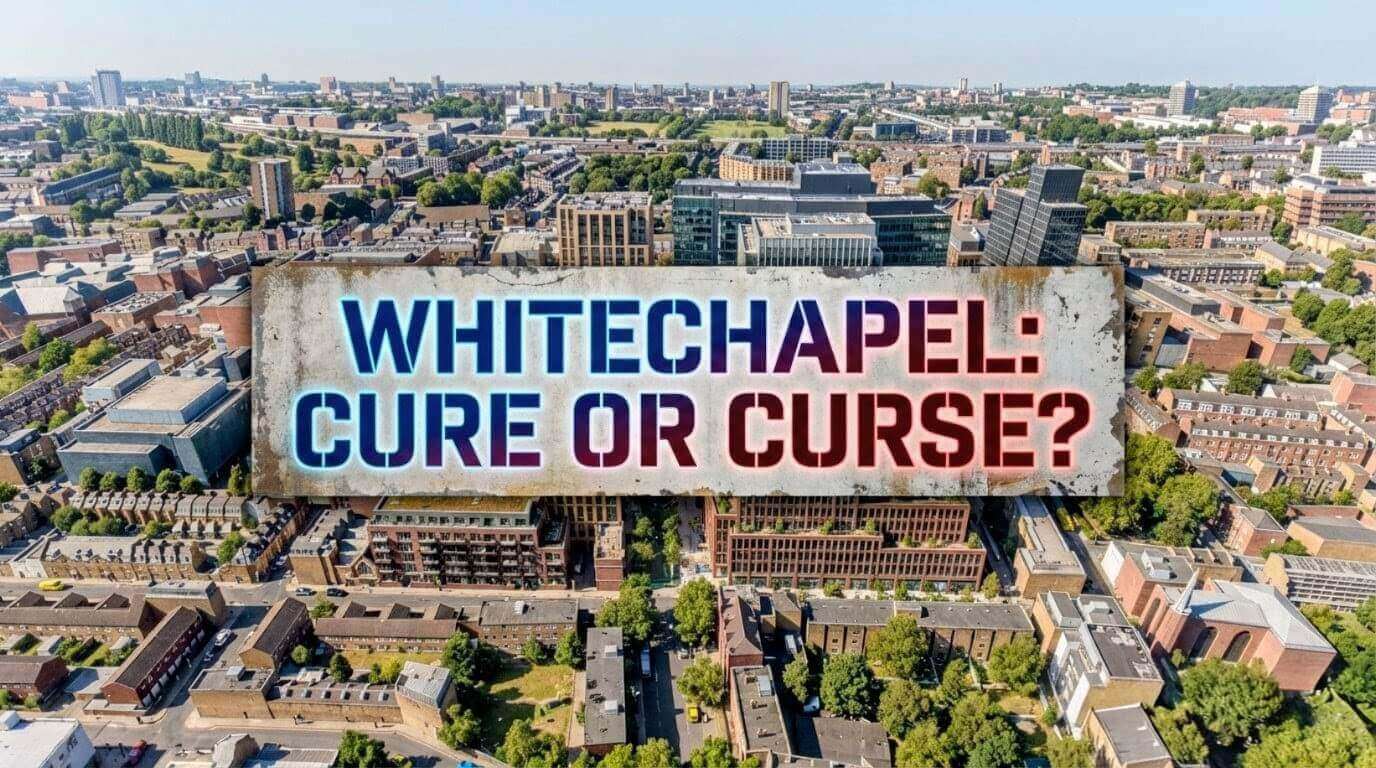
Whitechapel’s £750m ‘Life Science’ Gamble: Will Locals Pay the Price for London’s Newest Mega-Hub? Whitechapel is bracing for a seismic shift as a massive £750m development threatens to rewrite the DNA of the historic East End under the guise of medical innovation, Daily Dazzling Dawn realised.
The True Cost of a Decade of Disruption-While the glossy artist impressions from BGO and PLP Architecture depict a utopian vision of greenery and glass, the reality facing Whitechapel residents is far grittier. The proposal, part of the Barts Life Science Cluster, outlines a demolition timeline set to commence in 2027, triggering a staggering ten-year construction window.
For a community already navigating the intense footfall of the Royal London Hospital and the recent upheavals of the Elizabeth Line construction, this promises a fresh decade of dust, noise pollution, and logistical chaos. Local critics are raising alarms about the irony of a "health campus" causing prolonged environmental stress next to one of the capital's busiest hospitals. The sheer scale of the 1 million sq. ft development implies heavy goods vehicles and road closures in an area where air quality is already a critical concern. For the families living in the shadow of the proposed site, the promise of a "green garden" on Philpot Street may feel like a poor consolation prize for ten years of living in a building site.
The Gentrification Trojan Horse & The Threat to "Banglatown"- The headline promise of the development is housing for NHS key workers—a move ostensibly designed to alleviate the staffing crisis. However, housing analysts warn that such high-spec developments often act as hyper-accelerants for local gentrification.
This danger is particularly acute for the British Bangladeshi community, for whom Whitechapel is a cultural and spiritual home. By injecting a massive hub of AI, robotics, and MedTech enterprises into the heart of a working-class borough, the project creates a "wealth shock."
Commercial Displacement: As high-salaried tech workers move in, local businesses—traditional curry houses, fabric shops, and community grocers—face soaring rents and a pressure to pivot to "luxury" services.
The "Affordable" Myth: While developers tout that 50% of homes will be "affordable social rent" or salary-capped, in London's property market, "affordable" often remains out of reach for existing long-term residents. There is a palpable fear that Whitechapel is being redesigned not for its current community, but for a transient class of tech professionals. This risks creating an exclusive enclave that pushes traditional East Enders and multi-generational Bangladeshi families further to the margins.
Privatization of Public Good-The proposal makes much of its "publicly accessible" ground floor, featuring a café, foyer, and event space. Yet, urban planners criticize these as "pseudo-public" spaces—areas that appear open but are privately owned, surveyed, and controlled.
The economic mismatch is stark. The flexible workspaces are reserved for health-tech and diagnostics companies. Unless there is a massive, binding commitment to training local youth, the high-quality jobs will go to outsiders, while locals are relegated to servicing the buildings. Furthermore, the "amenity spaces," including the headline-grabbing rooftop running track and panoramic views, are explicitly designated for NHS staff and building tenants. This reinforces the narrative of a two-tier Whitechapel: one for the new elite utilizing the skyline, and another for the locals dealing with the density and shadow at street level.
The Approvals Battle-The submission of these plans marks only the beginning of a contentious planning battle. The project sits with the Tower Hamlets planning committee, where the focus will now shift to Section 106 agreements.
The Demands: Residents and advocacy groups must demand more than just "consultation." Key demands will likely include strict rent caps that match local incomes (not London-wide averages), binding quotas for local youth apprenticeships in the new tech sector, and guarantees that "public spaces" remain truly public, not security-patrolled private zones.
If the green light is given, the clock starts ticking toward the 2027 demolition. The coming months will reveal whether this £750m giant will be a lifeline for the NHS or a wrecking ball for the local community spirit.