




.svg)
The UK’s road network has entered a new era of automated surveillance as artificial intelligence and next-generation ANPR systems take over the role of the traditional traffic warden.
The AI Surveillance Explosion Across Key Cities
A nationwide shift toward "smart" enforcement has seen high-tech AI cameras officially go live across a vast number of regions, including Greater Manchester, Sussex, Durham, and Kent. These are not your standard speed cameras; new systems like the "Vector-SR" and "Redspeed Sentio" use 4D radar and AI image analysis to peer through windscreens, automatically detecting seatbelt violations and mobile phone use even at high speeds. In London, Transport for London (TfL) has launched its "London on the Move" strategy, deploying over 1,000 AI-powered VivaCity sensors to monitor everything from bus lane blocking to "near-miss" incidents with pedestrians.
Local Councils Weaponize Moving Traffic Powers
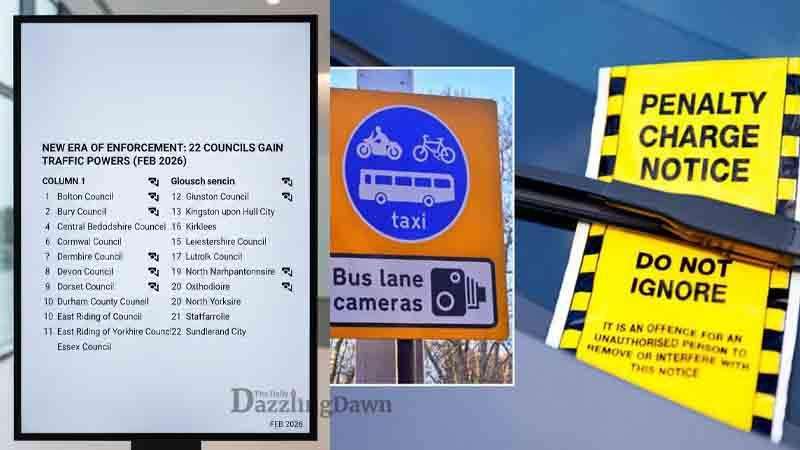
The legislative landscape has shifted permanently as more than 73 local authorities outside London have now been granted "Moving Traffic Enforcement" (MTE) powers. This allows councils in cities like Liverpool, Birmingham, and Coventry to issue penalty charge notices (PCNs) for infractions that once required a police officer to witness. Liverpool has recently activated cameras across the city centre, specifically targeting Lime Street bus links and banned U-turns. Meanwhile, Kent and Medway have rolled out extensive ANPR networks covering over a dozen key yellow box junctions where "accidental" stops now trigger automatic £70 fines.
The Rise of High-Stakes School Zone Enforcement
The newest frontier for automated fines is the "School Street" zone, where enforcement has intensified following the return to education this year. Councils are now using time-based ANPR cameras to lock down residential roads during drop-off and pick-up hours. Unlike standard road rules, these zones are often invisible to older Sat-Nav systems, creating a lucrative trap for unsuspecting parents and delivery drivers. Areas like Merton and Liverpool are leading the charge, with AI systems programmed to distinguish between residents and unauthorized through-traffic, leaving no room for human error or "just a minute" excuses.
The Future: Predictive Policing and Insurance Links
What’s coming next is the integration of this AI data with wider enforcement networks. Industry experts indicate that the next phase will involve "live data sharing," where persistent traffic violations caught on council cameras could be flagged directly to insurance companies, potentially spiking premiums in real-time. We are also seeing the introduction of "LitterCams" and noise-detecting cameras in urban hotspots. For motorists, the "Highway Code refresher" is no longer a suggestion—it is a financial necessity, as the digital eyes monitoring our roads become faster, more accurate, and entirely unavoidable.