





.svg)
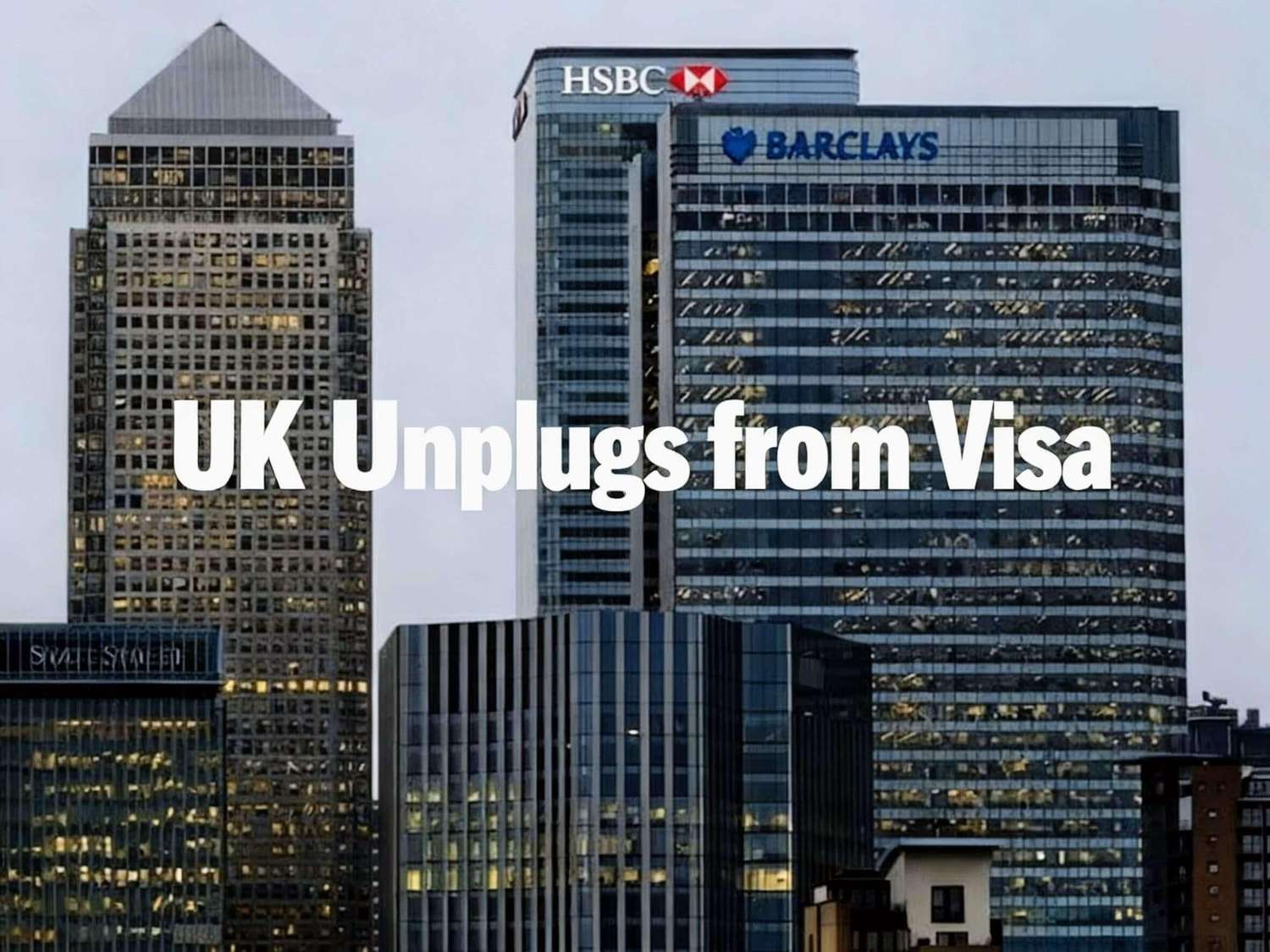
The United Kingdom is moving to insulate its domestic economy from foreign political leverage by developing a homegrown "sovereign" payment network, Daily Dazzling Dawn realised.
This Thursday, Barclays UK Chief Executive Vim Maru will chair a high-stakes assembly of the nation's most powerful financial institutions, including Lloyds, NatWest, and Nationwide. The objective is the formal activation of DeliveryCo, a dedicated entity tasked with stripping away the UK's near-total dependence on US-based payment rails. Currently, a staggering 95% of all British card transactions flow through Mastercard and Visa. While these American giants remain participants in the discussions, the project represents a strategic pivot toward "Account-to-Account" (A2A) technology, which allows money to move directly between bank accounts without requiring an overseas intermediary.
The urgency surrounding this initiative has intensified following recent geopolitical volatility and the potential for aggressive "America First" trade policies. While British officials often frame the project as a technical upgrade for "operational resilience," the underlying reality is a drive for national autonomy. By creating a domestic alternative, the UK ensures that its internal commerce remains functional even if transatlantic relations face friction or if international payment networks are ever leveraged as tools of diplomatic pressure. This move mirrors a growing "European Airbus for payments" sentiment within the EU, signaling a global shift where major economies view payment infrastructure as a matter of national security rather than just commercial convenience.
The immediate next steps involve the Bank of England finalizing the technical blueprints for the infrastructure, which will be handed to DeliveryCo’s private-sector leadership by 2027. Unlike previous slow-moving iterations of this plan, the current timeline aims for a fully functional national system by 2030. To accelerate this, the government is expected to introduce streamlined regulatory frameworks that incentivize retailers to adopt the new system through lower transaction fees compared to traditional card networks. This transition would not only secure the economy against external shocks but also position the UK as a global leader in next-generation financial technology.
Beyond domestic security, a successful UK-owned payment rail could fundamentally alter the global financial landscape. If the UK proves that a major economy can successfully bypass the traditional card duopoly, it provides a template for other nations to follow, potentially decentralizing global financial power. For the British consumer, this shift promises a future where the ability to buy groceries or pay rent is protected by domestic law and infrastructure, entirely decoupled from the political climate of foreign capitals.