




.svg)
New inquiry identifies foreign-backed "communicative inversion" as the primary driver behind the 2022 Hindu-Muslim unrest.
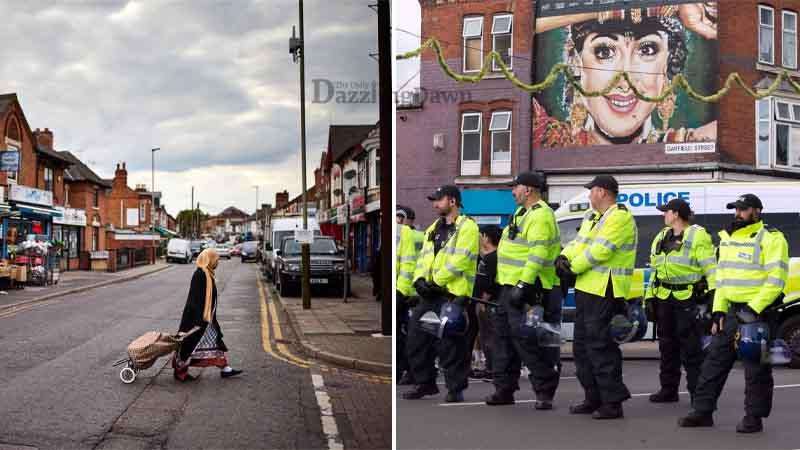
The 2022 Leicester unrest was a landmark failure of local governance that allowed global digital actors to transform a British city into a geopolitical battlefield, according to the final independent inquiry report released today, February 23, 2026.
The Ethnic Tapestry: From East Africa to the East Midlands
To understand the 2022 fracture, one must look at the specific origins of the communities involved. The Hindu community in Leicester is predominantly of East African Asian origin—specifically "twice-migrants" who fled Uganda and Kenya in the 1970s. This group, largely of Gujarati heritage, brought a distinct identity rooted in resilience and entrepreneurship. Conversely, the city’s Muslim community is a diverse mosaic, including families with direct roots in Pakistan’s Mirpur region and Gujarat, India, as well as more recent arrivals from Somalia and the Middle East. For decades, these groups co-existed in a "Leicester Model" of multiculturalism that masked underlying ideological shifts being imported from the Indian subcontinent.
The "Vacuum of Leadership" and Policing Gaps
The 200-page report, Better Together: Understanding the 2022 Violence in Leicester, is the most comprehensive investigation to date, revealing that no significant intercommunal meetings have taken place since the violence occurred. Researchers from SOAS and the LSE, chaired by Professor Juan Méndez, found "no evidence of leadership" from Leicester City Council and Mayor Peter Soulsby, noting that repeated attempts to involve the mayor in the inquiry were declined. Leicestershire Police were also criticized for "major gaps" in intelligence and a fundamental lack of understanding of communal dynamics, which allowed polarising narratives to fill the vacuum for over three years.
Communicative Inversion: The Disinformation Blueprint
The report identifies "communicative inversion" as the primary tactic used by agitators. This involves flipping the roles of aggressor and victim to justify retaliatory violence. Digital ethnography revealed that roughly 50% of the 200,000 tweets analyzed during the peak of the violence were geo-located to India. These accounts utilized hashtags like #HindusUnderAttack to amplify local incidents to a global audience within minutes. On the ground, this translated to a "victimhood complex" where both Hindu nationalist and political Islamist actors sought to inflame divisions for political ends, though the report notes Hindu nationalist groups often possessed greater organizational resources.
What Happens Next: The Lord Austin Review and Policy Shifts
The focus now shifts to the government’s next move as it reviews these findings alongside a separate, ongoing review chaired by Lord Ian Austin. The inquiry warns that community coexistence is "increasingly fragmenting" due to new migration patterns and the importation of "communalism." The most immediate recommendation is the creation of a permanent "Community Unity Forum" and specialized training for police to decode sectarian symbols. Without these interventions, experts warn that future international flashpoints—particularly those between India and Pakistan—will continue to trigger unrest on British streets.