.jpeg)


.svg)
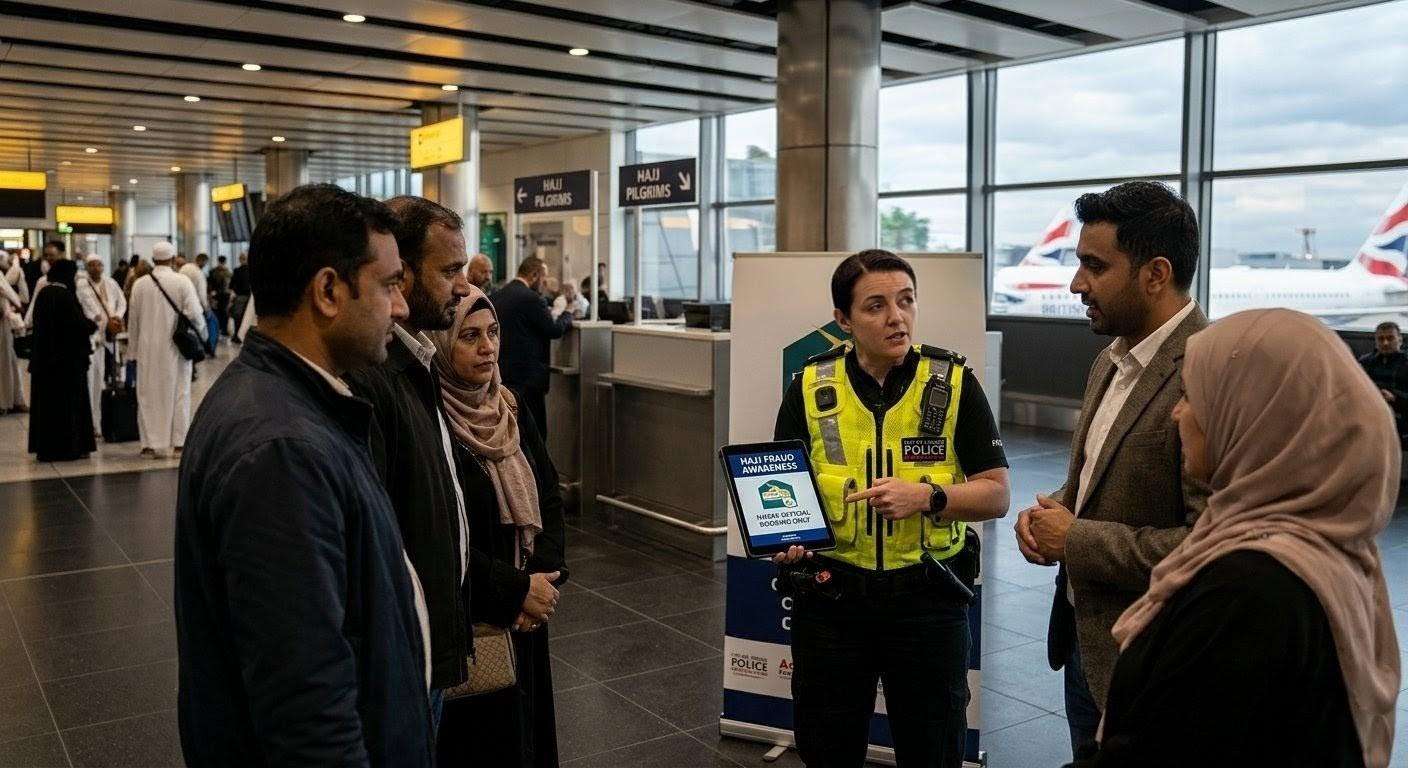
The City of London Police and national community advocates have launched an urgent safety offensive to protect the thousands of British Muslims preparing for the 2026 Hajj season.
Securing the Spiritual Journey Against Rising Threats
As the global pilgrimage landscape shifts toward digital-first platforms, a new wave of sophisticated travel scams has emerged, specifically targeting the UK’s 25,000 annual pilgrims. Detective Chief Inspector Kevin Ives of the City of London Police warns that these financial crimes are uniquely devastating because they exploit deep religious devotion. Fresh data reveals that while reported losses exceeded £195,000 last year, the true figure is likely in the millions due to a chronic under-reporting rate of only 3%. The next phase of police strategy involves a high-profile partnership with Faraaz Noor to ensure that every traveler, particularly those aged around the average victim age of 42, understands that a "deal" found on social media is often a gateway to identity theft or total financial loss.
Navigating the Dual-National Passport Strategy
A significant and growing segment of the UK pilgrimage contingent includes British Bangladeshi citizens who utilize their dual-nationality status to secure Hajj spots. While most British citizens must navigate the Saudi Ministry of Hajj and Umrah’s "Nusak" platform, many British Bangladeshis opt to use their Bangladeshi passports to tap into the specific Hajj quota allocated to Dhaka. This practice is mirrored by other dual-national communities, such as British Pakistanis and British Nigerians, who occasionally look to their home countries' quotas when UK-based slots are limited. However, experts warn that this "motherland passport" route requires extreme caution. Travelers must ensure their chosen agency in Bangladesh or their respective home country is fully registered with that nation’s Ministry of Religious Affairs. Opting for this route does not exempt one from fraud; in fact, it can complicate legal recourse if the agency fails to deliver services, as the UK’s ATOL protection typically only covers bookings made through UK-regulated entities.
Vigilance and Verification: The 2026 Survival Guide
Protection begins with a "digital-first" mindset. The primary defense against modern Hajj fraud is the exclusive use of the official Nusak portal for all bookings. Any agency claiming to bypass this system is a red flag for potential criminal activity. Pilgrims are advised to conduct rigorous background checks on any third-party service providers, ensuring they possess a valid ATOL license and are recognized by the Saudi authorities. Financial safety is best maintained by avoiding cash transactions entirely; using credit cards or protected bank transfers provides a trail of evidence and a greater chance of fund recovery through Section 75 of the Consumer Credit Act. Beyond financial safety, physical safety is paramount. The next few months will see a surge in "pre-travel seminars" across the UK where pilgrims can learn about crowd management and health protocols, which are now as essential as the visa itself.
Reporting and Response: Breaking the Silence
The Council of British Hajjis emphasizes that silence is the fraudster’s greatest ally. If a package seems suspiciously inexpensive or an agent pressures for immediate payment via unverified links, it must be reported to Action Fraud immediately. For those who have already fallen victim or are experiencing contract disputes with travel providers, the Citizens Advice Consumer Helpline and Birmingham Trading Standards offer dedicated support. Law enforcement’s ability to dismantle these international fraud networks depends entirely on the data provided by the community. By reporting even small-scale scams, pilgrims protect not only their own journey but the safety and financial security of the entire British Muslim community.


.jpg)