






.svg)
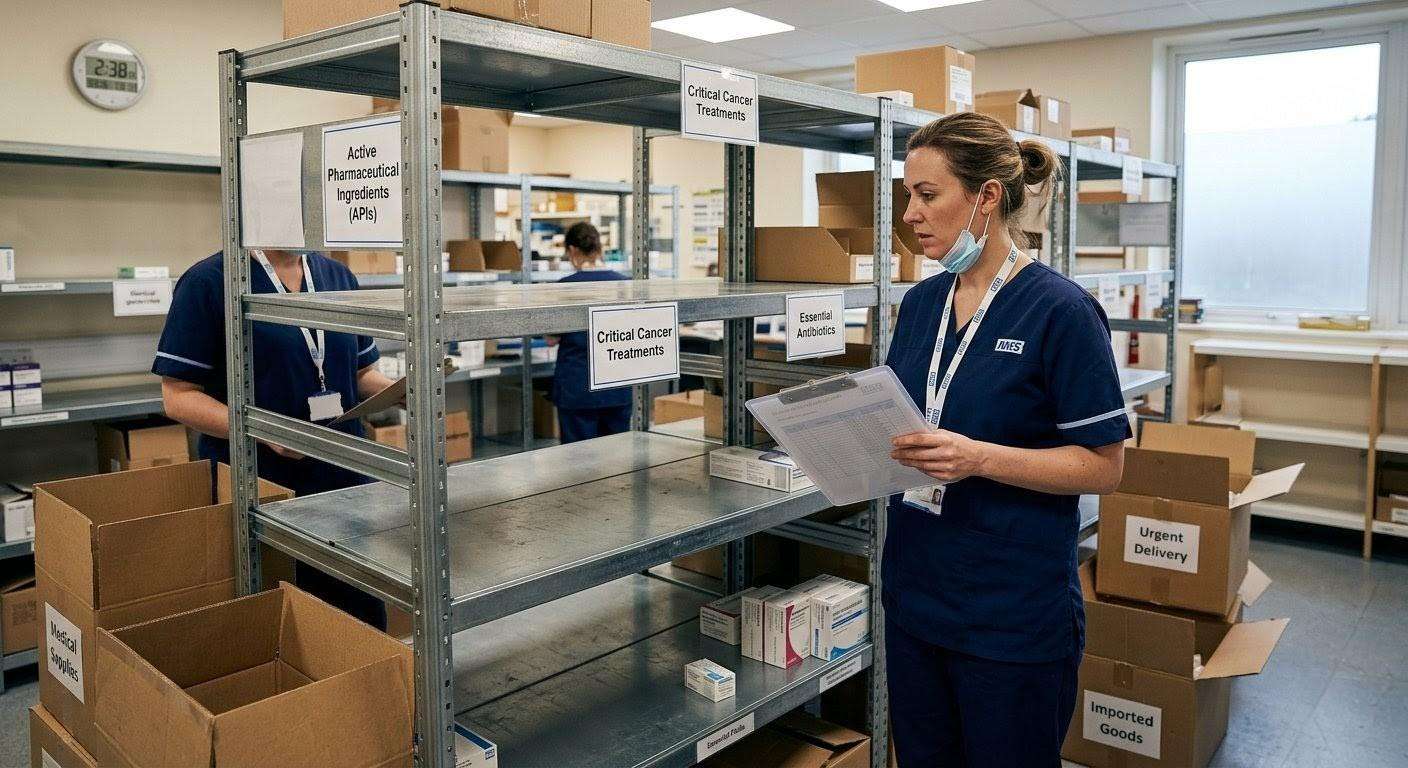
UK trade officials and health leaders are quietly preparing for a potential "buffer break" as the maritime blockade in the Gulf enters a critical second month. While the government has previously downplayed immediate risks, internal data now suggests that the current 6-to-8-week safety net for essential medicines is being eroded faster than anticipated due to a near-total cessation of traffic through the Strait of Hormuz.
New Supply Chain Vulnerabilities
Beyond the widely reported shortage of painkillers and cancer drugs, industry insiders are now flagging a secondary crisis: a lack of high-purity helium and petrochemical feedstocks. Helium is vital for the operation of MRI scanners in NHS hospitals, and the disruption of shipments from Qatar—one of the world's largest producers—could lead to the "quencing" or shutdown of diagnostic equipment. Furthermore, shortages in methanol and ethylene are beginning to affect the production of medical-grade plastics, threatening the supply of sterile syringes, IV tubing, and protective gowns.
The India-UK Freight Crisis
While India remains the "pharmacy of the world," the logistical cost of bypass routes has hit a breaking point. For the first time, some Indian manufacturers have signaled they may suspend shipments of low-margin generic drugs to the UK because the "Cape of Good Hope" surcharge—adding $1 million in fuel per voyage—exceeds the total value of the cargo. This puts 85% of the NHS’s medication volume at risk, as generic manufacturers typically operate on razor-thin margins and cannot absorb the 1,000% spike in maritime insurance premiums.
What Happens Next?
The Department of Health and Social Care is expected to trigger "Serious Shortage Protocols" (SSPs) as early as next week. This would allow pharmacists to swap prescribed brands for available alternatives without consulting a GP, a move designed to stretch remaining stocks. Concurrently, the NHS is bracing for "Category H" price hikes, where the cost of common medications like Omeprazole and Doxazosin is expected to rise by double digits to account for the skyrocketing air-freight fees, which have already doubled since the conflict began.


_2.jpg)


.jpg)