





.svg)
The long-running international pursuit of a sophisticated underworld kingpin has reached its conclusion with a landmark 20-year sentence that signals a new era of global law enforcement cooperation.
The Fugitive Journey and Hidden Identity
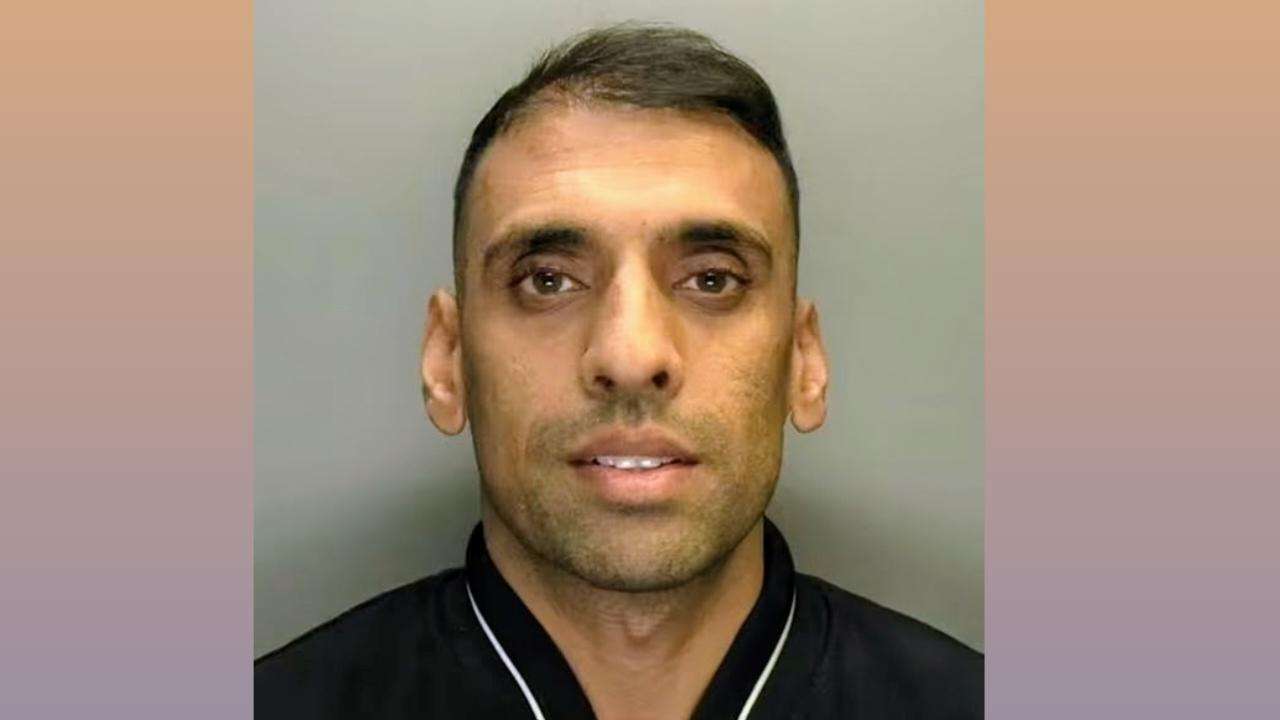
Ritesh Patel, a 43-year-old British national of Indian heritage, had long attempted to insulate himself from UK law by operating from the luxury hubs of Dubai. While his criminal network flourished across Cardiff, Newport, and Northern England, Patel maintained a persona of a legitimate businessman, even establishing a vehicle recovery firm named 'Mr Recovery.' Investigators have now revealed that this company was a front for a sophisticated logistics operation, involving the modification of recovery trucks and fake NHS Patient Transport vans with high-tech "hides"—concealed compartments designed to bypass police thermal imaging and manual searches. His personal life was one of calculated evasion; he moved through international borders using fraudulent documentation until his luck expired in Thailand in June 2022.
The Tech-Driven Downfall
The breakthrough in the case did not come from a physical raid, but from the digital ether. Patel was a prolific user of EncroChat, the encrypted communication network once favored by the world's most powerful cartels. Following the 2020 decryption of this network by European authorities, South Wales Police and the Tarian Regional Organised Crime Unit (ROCU) painstakingly mapped Patel’s digital footprint. They discovered a hierarchy where Patel orchestrated the movement of hundreds of kilograms of cocaine and heroin from hubs in Southern Spain and Liverpool directly into Welsh communities. The level of detail in the recovered messages provided a roadmap of his entire supply chain, making his eventual guilty plea in Cardiff Crown Court a mathematical certainty.
Strategic Extradition and Legal Precedent
The road to justice was delayed by a complex legal battle in Southeast Asia. After his arrest for passport fraud in Thailand, Patel fought his return to Britain through multiple rounds of appeals. It wasn't until August 2025 that a final Thai court order cleared the way for his October return to the UK. Specialist Prosecutor Caroline Hughes told journalists that Patel is a career criminal who resumed his activities almost immediately after serving a previous sentence for similar offenses. She noted that his belief in Dubai’s lack of jurisdiction proved to be his undoing, as his travel to Thailand provided the window of opportunity for the Crown Prosecution Service (CPS) to strike.
The Next Phase: Asset Seizure and Network Dismantling
With Patel now beginning his two-decade sentence, the focus of the National Crime Agency (NCA) and Tarian has shifted toward the "Follow the Money" phase. Authorities are expected to initiate Proceeds of Crime Act (POCA) proceedings to strip Patel of the wealth generated by his "greed-motivated" enterprise. Law enforcement officials told journalists that the focus is now on identifying the remaining silent partners in the Dubai and Spanish hubs. Detective Chief Inspector Lloyd Williams told journalists that this sentence is just the beginning, as the intelligence gathered from Patel’s arrest is currently being used to target other high-level offenders who believe they are untouchable while living abroad.
Impact on Regional Security
The removal of the "NHS van" fleet is a significant blow to the logistics of organized crime in the UK. By mimicking essential services, Patel’s group had exploited the trust placed in frontline workers during a period of national pressure. The court heard that the volume of drugs moved by this specific cell contributed to a surge in secondary crimes across Wales. As the investigation enters its final stages, police are working with transport authorities to implement more rigorous verification for private contractors using liveried vehicles, ensuring that the loophole Patel exploited is permanently closed.