






.svg)
The battle over the future of higher education funding has moved to the High Court, with nine universities seeking an emergency injunction to freeze the "immediate clawback" of £190 million in student maintenance loans. Legal experts representing the institutions told journalists that they are challenging the Department for Education's retroactive reclassification of weekend-only courses as "distance learning," a move that has effectively stripped 22,000 students of their financial safety nets mid-degree. The forthcoming judicial review will determine whether the government’s sudden policy shift violates the principle of "legitimate expectation," as these courses had been approved and funded for over a decade, Daily Dazzling Dawn understand.
What happens next will be a fundamental restructuring of how "franchise" degrees are governed in England. The Office for Students (OfS) has confirmed that as of April 2026, a new "Condition E10" has come into force, requiring all institutions with subcontracted arrangements to undergo rigorous financial and academic audits. Sources close to the regulator indicate that large franchise providers with over 300 students now have until 1 July 2026 to submit formal applications for mandatory registration. Failure to meet these new standards will result in a total block on student finance for new enrolments from the 2028/29 academic year, effectively ending the current "hands-off" oversight model.
Education Secretary Bridget Phillipson has remained defiant, telling journalists that the situation is a result of "incompetence or abuse of public money" by providers who failed to adhere to long-standing regulations. However, the National Union of Students (NUS) has countered that the government is essentially punishing students for a "regulatory failure" they did not cause. While the Student Loans Company (SLC) is bound by law to recover overpayments, activists told journalists that the "accelerated" timeframe—which demands repayment regardless of current income—is pushing thousands into a "financial emergency" that could force mass withdrawals from higher education.
As the legal case progresses, the immediate financial burden has shifted to the universities. The OfS has issued a directive stating that institutions must provide "appropriate redress," including direct financial compensation and emergency hardship support, for students whose maintenance payments were blocked without warning. This sets a significant legal precedent: if the High Court rules against the government, the Department for Education may be forced to reimburse these universities for the hardship funds they are currently being compelled to pay out.
With hundreds of students expected to gather in Westminster to hand-deliver a petition to the Department for Education, the focus is now on whether a legislative compromise can be reached before the court issues its final ruling. University leaders told journalists that they "strongly reject" the idea that in-person weekend teaching can be classified alongside traditional distance learning. The outcome of this standoff will not only decide the fate of the £190 million currently in dispute but will also redefine the legal definition of "attendance" for the modern, flexible UK degree.
**Social Media Intro**: A £190m legal showdown begins as universities take the government to court to stop student loan clawbacks.
#HigherEducation #StudentFinance #HighCourt #BridgetPhillipson #UKUniNews
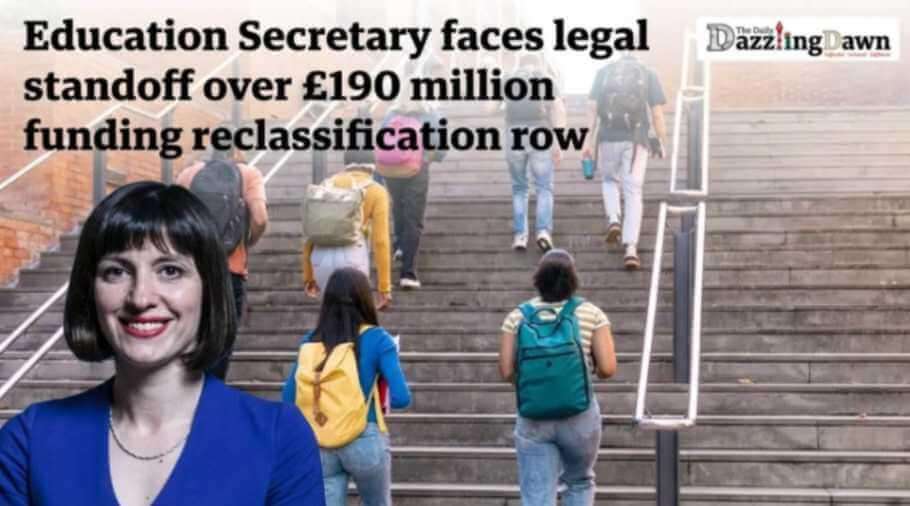
**Sub-headline**: Education Secretary faces legal standoff over £190 million funding reclassification row.
**Meta Description**: Legal proceedings enter a critical phase as nine universities seek a High Court injunction to halt the "immediate" recovery of student loans for 22,000 students.
**Meta Keywords**: Student loan judicial review, Bridget Phillipson, Office for Students registration, weekend course funding, SLC overpayment recovery.
The battle over the future of higher education funding has moved to the High Court, with nine universities seeking an emergency injunction to freeze the "immediate clawback" of £190 million in student maintenance loans. Legal experts representing the institutions told journalists that they are challenging the Department for Education's retroactive reclassification of weekend-only courses as "distance learning," a move that has effectively stripped 22,000 students of their financial safety nets mid-degree. The forthcoming judicial review will determine whether the government’s sudden policy shift violates the principle of "legitimate expectation," as these courses had been approved and funded for over a decade.
What happens next will be a fundamental restructuring of how "franchise" degrees are governed in England. The Office for Students (OfS) has confirmed that as of April 2026, a new "Condition E10" has come into force, requiring all institutions with subcontracted arrangements to undergo rigorous financial and academic audits. Sources close to the regulator indicate that large franchise providers with over 300 students now have until 1 July 2026 to submit formal applications for mandatory registration. Failure to meet these new standards will result in a total block on student finance for new enrolments from the 2028/29 academic year, effectively ending the current "hands-off" oversight model.
Education Secretary Bridget Phillipson has remained defiant, telling journalists that the situation is a result of "incompetence or abuse of public money" by providers who failed to adhere to long-standing regulations. However, the National Union of Students (NUS) has countered that the government is essentially punishing students for a "regulatory failure" they did not cause. While the Student Loans Company (SLC) is bound by law to recover overpayments, activists told journalists that the "accelerated" timeframe—which demands repayment regardless of current income—is pushing thousands into a "financial emergency" that could force mass withdrawals from higher education.
As the legal case progresses, the immediate financial burden has shifted to the universities. The OfS has issued a directive stating that institutions must provide "appropriate redress," including direct financial compensation and emergency hardship support, for students whose maintenance payments were blocked without warning. This sets a significant legal precedent: if the High Court rules against the government, the Department for Education may be forced to reimburse these universities for the hardship funds they are currently being compelled to pay out.
With hundreds of students expected to gather in Westminster to hand-deliver a petition to the Department for Education, the focus is now on whether a legislative compromise can be reached before the court issues its final ruling. University leaders told journalists that they "strongly reject" the idea that in-person weekend teaching can be classified alongside traditional distance learning. The outcome of this standoff will not only decide the fate of the £190 million currently in dispute but will also redefine the legal definition of "attendance" for the modern, flexible UK degree.



.jpg)