

.svg)
The legal infrastructure surrounding one of the world's most notorious radical preachers has entered a complex new phase as he pivots from the pulpit to the courtroom.
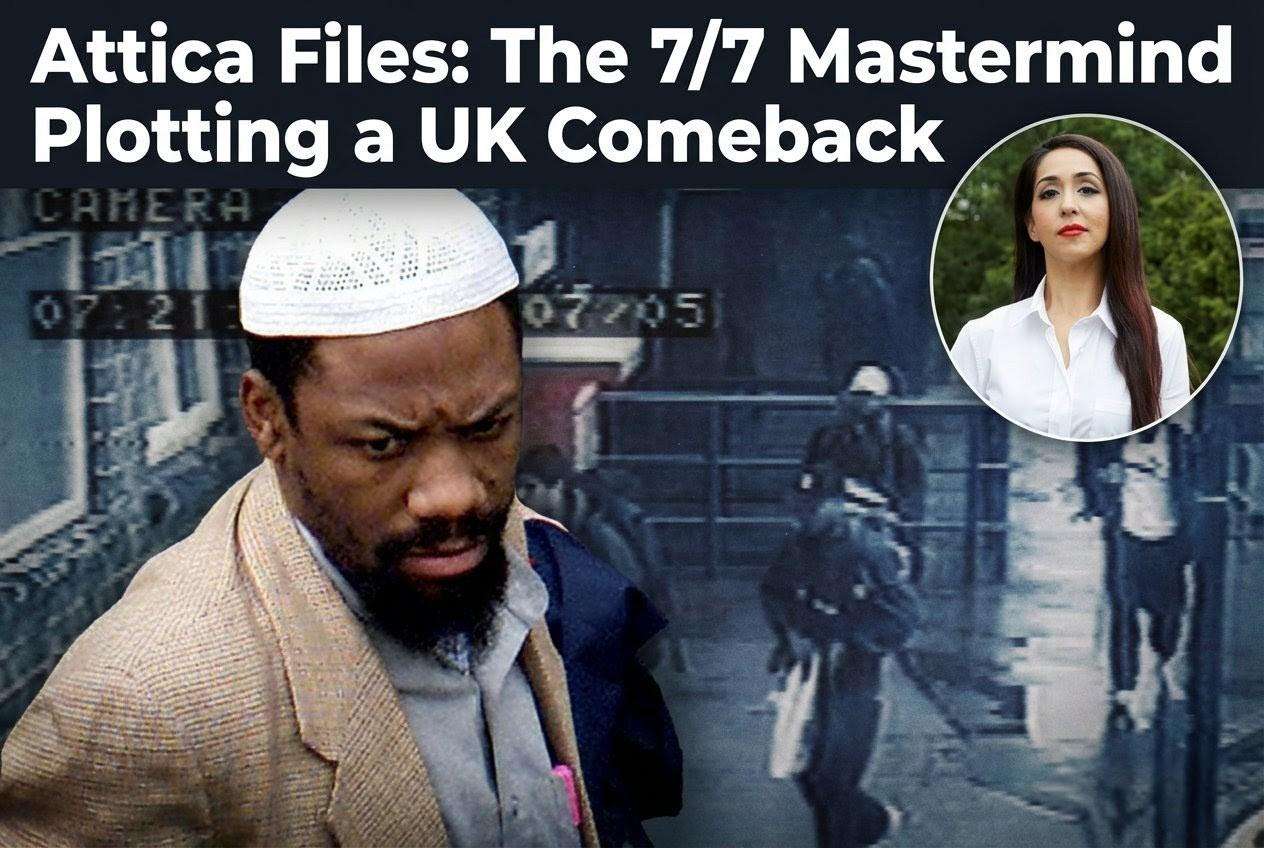
Shaikh Abdullah al-Faisal, currently serving an 18-year sentence in the United States, has initiated a high-profile $3 million lawsuit against the New York State Department of Corrections. While the cleric remains confined within the walls of the maximum-security Attica Correctional Facility, his legal challenge alleges systematic mistreatment and human rights violations, including claims of sleep deprivation. Though initial reports suggest the lawsuit has faced significant hurdles in court, the move represents a strategic attempt by Faisal to reframe his narrative from a convicted "ISIS fixer" to a "political prisoner."
Born Trevor William Forrest in Saint James, Jamaica, Faisal’s journey from a Caribbean upbringing to the center of global counter-terrorism efforts is a study in extremist evolution. After converting to Islam at age 16, he spent eight years studying at the Imam Muhammad ibn Saud Islamic University in Riyadh, Saudi Arabia, a period that deeply shaped his theological trajectory. Arriving in the United Kingdom in the early 1990s, he established a base in Stratford, East London. His time in Britain was defined by a series of high-tension sermons that eventually led to his 2003 conviction for soliciting murder and stirring racial hatred—the first time in over a century that such a charge had been successfully prosecuted in the UK.
Internal security documents now reveal the sheer scale of the "Faisal Network" that operated under the radar of British intelligence for years. Beyond his influence on Germaine Lindsay—one of the 7/7 London subway bombers—Faisal’s reach extended to Richard Reid and Zacarias Moussaoui. Recent disclosures from his time in HMP Belmarsh and HMP Long Lartin indicate that his influence was not merely rhetorical but logistical. Faisal has recently confirmed that he acted as a "jihadi matchmaker" for Samantha Lewthwaite, known as the "White Widow," facilitating her marriage to a high-ranking extremist after she fled the UK.
The focus of international intelligence agencies has now shifted to what happens next. Despite being held in one of America's most restrictive environments, Faisal continues to communicate with the outside world via monitored messaging services. He has expressed a bold, albeit highly controversial, desire to return to the United Kingdom, claiming he could serve in a "de-radicalization" capacity. This claim has been met with fierce resistance from survivors of the 7/7 attacks and security experts alike. "These are dangerous people and the less communication they have with the outside world, the better," a former counter-terrorism chief told a journalist, emphasizing that Faisal's potential for remote radicalization remains a top-tier security priority.
As the 20th anniversary of the London bombings approaches, the British government faces renewed pressure to ensure that individuals deported on national security grounds, like Faisal, remain permanently barred from reentry. Meanwhile, in New York, the focus remains on the "Attica Files"—the ongoing vetting of his communications as he attempts to use his $3 million lawsuit to maintain a foothold in the public consciousness.

.jpg)