.jpg)
_1.jpg)


.svg)
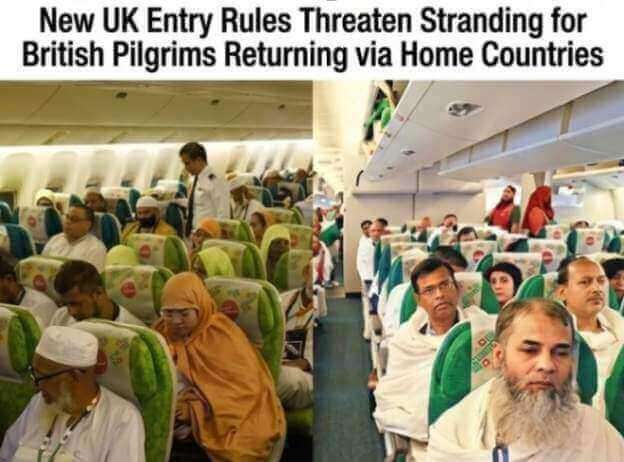
As the Hajj 2026 season officially commences with the arrival of the first flights in Jeddah, a growing number of British dual nationals are bypassing the UK’s competitive Nusuk booking system in favour of the more abundant Hajj quotas allocated to Bangladesh, Pakistan, and India. While this "home-country" route offers a virtually guaranteed pilgrimage spot, travellers are being issued urgent warnings regarding a dual-front challenge: complex new UK border digital mandates and a significant disparity in travel costs, Daily Dazzling Dawn understand.
Over the past few years, travel agencies and Hajj-Umrah service providers from various countries have been actively engaging with the British Muslim community. By hosting seminars and extensive promotional campaigns within the UK, they have successfully generated significant interest among prospective pilgrims. Furthermore, several UK-based travel agencies have also become integral partners in this collaborative process.
The Quota Advantage and the Return Journey- With the UK’s Hajj allocation for 2026 capped at just over 12,000 seats, thousands of British citizens with dual heritage are utilising their secondary passports to secure spots within the much larger quotas of their ancestral homes—such as Bangladesh’s 127,000 or Pakistan’s 180,000 allocations. Applying through these countries often guarantees a place for those who plan ahead, a certainty that is currently impossible within the oversubscribed UK system. Additionally, this route provides a cherished opportunity to visit family in their home country before or after the pilgrimage.
Cost Disparity and Financial Realities-Despite the accessibility of foreign quotas, the financial implications are nuanced. While local Hajj packages in South Asia are often significantly cheaper than the £6,000 to £12,000 typical of UK-based luxury packages, journalists have been told that the "true cost" can rise quickly. Once the price of return international flights from the UK to Dhaka or Islamabad is factored in, alongside multiple visa fees, the total expenditure can frequently exceed the cost of a direct UK-to-Saudi journey.
The Home Office has recently softened its stance on the February 2026 digital border mandate, providing a narrow window of flexibility for those caught without a current British passport. In a late-stage clarification, carriers have been informed they may—at their own discretion—accept an **expired British passport** (issued in 1989 or later) as proof of citizenship if presented alongside a valid foreign passport. However, legal experts warn this is not a legal guarantee, and travellers remain at the mercy of individual airline policies at the boarding gate.
For those choosing this route, the benefits are clear: guaranteed entry and family reunions. Yet, the logistical burden is high. Pilgrims must balance their home-country requirements with the UK’s increasingly automated "permission to travel" systems. The safest protocol remains carrying a valid British passport to ensure the transition from the home-country Hajj mission back to British soil is not met with a "denied boarding" notice.
Beyond the legal complexities of entry, logistical hurdles are already creating significant friction for those returning to the United Kingdom. Reports from previous seasons indicate that pilgrims travelling on dual nationality passports frequently face extensive processing delays, with many forced to wait for several hours at Saudi airport terminals while their documentation is verified against UK digital systems. An immigration lawyer confirmed to journalists at **The Daily Dazzling Dawn** that these bottlenecks are expected to persist as airline carriers navigate the stringent requirements of the new digital border mandate. To avoid prolonged disruptions at Makkah or Madinah departure gates, travellers are urged to keep all travel documents—both current and expired—readily accessible for inspection.
As the departure phase begins later this summer, the Home Office will closely monitor the effectiveness of the expired passport allowance. Families are urged to check their British passport validity now; while the ancestral route offers a door to Makkah that the UK cannot always provide, the digital border remains a rigid barrier for those unprepared for the return to London.
Abdul Mumin Chowdhury, an expatriate living in the United States, stated on Monday that this trend is not confined to the UK; many individuals from America have also been travelling to Bangladesh over the past few years to perform Hajj using Bangladeshi passports. He noted that the Department of Homeland Security is currently monitoring these movements. Furthermore, Mr. Chowdhury remarked that those opting for this route often receive sub-standard services that fail to meet expected quality levels.

.jpeg)