





.svg)
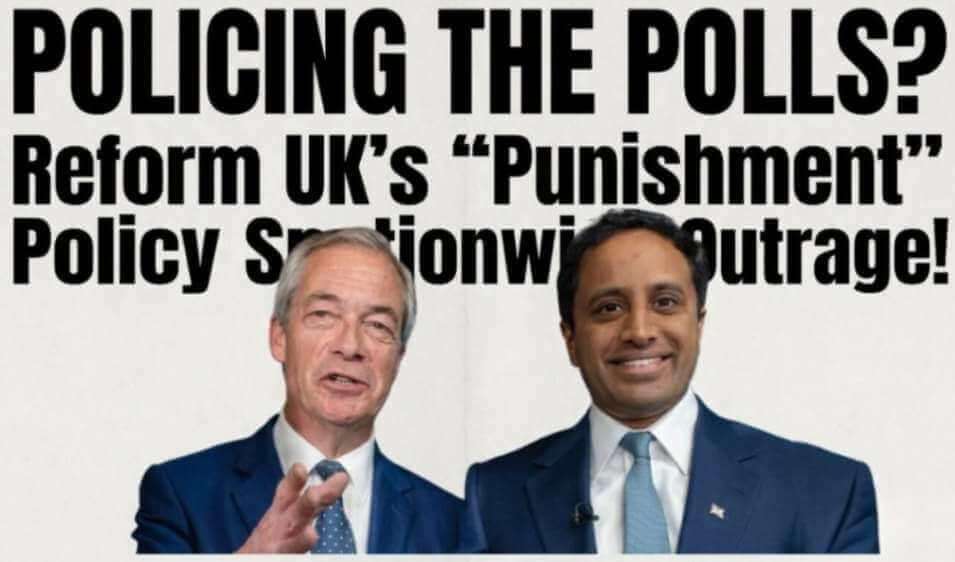
The logistical framework of British border control is being reimagined as a partisan tool, sparking warnings of a constitutional impasse. As the United Kingdom approaches the pivotal May 7 elections, a radical new doctrine in infrastructure planning has emerged, threatening to redefine the relationship between the state and the voter. An investigation by Daily Dazzling Dawn has scrutinised Reform UK’s latest "locational strategy," which proposes a prioritisation of migrant detention facilities in areas that elect Green Party representatives, while granting total exemptions to constituencies that return Reform candidates.
Zia Yusuf, the party’s home affairs spokesperson, framed the policy to a journalist as an exercise in "democratic consent," suggesting that those who support open-border advocates should host the resulting infrastructure. However, legal experts have privately warned that using public works as a weapon of political retribution would almost certainly constitute an "abuse of ministerial power." Such a policy would face immediate challenge in the High Court, as infrastructure siting must traditionally adhere to objective criteria such as transport logistics, security viability, and land suitability, rather than the contents of a ballot box.
The ambition to facilitate the deportation of up to 24,000 individuals represents a massive escalation in the UK's detention capacity. With an estimated build cost of £12bn, critics from the major parties have argued that the plan is less a viable administrative policy and more a strategic provocation designed to dominate the news cycle in the final days of the campaign.
While the party maintains a populist "worker vs. non-worker" narrative, recent data suggests a more nuanced reality for Nigel Farage’s movement. Reform supporters remain more likely to be retired than those of any other party except the Conservatives. Current polling indicates the party’s core strength is concentrated among men, particularly those from routine and manual occupational backgrounds, who make up 39% of its support base. There are, however, signs of a broadening coalition. The party has attracted a significant segment of the former Conservative base, with 29% of 2024 Tory voters now backing Reform. This coalition of the "traditionally ignored" is finding a voice in the party’s hard-line stance on national identity, though support remains considerably lower among higher managerial and professional groups (19%) than among working-class voters.
The plan to exempt Reform areas while targeting Green-voting constituencies is viewed by opponents as an "affront to democracy." High-ranking political figures told a journalist that this strategy reveals a "contempt for all voters," suggesting that the threat of local "punishment" for national voting choices undermines the principle of the secret ballot.
The proposal to house 24,000 detainees for deportation is being met with deep scepticism regarding its feasibility. Without established return treaties with a wide range of nations, experts argue that the UK would simply be creating a permanent, high-cost detention estate that fails to execute actual removals, leading to an "appalling waste of public money."
Green Party deputy leader Mothin Ali has strongly criticised the detention centre policy as a smokescreen. He told a journalist that these "abhorrent announcements" are a tactical diversion to distract the public from what he characterised as Reform’s long-term aspirations regarding the "privatisation of the NHS."
The stakes for the upcoming ballot are particularly high in Scotland and Wales, where a fragmented unionist vote could lead to unexpected outcomes. While the SNP’s support has seen a retreat from historic highs, the division between Labour, the Conservatives, and a surging Reform UK may create a path for the Nationalists to consolidate power in "knife-edge" regional seats. Polling experts have noted that Reform is emerging as the main opposition north of the border, further splitting the anti-SNP vote.
Simultaneously, the Prime Minister is facing domestic pressure over reports of a £1bn annual cost for improved single-market access. Keir Starmer has defended the logic of making contributions to EU schemes when the "benefit outweighs the cost," specifically citing the UK's participation in a €90bn loan for Ukraine. Nevertheless, for Reform UK, every pound sent to Brussels serves as further evidence for their narrative of "Brexit betrayal." As the polls open on May 7, the UK will decide if it prefers Starmer’s pragmatism or Farage’s politics of provocation.





.jpg)