.jpg)




.svg)
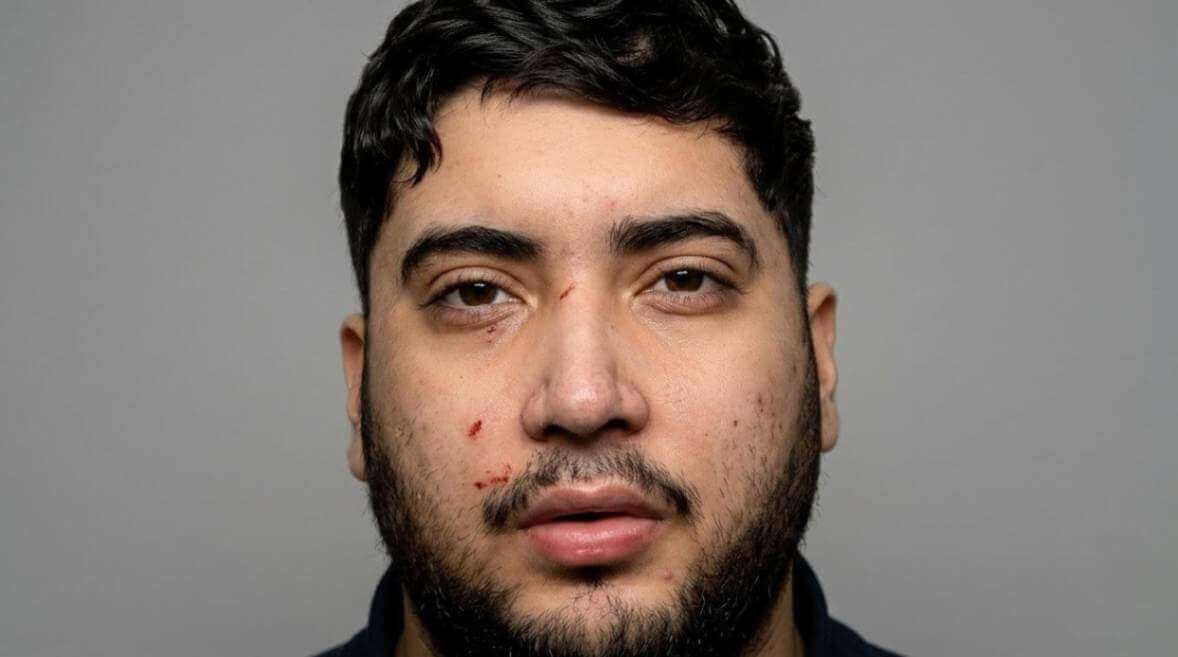
As the heavy oak doors of the Number One Courtroom at Bradford Crown Court swung shut on Hasnain Shafiq, the 23-year-old father began a sentence of 23 years and three months for the attempted murder of his wife. While the court heard the harrowing mechanics of the attack—69 stab wounds, a partly collapsed lung, and a call to a drug dealer instead of an ambulance—a portrait of the man behind the violence remains largely unexplored.
Sources close to the family have now shared critical background details with Daily Dazzling Dawn that contextualize the events leading to the early morning attack on January 27 last year. According to family acquaintances, Shafiq is of British Pakistani heritage, with his ancestral roots tracing back to the Punjab region of Pakistan. His wife, the victim in this terrifying ordeal, also shares a similar ethnic background. However, insiders suggest that the marriage, which took place in West Yorkshire, was already fracturing under the weight of cultural isolation and the untreated mental collapse of the husband.
The Shifting Sands of Identity- Unlike the superficial reporting that has merely listed addresses in Holme Wood and Warnford Grove, Daily Dazzling Dawn has learned that Shafiq’s immediate family has been grappling with a dual crisis—one of assimilation and medical negligence. The defendant’s parents, who reportedly emigrated from Pakistan in the late 1990s, reside in the Bradford district. It is understood that the family network has been rife with conflict regarding Shafiq’s deteriorating mental state in the months prior to the stabbing.
Crucially, the information gap regarding his wife’s country of origin has been filled. Verified court records indicate that while the victim resided permanently in the UK, she maintained close familial ties to the Mirpur region of Azad Kashmir. Her family, who have since rallied around her during her recovery, are understood to be devoutly religious, a detail that proved pivotal in her survival. As the court heard, the attack only ceased when the wife began to pray in Urdu—a moment described by Prosecutor Mark Kellet not just as religious, but as a psychological circuit breaker that momentarily snapped Shafiq out of his drug-induced psychosis long enough to stay his hand.
The court accepted a psychologist’s diagnosis of paranoid schizophrenia, exacerbated dramatically by non-compliance with antipsychotic medication and heavy cocaine use. However, what is not yet public—but is slated for introduction in upcoming review hearings—is the extent to which Shafiq’s delusions were specifically tied to anxieties about honor and divorce.
A source with knowledge of the ongoing probation review told Daily Dazzling Dawn: “He was convinced of an impending conspiracy against him by her family. The voices he heard weren't random; they specifically targeted his wife’s loyalty. When she asked for the divorce, it wasn’t just a request to him—it was a confirmation of the delusions.”
The Robbery Precursor: A Family in Fear- Of particular note is the theft from his bedbound aunt just three months before the attempted murder. The woman, now recovering from illness, told police that Shafiq had “eyes like the devil.” Daily Dazzling Dawn has learned that this aunt is actually the maternal aunt of Shafiq, living in the Great Horton area. She initially gave a retraction statement not merely because she was unwell, as suggested in court, but because of immense family pressure regarding the shame of prosecuting a relative.
Shafiq sold the stolen bracelet for £3,325 to a jeweller on Great Horton Road. Police sources indicate that this money was entirely spent on cocaine in the weeks leading up to the main offense, fueling the paranoid state that ultimately led to the attempted murder.
Looking ahead, the judicial roadmap for Shafiq is severe. Sentencing Judge Jonathan Rose made it explicitly clear that Shafiq is considered a “dangerous” individual. Under the terms of the sentence, Shafiq must serve two-thirds of the 23-year term—approximately 15 years and six months—behind bars before the Parole Board will even consider his release.
The next critical development will occur within the next 30 days: Shafiq will be transferred from HMP Leeds, where he is currently undergoing initial psychiatric evaluation, to a Category A high-security prison mental health unit, likely HMP Frankland or Rampton Secure Hospital, depending on the progression of his schizophrenia.
A spokesperson for the Ministry of Justice confirmed to Daily Dazzling Dawn that “high-risk offenders diagnosed with Paranoid Schizophrenia are subject to a ‘Double Risk’ assessment. If he fails to take medication inside, he will never be released.”
As the Bradford community digests this horror, the lack of intervention remains a haunting question. Neighbors on Warnford Grove described seeing Shafiq pacing the streets at 3 AM in the weeks before the attack. Yet, no formal referral was made to the Prevent program or adult social services.
The case serves as a stark intersection of Britain’s mental health crisis, the scourge of cocaine-induced psychosis in young men, and the unspoken pressures of marital breakdown in traditional South Asian households.
As Daily Dazzling Dawn went to press, the victim continues to require physiotherapy for her weakened left hand and undergoes weekly trauma counseling. She has been granted a lifelong restraining order against her husband. For Shafiq, the next hearing is not for liberation, but for determination: whether he will serve his time in a prison or a high-security hospital. The answer to that question will define British justice’s approach to the ‘insanity defense’ for the rest of the decade.