




.svg)
As voters head to the booths, the traditional dominance of the two-party system faces a sophisticated challenge from a multi-polar electorate.
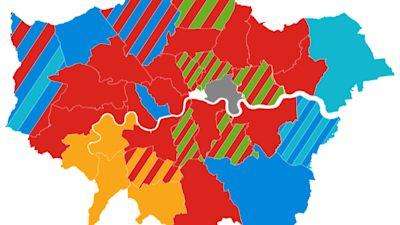
The fundamental architecture of local governance is currently undergoing a quiet but seismic shift, with today’s borough elections serving as a litmus test for a nation seemingly weary of binary choices. This investigation reveals that the narrative of a simple two-horse race has been superseded by a granular, hyper-localised political reality where the "kingmaker" status of smaller parties is no longer a peripheral possibility, but a statistical likelihood in over a dozen administrative districts.
Reliable indicators suggest a high degree of stability in the Liberal Democrat strongholds of Richmond upon Thames and Kingston upon Thames. Strategic data analysis points toward a successful retention of control in these areas, bolstered by a disciplined incumbency. Similarly, in Sutton, the Liberal Democrats appear set to benefit from a fragmented right-wing vote, where the dilution of the Conservative base provides a clear mathematical path to victory. Meanwhile, the Conservative party maintains a resilient grip on Kensington & Chelsea and Harrow, despite the latter's historical reputation for volatility. However, the most striking certainty emerging from this cycle is the transition of Redbridge into a state of No Overall Control (NoC), a precursor to the complex coalition-building that is expected to define the next four years.
Writing for *Daily Dazzling Dawn*, observers note that the Labour Party is navigating a particularly treacherous landscape, facing the prospect of substantial seat erosion. While majorities in Hammersmith & Fulham, Ealing, Hounslow, and Brent are expected to endure, they will likely do so with significantly diminished margins. The challenge in Barking & Dagenham from Reform UK, and in Merton from the Liberal Democrats, highlights a pincer movement where Labour is forced to defend its flank against both populist right and centrist liberal surges.
The most significant disruption is anticipated in the outer boroughs. Sources close to the ground suggest that Bexley and Havering are on the precipice of a historic shift, with Reform UK poised to dismantle long-standing Conservative hegemony. Should these projections hold, it would represent the first major institutional foothold for the party in local government. Concurrently, the unconventional political ecosystem of Tower Hamlets looks set to remain under the stewardship of Aspire, further cementing the trend of localised independent movements outperforming national brands.
The "Valley of Uncertainty" stretches across boroughs like Enfield, Waltham Forest, and Bromley, where the probability of No Overall Control has moved from a fringe theory to a central expectation. In Hackney, the Green Party’s momentum in the mayoral race has created a vacuum of predictability regarding the council’s ultimate composition. Even Westminster, the symbolic heart of British politics, remains a toss-up; while a Conservative recapture is whispered in certain circles, the margin for error is razor-thin.
The complexity of this election is perhaps best exemplified by the "South London Belt"—Southwark, Lewisham, and Lambeth—where a potential "traffic light" coalition of Red, Yellow, and Green interests could displace monolithic Labour control. "The signals from the ground are fundamentally inconsistent," one seasoned political analyst told a journalist, "we are seeing a rise in tactical voting that defies traditional polling models." As the count begins, the focus shifts to Barnet and Wandsworth, where the interplay between Green gains and Reform UK’s impact on the Tory base will decide whether the status quo survives or if the map is redrawn entirely.