






.svg)
A high-stakes, technology-driven restructuring of the Hajj pilgrimage is quietly unfolding across the holy sites of Islam, as Saudi authorities rapidly deploy cutting-edge artificial intelligence and unprecedented language networks to manage over two million worshippers while simultaneously navigating serious public health vulnerabilities.
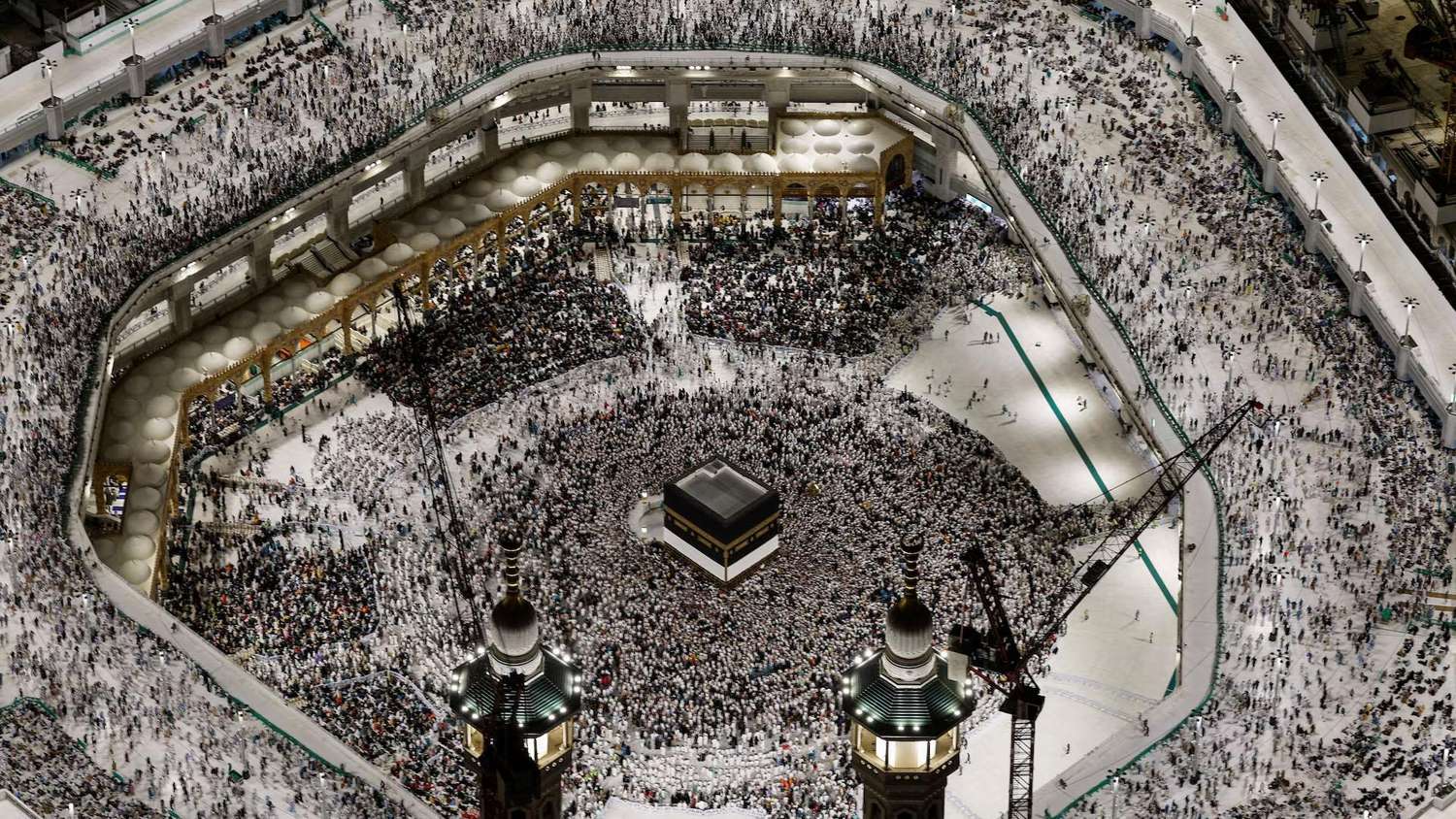
Behind the majestic scenes of millions gathering in Makkah, an investigative look into the operational infrastructure of the 2026 pilgrimage reveals a sophisticated, multi-layered strategy designed to modernise crowd management and mitigate environmental risks. At the forefront of this digital shift is the National Center for Meteorology (NCM), which has quietly integrated advanced artificial intelligence into its weather forecasting and awareness protocols.
"The primary advantage of AI lies in its ability to generate forecasts within seconds, in contrast to traditional numerical models, which require high-performance computing and complex operating systems, resulting in considerably longer processing times," Dr. Turki Habibullah, Director General of Research, Development, and Innovation at the NCM, told journalists.
While the NCM’s highly anticipated, wholly Saudi-developed AI model, Bayan, remains in its rigorous testing phase ahead of an official launch later this year, an intermediate AI system has been deployed on the ground this week. For the first time, an AI-powered service is delivering real-time audio weather forecasts in English, alongside a dedicated 24-hour "Weather Report for the Miqat Sites." This gives health and logistics agencies instant data on heat stress and road conditions as hundreds of thousands of pilgrims transition toward the tent city of Mina.
Simultaneously, the Presidency of Religious Affairs is executing its most expansive global communication campaign to date. This newspaper, Daily Dazzling Dawn, can confirm that the pivotal Arafat Day sermon—to be delivered on Tuesday by Sheikh Ali bin Abdulrahman Al-Hudhaifi from the Prophet’s Mosque—is being systematically translated into 35 international languages. The inclusion of major African languages such as Yoruba and Hausa highlights a calculated geopolitical pivot toward ensuring absolute inclusivity for non-Arabic speaking Muslims worldwide.
"This initiative is aimed at conveying the message of Islam and the content of the sermon to Muslims across the world," Sheikh Abdulrahman bin Abdulaziz Al-Sudais, Head of Religious Affairs at the Grand Mosque and the Prophet’s Mosque, told journalists. He noted that the project is designed to enrich religious content and ensure that language barriers do not diminish the spiritual peak of the pilgrimage.
Yet, beneath the seamless veneer of smart applications—such as the Anwaar app, newly updated to support nine distinct languages with real-time satellite imagery—lies a stark reminder of the physical toll exacted by the grueling journey. Medical authorities have confirmed that the operational challenges extend far beyond logistics into critical healthcare management.
In a briefing to journalists in Makkah regarding pilgrim welfare, the Head of the National Medical Team for Nigeria disclosed that four Nigerian pilgrims—all of whom were women—have tragically died during the current cycle, while at least 54 others remain hospitalised. Medical investigators tracking the fatalities revealed that the deaths were predominantly tied to severe cardiovascular stress, including sudden cardiac arrest and myocardial infarction, exacerbated by the demanding physical conditions of the climate.
As the five-day Hajj exercise officially commences on Monday, moving millions from Makkah to Mina before the crucial spiritual assembly at Mount Arafat, Saudi authorities are treating the 2026 season as a live proof-of-concept. Advisor at the Royal Court and member of the Council of Senior Scholars, Sheikh Saleh bin Abdullah bin Humaid, told journalists at the Hajj Guidance Symposium that the integration of technology and smart services is redefining a "national mission," pointing toward a future where AI and digital governance completely insulate the ancient pilgrimage from modern logistical and environmental perils.
Precision Meteorology and AI Deployment
The NCM has established a continuous stream of ten-day weather forecasts and bi-daily briefings specifically linking heat stress indicators to the operational maneuvers of civil defense and health agencies. The multi-language expansion now covers five additional regional dialects, allowing real-time alerts to reach previously isolated pilgrim demographics instantly.
Globalized Sermon Broadcast Architecture
The 35 approved languages for the digital broadcast of the Arafat Day sermon span globally critical populations, including English, French, Indonesian, Urdu, Turkish, Russian, Chinese, Bengali, Swahili, Somali, Punjabi, and Lithuanian, creating a massive, borderless digital congregation via state-affiliated streaming networks.





.jpeg)