




.svg)
Algorithmic radicalisation and right-wing divisions carve an unexpected pathway for Labour in the crucial parliamentary by-election.
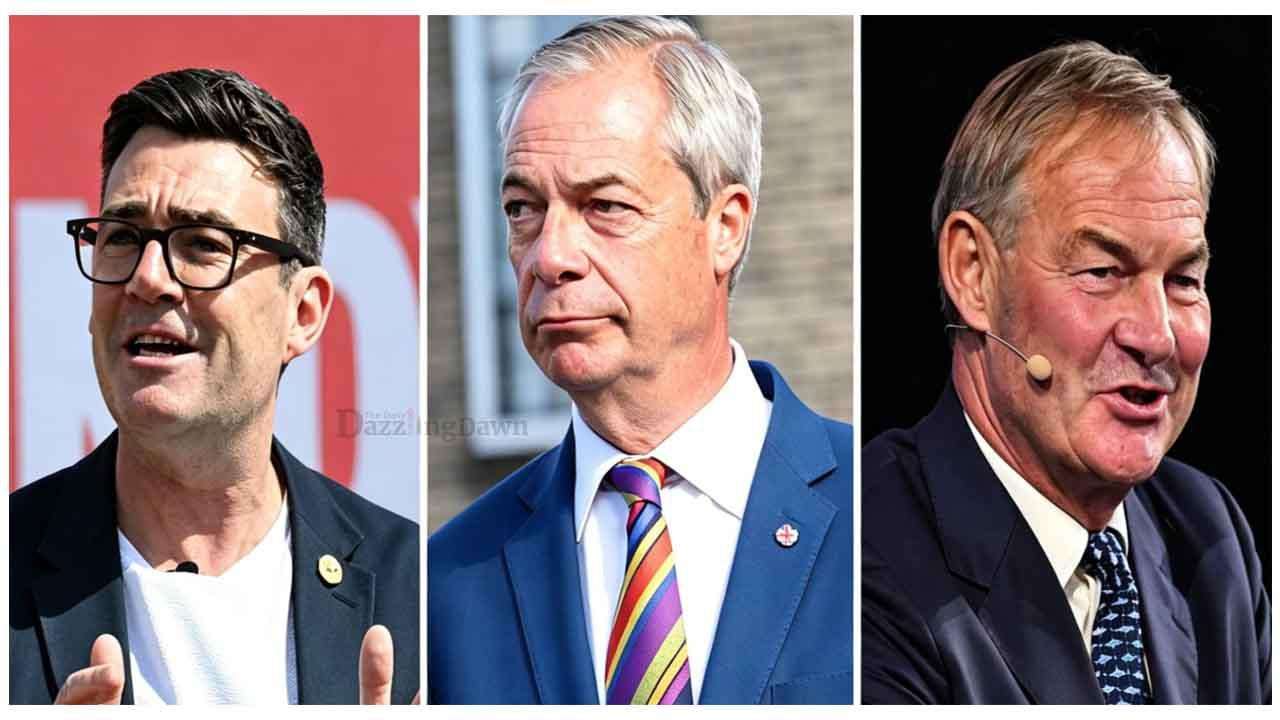
The upcoming Makerfield by-election has transformed into a high-stakes laboratory for right-wing factionalism, where data-driven micro-targeting is threatening to stall Reform UK's momentum and hand an electoral advantage to Labour’s heavyweight candidate, Andy Burnham.
An investigation by Daily Dazzling Dawn reveals that Restore Britain, a hard-line splinter group established just twelve months ago by ousted former Member of Parliament Rupert Lowe, has weaponised digital infrastructure to establish a foothold in this historically Brexit-leaning constituency. Fresh constituency polling indicates Restore has secured 7% of local voter intention. In a seat where Reform UK required a unified right-wing electorate to defeat Labour, this marginal diversion of working-class voters functionally ends Nigel Farage’s chances of capturing the seat, tipping the tactical scales decisively in favour of Burnham.
Political analysts monitoring the Greater Manchester seat point to a deeper structural shift rather than a temporary protest vote. While Reform UK has moderated its rhetoric to appeal to mainstream voters, Restore Britain has capitalised on unyielding immigration stances, capturing a segment of the electorate that feels abandoned by traditional political institutions. Internal data shared by polling specialists shows that Restore’s core support consists of voters who backed the UK Independence Party and the Brexit Party but now view Reform UK as part of the established political order.
The sudden rise of a one-MP movement into a serious electoral spoiler stems from an advanced social media network that bypasses conventional broadcasting. Data analytics from the past quarter show that Rupert Lowe’s digital output regularly outperforms established political figures, with multiple posts reaching over ten million impressions. This algorithmic reach has been amplified by technology billionaire Elon Musk, whose open endorsements on the platform X have directed substantial attention to the party. Sources close to party strategists suggest that Musk’s shift from potentially funding Reform UK to amplifying Restore reflects a preference for anti-establishment tech-driven movements over traditional party structures.
However, this rapid digital growth has brought increased scrutiny regarding the party's associations. Field reports from Makerfield indicate that the party's online rhetoric has attracted fringe elements, with several local canvassers expressing unsavoury alternative theories regarding mainstream politicians. Furthermore, the party has faced criticism over its loose vetting procedures, highlighted by the recent reinstatement of controversial figures like James Munro. When questioned about these associations, a party spokesperson stated to a journalist that the organisation cannot police the lawful opinions of random members of the public, emphasizing that their focus remains entirely on their core platform.
As the June 18 polling date approaches, Reform UK figures are attempting to counter the threat by warning voters against splitting the ballot. Nigel Farage stated to a journalist that Makerfield represents the most critical by-election in half a century, framing it strictly as a two-horse race. Whether this appeal for unity can cut through Restore’s digital network remains the defining question of the campaign. For Andy Burnham and the Labour leadership, the fracturing of the right-wing vote offers a clear advantage, proving that the deep divisions within populist politics may ultimately dictate the future of Westminster's margins.



.jpeg)

