



.svg)
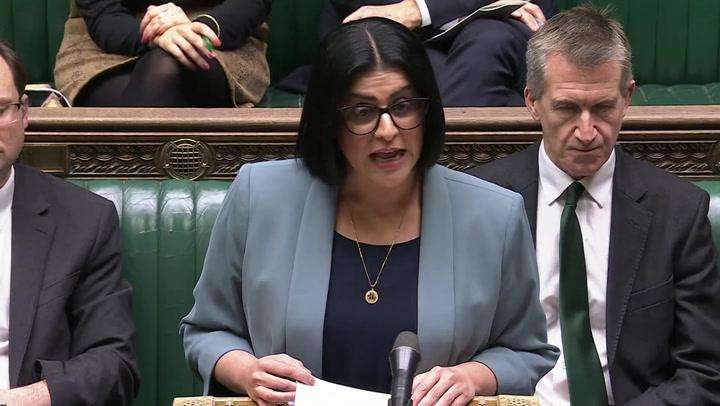
The architecture of British higher education is undergoing a structural realignment as the Home Office shifts the financial and administrative burden of immigration enforcement directly onto vice-chancellors. Under a newly unveiled regulatory architecture, universities risk absolute bans on international recruitment if overseas scholars fail to meet rigorous academic milestones, transforming campus registries into de facto border control outposts.
This regulatory tightening builds upon the "visa brake" mechanism enacted earlier this year, which unilaterally halted outbound student applications from Afghanistan, Cameroon, Myanmar, and Sudan. The updated mandate, however, moves past absolute country bans to target the operational lifelines of British universities by imposing a zero-tolerance compliance framework across all global recruitment corridors.
Documents obtained by journalists reveal that the Home Office will implement a Red-Amber-Green (RAG) traffic-light ranking system, evaluating every sponsoring institution on unyielding statutory metrics. To retain an unblemished "green" status, universities must ensure a course completion rate of at least 90 percent, an initial enrolment rate of no less than 95 percent, and maintain student visa refusal rates strictly below 5 percent.
Crucially, the policy dictates that an institution’s overall rating is tethered exclusively to its lowest-performing metric, entirely eliminating the possibility of averaging out institutional deficiencies. A red designation triggers an immediate, mandatory 12-month remediation plan entirely funded by the university, alongside severe caps on foreign intake; persistent non-compliance will culminate in the absolute revocation of the sponsor licence.
This institutional dragnet carries profound geopolitical consequences for recruitment networks across South Asia and Africa. While irregular Channel crossings dominate public discourse, internal intelligence confirms that legal entry pathways followed by subsequent asylum claims have emerged as a primary focus for Whitehall.
Data shows that 10,835 individuals who arrived on valid study permissions subsequently sought asylum in the year leading to March 2026, with the single largest volume of visa-linked claims originating from Pakistani nationals. Substantial domestic conversion rates have similarly been noted among applicants from Bangladesh, India, Nigeria, and Sri Lanka.
The immediate fallout is already reshaping university operations. In disclosures reviewed by journalists at Daily Dazzling Dawn, several mid-tier institutions have quietly suspended recruitment from high-risk South Asian corridors until at least autumn to protect their sponsorship statuses from escalating visa refusal rates.
Senior migration officials told journalists that the state will not permit student pathways to function as secondary mechanisms for low-skilled employment or unexpected asylum applications. They noted that overall student asylum claims have contracted by 30 percent over the past twelve months—a direct consequence of prior restrictions preventing postgraduates from bringing family dependents.
Yet, the economic realities underpinning the sector remain precarious. Overseas scholars provide an estimated £37 billion in export earnings, effectively subsidising the domestic teaching deficit created by frozen home tuition fees.
Speaking to journalists, higher education representatives acknowledged the necessity of safeguarding system integrity but warned of acute financial instability. They stressed that recent sharp declines in international registrations have already forced widespread cost-cutting and institutional redundancies, cautioning that further systemic shocks risk compromising the global standing of British research.
As the Home Office prepares to fully deploy the tracking infrastructure, the next phase of enforcement will focus heavily on standardising independent English language testing and banning rogue overseas recruitment sub-agents. For a sector structurally dependent on foreign capital, the coming months represent a high-stakes calculation between academic independence and survival under an increasingly punitive state apparatus.

.jpg)




_2.jpg)