




.svg)
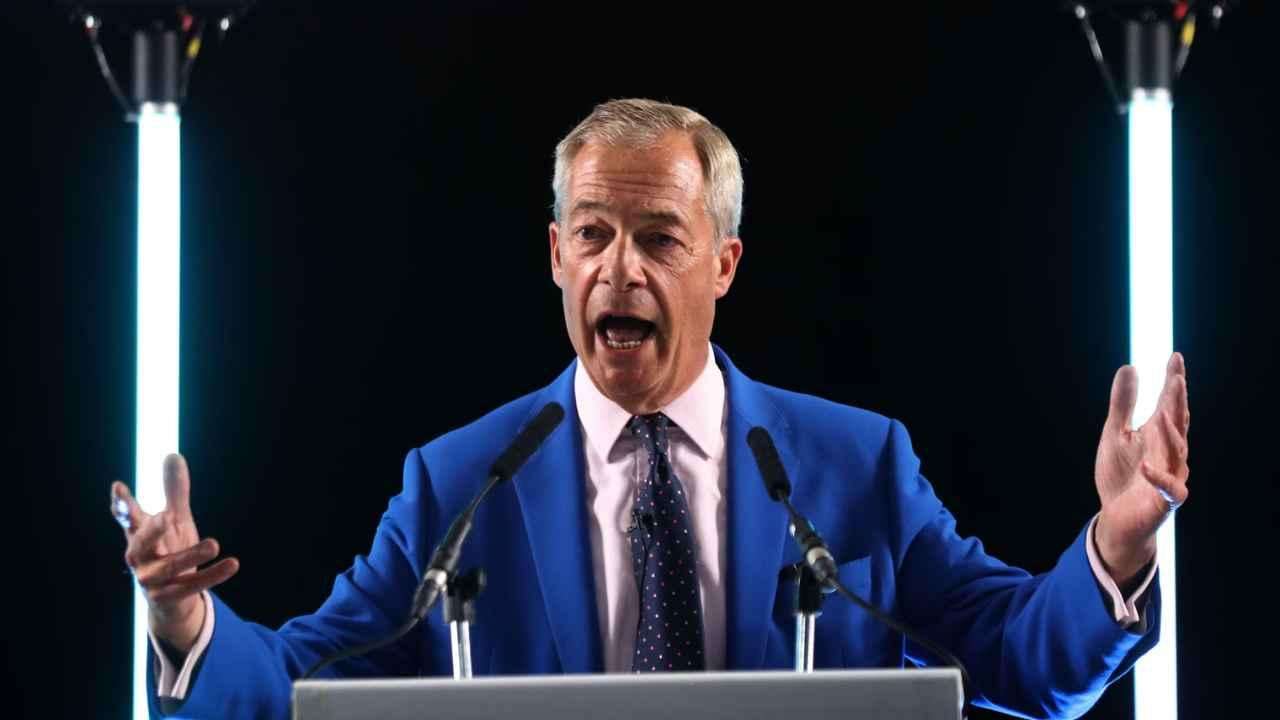
Political leaders across Ireland, Northern Ireland, Scotland, and Wales are increasingly discussing a scenario that once seemed unlikely—the possible break-up of the United Kingdom. Their concerns have intensified as Reform UK, led by Nigel Farage, continues to gain political momentum ahead of the next general election.
Figures from both unionist and nationalist parties believe a Farage-led government, or even a strong Reform UK presence in Parliament, could dramatically reshape the constitutional future of the UK. They warn that tougher immigration policies, growing English nationalism, and renewed debates over Brexit-related issues could deepen divisions among the UK's four nations.
Former Welsh First Minister Mark Drakeford has warned that politics in Britain has changed significantly in recent years. Speaking at a conference in Belfast, he argued that the UK is a voluntary union of four nations and that each nation should have the right to decide its future.
Drakeford expressed concern that if Reform UK gains power, constitutional decisions—particularly regarding Northern Ireland—could happen rapidly without sufficient planning or public discussion. He also suggested that hardline immigration policies similar to those seen in the United States could further alienate Scotland, Wales, and Northern Ireland.
Ireland's Justice Minister, Jim O'Callaghan, said Dublin should begin preparing for the possibility of Irish reunification rather than waiting for political developments in London to dictate the pace of change. He warned that future political events may not follow a predictable path.
Leaders from the Social Democratic and Labour Party (SDLP) echoed similar concerns. SDLP leader Claire Hanna said the political influence of Nigel Farage can no longer be dismissed as temporary and argued that Ireland must seriously consider its constitutional future.
One issue likely to become increasingly controversial is the financial support the UK provides to Northern Ireland. Estimates of the annual subsidy vary widely, and some politicians fear Reform UK could use the cost as a major political argument, similar to Brexit-era debates over Britain's contributions to the European Union.
Sinn Féin continues to support a future referendum on Irish reunification but insists that any vote must be carefully prepared.
Former Stormont Finance Minister Conor Murphy warned that an unpredictable UK government could use the financial cost of Northern Ireland as justification for encouraging constitutional change. He urged both the Irish and British governments to establish clear rules for any future referendum before political circumstances become more uncertain.
Meanwhile, Ireland's governing Fine Gael party plans to publish a detailed blueprint for a united Ireland later this year.
Former Taoiseach Leo Varadkar suggested that a Reform UK government could accelerate constitutional debates if it pursued a harder Brexit strategy or attempted to withdraw the UK from the European Convention on Human Rights (ECHR).
Farage has previously argued that leaving the ECHR would help the UK introduce stricter immigration controls and has questioned parts of the Good Friday Agreement linked to the convention.
Recent academic research also indicates stronger support for leaving the ECHR among unionist voters in Northern Ireland than across the UK overall.
Unionist leaders are also expressing concern that rising English nationalism could unintentionally strengthen support for independence movements in Scotland, Wales, and Northern Ireland.
Ulster Unionist Party leader Jon Burrows argued that Northern Ireland plays an important role in the UK's economy and national security. He highlighted the region's strategic location, food production, and infrastructure as reasons why it should remain part of the United Kingdom.
Scottish National Party representatives believe conversations about the UK's constitutional future should involve people from every part of Britain, including England.
Although Mark Drakeford said he hopes the United Kingdom remains united, he warned that if English nationalism continues to dominate British politics, Wales could eventually find itself isolated within a dramatically different UK. He even suggested that closer cooperation between Wales, Scotland, and Ireland could become a realistic option in the future.
Political analysts note that under the UK's first-past-the-post electoral system, a party does not necessarily need majority public support to secure a parliamentary majority.
That possibility has prompted political leaders across the UK and Ireland to prepare for a range of constitutional outcomes that, until recently, many considered highly unlikely.
As Reform UK continues to reshape British politics, debates over the future of the United Kingdom—and whether its four nations remain together—are expected to become increasingly central in the years ahead.