





.svg)
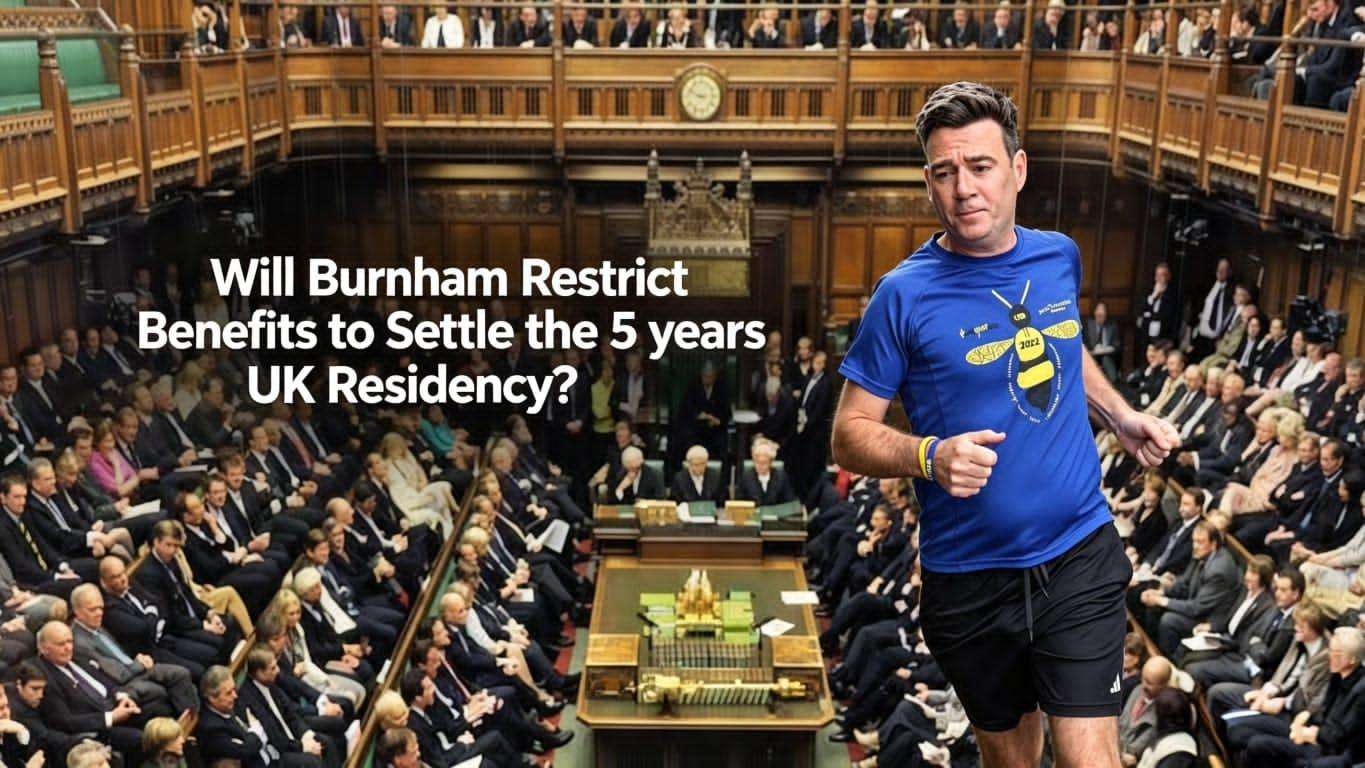
With Andy Burnham set to assume the office of Prime Minister next week, his transition team is grappling with a high-stakes standoff over the future of the British asylum and settlement framework. At the centre of the dispute is Home Secretary Shabana Mahmood’s proposal to overhaul Indefinite Leave to Remain (ILR) by replacing the traditional five-year settlement path with a complex "earned settlement" system.
Under the new system, high earners with salaries above £50,270 can still qualify for ILR in five years. However, most other applicants face a standard baseline wait of ten years, which extends to fifteen years for lower-skilled roles and up to twenty years for refugees. The policy, designed to apply retrospectively to 1.6 million migrants who arrived since 2021, has met with significant resistance from backbench Labour MPs who warn against altering residency rules mid-game.
To defuse a potentially damaging parliamentary rebellion, Whitehall officials are drafting a compromise that would retain the traditional five-year pathway to ILR for broader groups but strip successful applicants of their entitlement to state benefits for an extended period. In an exclusive briefing shared with Daily Dazzling Dawn, government insiders revealed that the Home Office is examining the legal viability of separating settlement rights from welfare access. A senior political source told journalists that a deal on both the qualification period and the retrospective nature of the rules is actively being negotiated to ensure a smooth transition of power.
The proposed changes would exempt family members of British citizens, British National (Overseas) visa holders, and EU Settlement Scheme applicants from the longer waiting periods. However, the proposed compromise has drawn strong condemnation from the opposition benches. In a formal letter to the Home Secretary, Conservative leader Kemi Badenoch argued that allowing automatic permanent settlement after five years remains a fundamental error. Badenoch stated that many temporary work-visa holders occupy low-wage positions that could be filled by economically inactive British citizens. She warned that any deviation from the stricter ten-year rule would be a mistake, pointing out that existing legislation lacks the provisions required to restrict the welfare rights of those who hold ILR. Because permanent residents typically qualify for British citizenship just one year later, Badenoch told journalists that restricting benefits would face intense legal challenges and ultimately risk a significant increase in welfare claims.
Beyond the ILR residency dispute, the wider legislation backed by Burnham contains sweeping, historically tight reforms to the asylum system. Under the newly debated Immigration and Asylum Bill, which passed its second reading in the House of Commons on Monday, July 13, 2026, with 264 votes to 90—despite a rebellion by 14 Labour MPs—successful asylum seekers will face an unprecedented financial liability. Officially confirmed by the Home Office, the "refugee accommodation tax" will force refugees to pay back up to £10,000 to the government for their hotel accommodation and financial support once they begin working. Human rights groups have fiercely condemned the policy as a "draconian extra tax on refugees" fleeing conflict, noting that child asylum seekers whose cases are not resolved before they turn 18 will also carry this legal debt.
To fast-track deportations and clear administrative backlogs, the bill also replaces independent immigration judges with a system of government-appointed adjudicators. Furthermore, it narrows the legal application of Article 8 of the European Convention on Human Rights—which protects the right to family and private life—making it substantially harder for individuals to appeal deportation orders.
In tandem with these domestic curbs, Burnham's team is quietly preparing a highly ambitious international negotiation. Sources familiar with the transition plans indicate that Burnham wants to establish a "one-in, one-out" exchange deal with France. Under this proposed treaty, the UK would agree to legally accept tens of thousands of processed refugees from the European Union in exchange for Paris agreeing to immediately take back those who attempt to cross the English Channel in small boats. This aligns with the Home Office's official target to "strengthen safe and legal routes" as a mechanism to suppress unauthorized crossings.
Concurrently, Communities Minister Miatta Fahnbulleh is formulating a domestic pivot. The incoming administration intends to cancel lucrative state contracts with private housing providers that cluster asylum seekers in cheap hotels and Houses of Multiple Occupation (HMOs) within deprived northern towns. Instead, ministers are exploring plans to grant immediate working rights to asylum seekers from high-risk countries like Sudan, aiming to transition them out of state-funded accommodation entirely.
The debate has also exposed tactical divisions within the current cabinet. A public clash emerged between the Home Secretary and Immigration Minister Mike Tapp after Tapp advocated in The Times for a targeted ILR exemption for key health and social care workers. This move was interpreted as a breach of collective responsibility, leading Mahmood to block Tapp's access to sensitive Home Office files and request his dismissal. Tapp countered publicly, claiming he had "the receipts" showing he had spearheaded the work on these exemptions for months.
Meanwhile, public opinion remains deeply divided on the issue. In statements gathered by journalists, supporters of the compromise suggested that a five-year residency requirement without access to public funds strikes a fair balance, ensuring migrants contribute to the tax base before accessing services. Conversely, critics and advocacy groups have warned that shifting the goalposts retrospectively undermines the country's reputation for fairness and administrative stability.



.jpg)