






.svg)
Growing anti-immigration protests and a wave of violent attacks have left many Malawian migrants fearing for their safety, forcing thousands to abandon their homes and seek a return to Malawi.
In Thembelihle, an informal settlement south of Johannesburg, Malawian families who had lived peacefully alongside South African residents for years say the atmosphere has changed dramatically following a series of robberies and escalating hostility.
On 29 June, 60-year-old Eibraheem Hussein, who has lived in South Africa since 2000, said armed men stormed his home, assaulted him, and stole valuable possessions.
Less than three weeks later, on the night of 16 July, several Malawian households were reportedly targeted in coordinated robberies. Victims said the attackers ordered them to "go home" while stealing cash, household goods, and personal belongings.
One resident, Moosa Addi Kunje, said five armed men broke into his home, beat him when he said he had no money, and stole his refrigerator, television, and mobile phone. He later received stitches for head injuries after being struck with a firearm.
Another resident, Aisha Muhammed, said the attackers took 4,000 rand she had been saving to fund her family's return to Malawi. She said the group told her that foreigners should leave South Africa.
Since March, South Africa has experienced sustained demonstrations demanding stricter action against illegal immigration. According to official figures compiled by AFP, more than 160,000 foreign nationals, including people from Malawi, Mozambique, Nigeria, and Zimbabwe, have left the country, with at least 54,000 deported. Authorities have also confirmed several deaths linked to the unrest.
Although South Africa has long attracted migrant workers, immigration increased after the country's democratic transition in 1994. Economic hardship and political instability across parts of southern Africa have continued to drive migration into the country.
Official census data indicates that South Africa's foreign-born population grew from around 2% of the population in 1996 to approximately 3.9%—about 2.4 million people—by 2022.
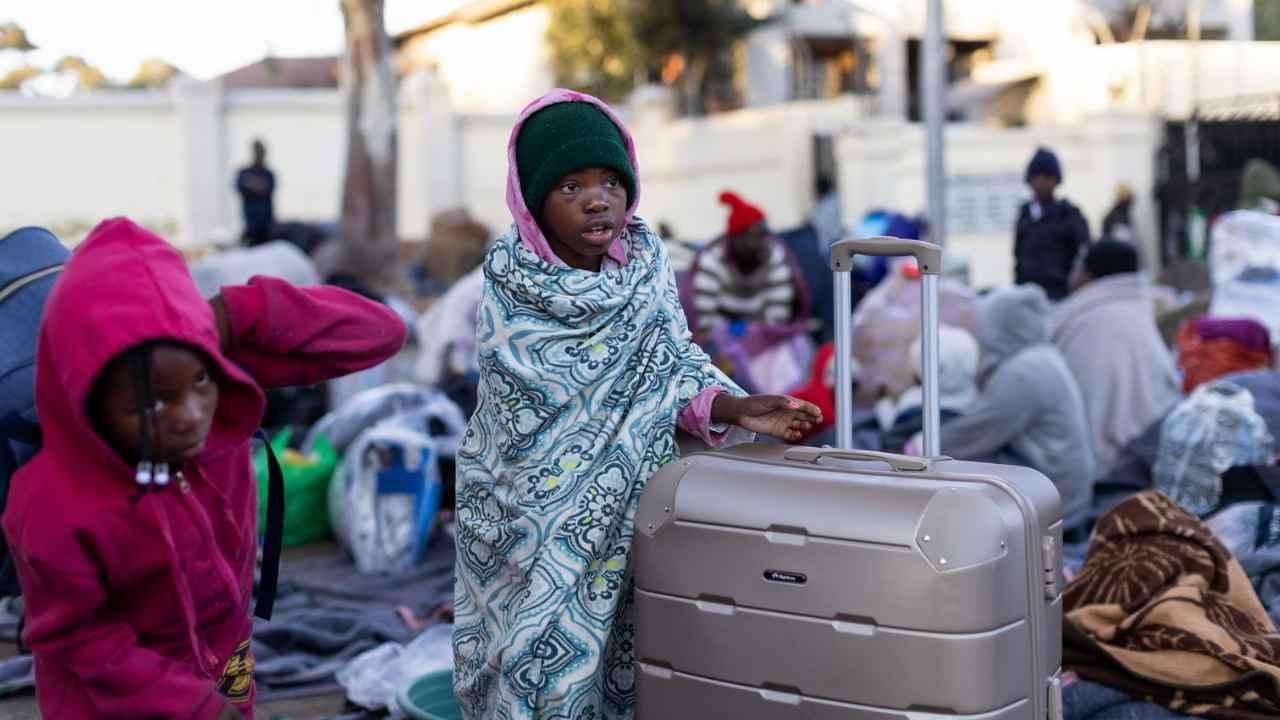
Outside the Malawi Consulate in Johannesburg, thousands of Malawian nationals have been sleeping outdoors while waiting for transport home, despite cold winter temperatures.
Many families, including women with young children, say they lost both their jobs and housing amid the recent unrest.
One woman, who asked not to be identified, said she was dismissed from her domestic work and decided to return to Malawi with her eight-year-old son. Her husband remained behind to earn enough money to transport their belongings home.
Humanitarian organizations have also raised concerns about migrants struggling to access medical services.
Médecins Sans Frontières (MSF) reported cases of migrants being unable to obtain treatment, including patients with drug-resistant tuberculosis and individuals requiring mental health medication.
However, Justice Minister Mmamoloko Kubayi said the government does not consider the situation a humanitarian crisis and stated that emergency medical care remains available to undocumented migrants.
Human rights organization Section27 argued that South African law guarantees access to primary healthcare regardless of immigration status.
Anti-immigration campaign groups have pledged to continue weekly demonstrations over the coming months, calling for undocumented migrants to leave South Africa.
Support for the protests has come from several political parties, while critics argue that migrants are being unfairly blamed for the country's unemployment, crime, and economic challenges.
In Alexandra township, a protest on 16 July turned violent after some demonstrators reportedly began forcing entry into homes while police observed the situation. Residents said both South Africans and foreign nationals were affected.
Police later reiterated that private citizens have no legal authority to demand immigration documents or conduct house-to-house checks, describing such actions as criminal offences.
For many Malawian migrants, the violence has shattered years of peaceful coexistence.
Those preparing to leave say they are doing so not by choice, but because they no longer feel safe. With belongings stolen, jobs lost, and uncertainty growing, many families face the difficult task of rebuilding their lives after leaving South Africa behind.


.jpg)


.jpg)

.jpg)