



.svg)
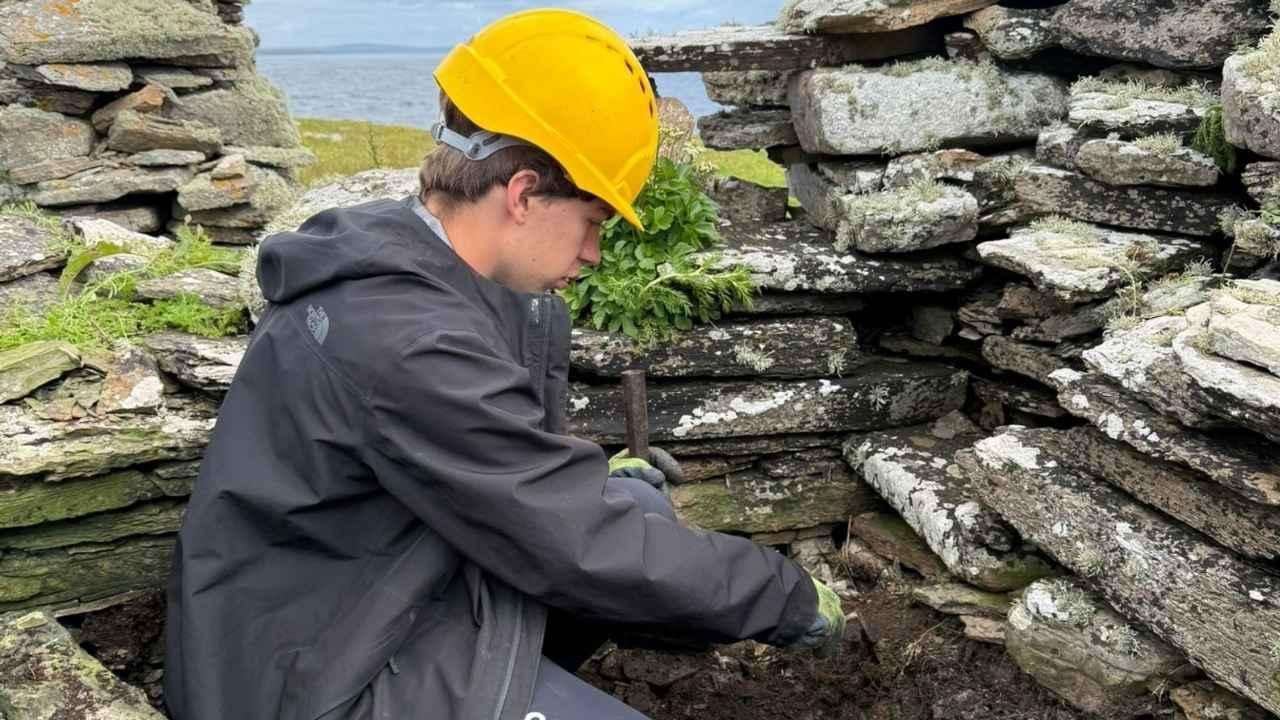
Gordonstoun pupils have helped uncover the remains of what is believed to be a medieval Viking-era church, potentially dating back around 1,000 years, during an archaeological expedition to the remote and uninhabited Scottish island of Swona in Orkney. The discovery was made during a six-day field trip involving students and staff from the Moray school, attended by King Charles III, alongside specialists from the Orkney Research Centre for Archaeology (ORCA).
The suspected church was found beneath the remains of a more recent building on Swona, a small privately owned island situated around seven miles north of John O'Groats. Today, the island has no permanent human population and is known chiefly for its feral cattle.
Daily Dazzling Dawn understands that archaeologists will now examine samples recovered from the site in the hope of finding material suitable for radiocarbon dating, which could provide clearer evidence about the age and use of the structure.
The expedition uncovered features that led researchers to believe the site may contain the remains of a church dating from the Viking period, particularly the 10th or 11th centuries.
Among the most significant discoveries was what is thought to be a foundation associated with the church's altar. After clearing vegetation and excavating a test pit with archaeologists, the group identified a step lying just beneath the surface which appeared to lead towards the altar area.
Dan McLean, a housemaster at Gordonstoun who supports pastoral care for the pupils and organised the trip, said the initial evidence for a church on the island had been limited.
"The only real hint about a church being on the island is a map reference to a ruin known locally as the 'Twinly Kirk'," he told journalists.
Mr McLean said the surviving walls initially appeared to belong to a more recent structure because the building had been altered and added to over time. Further archaeological investigation, however, revealed evidence suggesting that an older structure lay beneath or within the later remains.
"There are other clues, such as the construction method, layout and orientation," he said.
Another important feature was the building technique. Mr McLean noted that the structure was built using dry stone, without clay bonding or mortar, a detail which may assist specialists as they assess the site's possible date and architectural history.
Nearby archaeological features, including cairns and a wall blocking access to a landing point, have added further interest to the area surrounding the suspected church.
"It was a special moment to confirm to the students that they had helped to uncover a piece of Viking history that could be up to 1,000 years old," Mr McLean said.
Ten Gordonstoun pupils made the lengthy journey to Swona, travelling for around 10 hours to reach the isolated island. The expedition offered the students a rare opportunity to participate directly in archaeological fieldwork while living in conditions far removed from modern conveniences.
The group stayed in an abandoned house which had not been occupied for approximately a century. There was no electricity, while fresh water was pumped from an ancient well.
Some of the students also contributed to restoration work on the island, replacing the flooring of the former crofting cottage where they were staying.
Beyond the suspected church, the young archaeologists investigated other historic features across Swona, including a probable prehistoric settlement in the centre of the island.
They also examined a circular ditch believed to have been associated with a Viking warning beacon, adding another possible chapter to the island's long and complex history of human activity.
For 17-year-old student Archie Maclean, the experience offered something rarely available in a conventional classroom.
He said being able to "discover history in real time was incredible".
Fellow pupil Iona Fell said the expedition had also created a strong sense of teamwork among those involved.
"What I enjoyed most was the strong sense of community within the group and how quickly we became a team," she said.
The archaeological work on Swona is not yet complete, and researchers have stressed that further analysis will be required before firm conclusions can be reached about the age and function of the building.
Paul Clark, ORCA's senior project manager, said the students had approached the project with considerable enthusiasm.
"The next step is to look at the samples we took, to see what they can tell us about the activity undertaken at the chapel, and hopefully recover material suitable for radiocarbon dating," he said.
Radiocarbon testing could prove crucial in establishing when the suspected chapel was built or used. Such evidence may also help archaeologists understand whether the structure was connected to the Viking and Norse communities that shaped much of Orkney's medieval history.
The discovery has given the Gordonstoun pupils a direct role in a continuing archaeological investigation on one of Scotland's most isolated islands. For now, the evidence points towards the possibility that a structure hidden beneath later ruins could preserve a previously overlooked chapter of Swona's Viking past.
As laboratory analysis begins, the samples recovered during the expedition may determine whether the students have indeed helped uncover the remains of a church dating back to the Norse era.