






.svg)
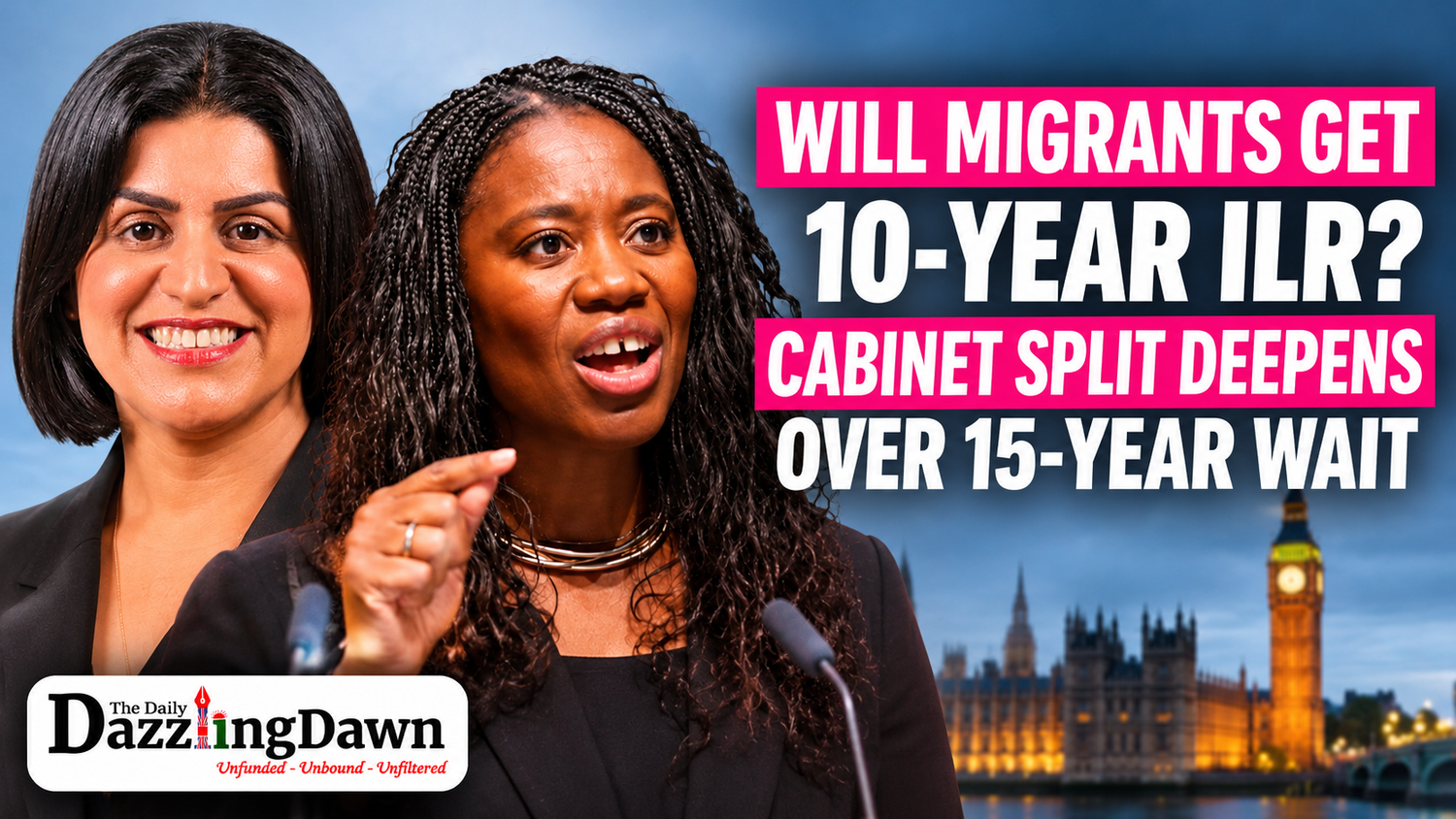
The Westminster fault line over Britain’s immigration settlement rules has widened sharply after a senior Cabinet minister pointedly declined to endorse the Home Secretary’s proposal to impose a 15-year wait for indefinite leave to remain (ILR) on certain foreign workers. Energy Secretary Miatta Fahnbulleh on Wednesday refused to say whether she backed Shabana Mahmood’s plan to extend the standard qualifying period from five years to 15 for medium-skilled workers, telling Sky News that reform must be rooted in “compassion” and “contribution” rather than arbitrary delay . The intervention, which followed the quiet removal of a constituency website post criticising the policy, lays bare a deepening split inside Sir Keir Starmer’s top team over how far the government should go in making settlement “earned, not automatic” .
At the heart of the public confusion is a simple question: will migrants now face a 10-year wait, or 15? The answer, according to the government’s own consultation framework, is both — and neither is yet final. The baseline qualifying period for most work and family routes is proposed to rise from five years to ten, a shift confirmed in parliamentary written answers and evidence sessions earlier this year . From that ten-year baseline, the Home Office intends to adjust waits up or down according to individual contribution. Those earning above £50,270 or working in specified public service roles could still qualify in five years; community volunteers in five to seven. But medium-skilled workers, including those on Health and Care visas, face a 15-year pathway. Refugees would wait 20 years, and those who entered illegally or overstayed could face up to 30 . The consultation, which closed on 12 February 2026 after receiving more than 200,000 responses, remains under active analysis, with no final model decided .
UK Tightens Visa Crackdowns, ILR Reform, Student Refusals, and Shelves Wealthy Investor Plans
Mahmood’s allies insist she retains the backing of Andy Burnham, and a government source stressed that ministers cannot offer opinions on specific elements of a policy still subject to consultation review . Yet the public reticence from Fahnbulleh — herself a former child refugee — is politically resonant. In a now-deleted post on her Peckham constituency website, she had been quoted warning that continually prolonging the wait for settlement could also prolong the process of building cohesion . Housing Secretary Angela Rayner had earlier publicly attacked the prospect of backdating the changes to 2021, and dozens of Labour MPs are understood to oppose the retrospective element . Burnham is reportedly considering exempting care work from the 15-year extension, though the Home Office has argued that doing so would trigger an exodus of foreign workers from a sector already reliant on overseas recruitment .
For migrants already in the UK on a pathway to settlement, the long-residence route is set to be abolished and superseded by the earned settlement model, with transitional protections still undecided . The current five-year rules continue to apply in the interim. Daily Dazzling Dawn understands that the Home Office will publish the outcome of the consultation and the final impact assessments only once the Home Secretary has settled the model, a timeline that could slip into next year. Until then, the question of whether a care worker or a medium-skilled visa holder will wait ten years or fifteen remains unresolved — and the Cabinet row over that very uncertainty is now the story.




.jpeg)