




.svg)
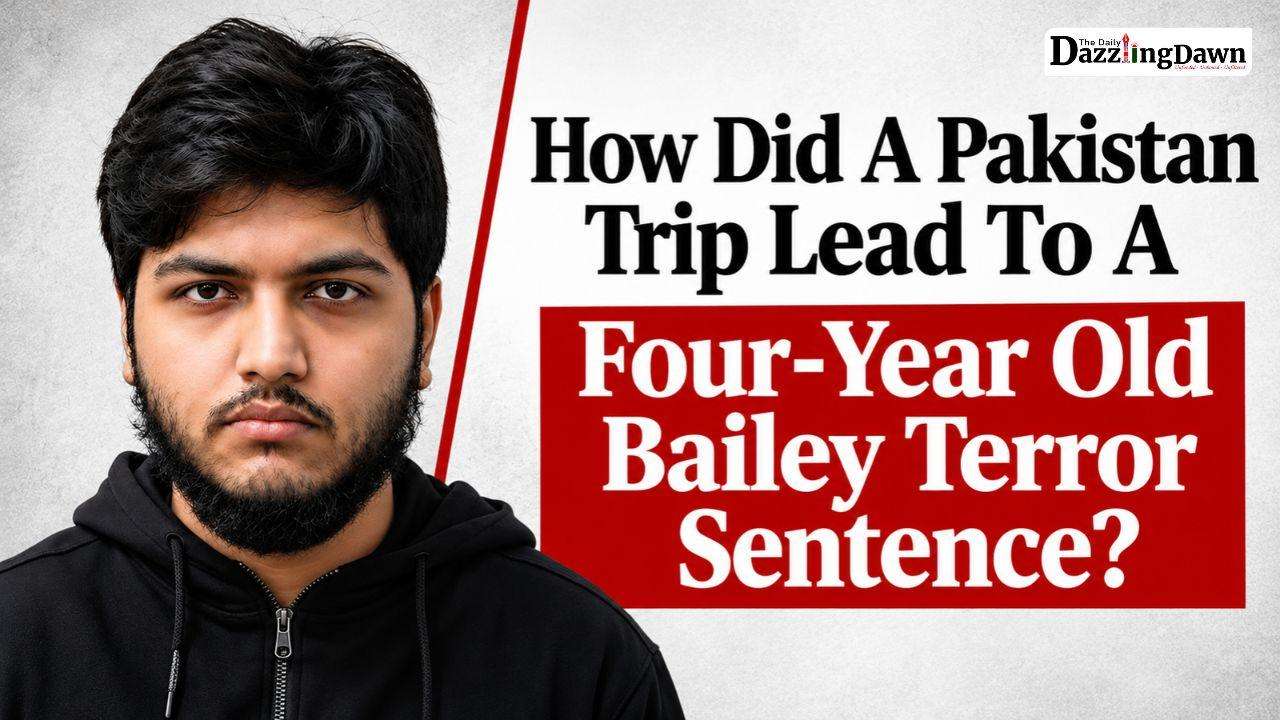
Shuja Gibraeel Mohsin, a 20-year-old resident of Mitcham in south London born on 24 January 2006, received a four-year custodial sentence at the Old Bailey on Thursday, 26 November 2026, following an investigation by Counter Terrorism Policing London. A jury convicted Mohsin on 19 June 2026 after a two-week trial on one count of possessing a document likely to be useful to a terrorist and two counts of disseminating terrorist material. Officers first uncovered the material after stopping him at Heathrow Airport in January 2024 upon his return to the United Kingdom from a trip to Pakistan.
Counter-terrorism officers stopped Mohsin at Heathrow Airport in January 2024 under Schedule 7 powers as he arrived back in the United Kingdom from Pakistan. Although officers allowed him to continue his journey after seizing his mobile phone, specialist digital examiners analysed the handset alongside a USB stick. Daily Dazzling Dawn learned that examiners discovered evidence showing Mohsin had viewed extremist content and joined online chat groups linked to extreme Islamist groups, including the Taliban, Hamas and Daesh.
Detailed forensic examination of the seized mobile phone identified material of acute concern, including a bomb-making manual and Daesh execution videos that Mohsin had sent to an online contact. Police formally arrested Mohsin in March 2024 and seized his computer for further digital analysis. Officers arrested him again in July 2024 to question him about material recovered from his devices, though Mohsin gave no comment during police interviews before being released on bail.
Following further police enquiries and device examinations, the Crown Prosecution Service authorised criminal charges against Mohsin in April 2025. At the conclusion of a two-week trial at the Old Bailey on 19 June 2026, jurors found him guilty of one count of possession of a document likely to be of use to a terrorist, contrary to section 58 of the Terrorism Act 2000, in relation to the bomb-making manual. The Old Bailey jury also convicted him on two counts of dissemination of terrorist material, contrary to section 2 of the Terrorism Act 2006, over the Daesh execution videos shared with an online contact.
Returning to the Old Bailey on Thursday, 26 November 2026, the court sentenced Mohsin to four years in custody to be served in a Young Offender Institution. Alongside the custodial term at the Old Bailey, the court ordered the forfeiture and destruction of Mohsin's seized mobile phone.
Speaking to Daily Dazzling Dawn and journalists after the sentencing, Commander Helen Flanagan, head of Counter Terrorism Policing London, highlighted how early Mohsin's online engagement began. Daily Dazzling Dawn understands that investigators found Mohsin had been drawn into extremist and terrorist material and ideologies from when he was only 14 or 15 years old. Commander Flanagan stated that the case reflects a growing trend and concern regarding children and young people being radicalised online and accessing dangerous, violent terrorist ideologies.
Commander Flanagan urged parents and carers to remain aware of what children are doing online, hold open conversations, stay inquisitive about their viewing habits and seek early support via the ACT Early website if concerns arise. Daily Dazzling Dawn learned that she underscored the serious legal consequences awaiting anyone involved in downloading or sharing terrorist content online, noting that Mohsin is now facing that reality. Authorities continue to direct families and members of the public to www.actearly.uk for guidance on identifying signs of radicalisation and contacting police.