






.svg)
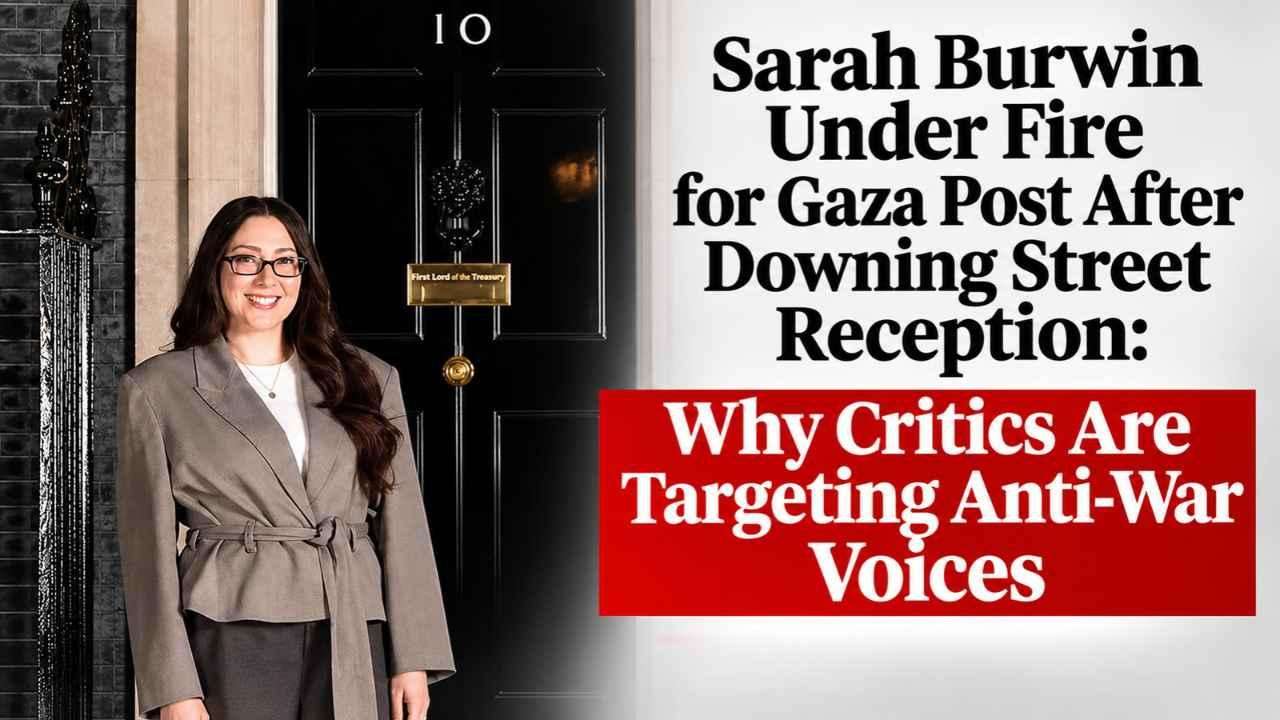
British content creator Sarah Burwin is facing a fierce wave of scrutiny from sections of the Westminster press on 29 November 2026 after reports highlighted an Instagram post opposing the war in Gaza following her attendance at a Downing Street reception. Burwin, who was one of roughly 60 digital creators invited to Number 10 Downing Street on 9 November 2026 in an outreach event linked to Andy Burnham, has become the centre of a wider national debate over free expression and anti-war advocacy. Daily Dazzling Dawn understands that defenders of the creator view the media backlash as an attempt to silence grassroots British voices speaking out against civilian suffering in Gaza.
The controversy began after Whitehall correspondent Sabrina Miller published a report in The Telegraph on Sunday morning drawing attention to an image Burwin had reposted on Instagram. The social media post featured Israeli Prime Minister Benjamin Netanyahu alongside German dictator Adolf Hitler and carried the caption "history is always watching." While conservative commentators quickly seized upon the historical comparison to question her presence at Number 10, supporters of Burwin maintain that her post reflected widespread public outrage over the humanitarian catastrophe in Gaza rather than any breach of democratic norms.
Downing Street's decision to host around 60 content creators earlier this month formed part of a broader effort by political leaders, including Greater Manchester Mayor Andy Burnham, to engage independent digital communicators who reach millions of citizens outside traditional newspaper readerships. Across the United Kingdom, digital creators have played a decisive role over the past two years in documenting the human toll in Gaza, giving voice to public concern that many Britons feel has been underrepresented in mainstream broadcast coverage. Daily Dazzling Dawn learned that several independent commentators view Burwin's invitation to Number 10 as long-overdue recognition of how ordinary citizens shape national political discourse.
By targeting an individual creator over a strongly worded anti-war repost, critics of the Westminster press argue that established media outlets are attempting to police the boundaries of acceptable debate on Gaza. Political observers note that historical analogies, however stark, are frequently employed in British public protest to warn leaders of moral accountability. Focusing exclusively on the phrasing of a single Instagram caption shifts public attention away from the ongoing devastation in Gaza and onto the personal reputation of a private citizen who accepted an official invitation to discuss digital media.
Free speech advocates across London warn that subjecting invited guests at Downing Street to retrospective social media audits risks creating a chilling effect across Britain's creative and digital sectors. When independent creators observe that expressing fierce moral opposition to military actions in Gaza can trigger coordinated front-page criticism, younger and less established voices may hesitate to engage with democratic institutions altogether. Daily Dazzling Dawn understands that supporters of Burwin are rallying behind her online, arguing that the phrase "history is always watching" captures a sentiment shared by millions of voters demanding international accountability.
The episode also highlights a growing disconnect between Westminster political gatekeepers and the British public on foreign policy. Opinion surveys throughout 2025 and 2026 have consistently demonstrated deep public unease across the United Kingdom regarding the scale of civilian casualties in Gaza and Britain's diplomatic posture in the Middle East. Independent content creators like Burwin have built substantial audiences precisely because they articulate those humanitarian concerns directly and without institutional filtering.
As debate continues across social media platforms and Westminster circles on 29 November 2026, the controversy surrounding Sarah Burwin has evolved into a test of how British political institutions handle genuine grassroots dissent. If Downing Street outreach initiatives are only open to creators whose views align neatly with establishment orthodoxy, critics warn that future receptions at Number 10 will lose credibility among digital audiences. For Burwin and those standing beside her, the core issue remains unchanged: the right of British citizens to speak plainly about Gaza and remind those in power that history will judge their actions.



.jpeg)

.jpg)