






.svg)
The world’s largest offshore oilfield, Safaniya Oil Field, which extends more than 40 miles from eastern Saudi Arabia into the Persian Gulf, has been forced to halt operations amid escalating tensions linked to the war involving Iran. The field, which has produced millions of barrels of heavy crude for nearly seven decades, is among several energy facilities impacted by the crisis.
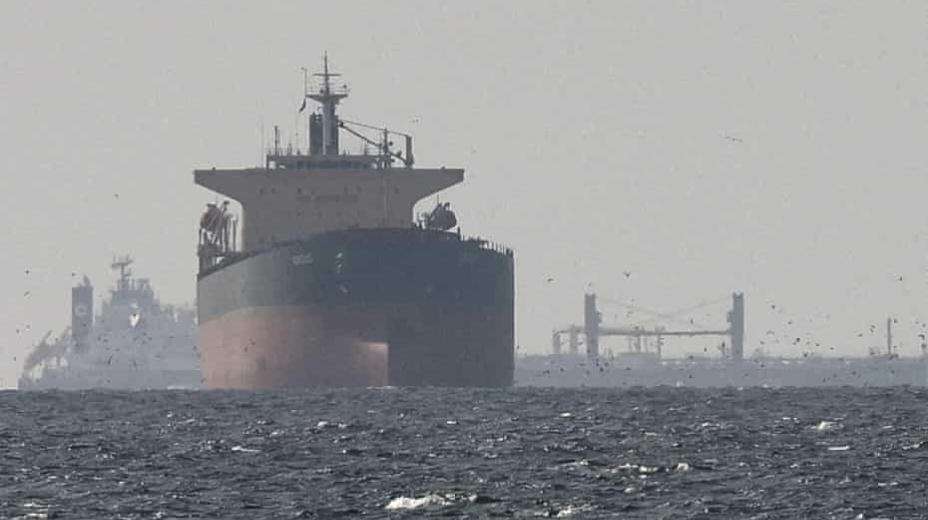
The conflict has severely disrupted shipping through the Strait of Hormuz, a crucial maritime passage responsible for transporting roughly one-fifth of the world’s oil supply. Attacks on oil tankers navigating the narrow route have effectively blocked exports from Gulf producers, removing an estimated 15 million barrels of oil from the global market.
Beyond the immediate tanker disruptions, analysts warn of a broader threat to global energy supplies. Major oil producers in the Gulf region may soon have to shut down additional oilfields as storage facilities fill up and export routes remain limited. If the shutdowns continue, experts warn oil prices could surge beyond the record level of $147.50 per barrel reached during the 2008 Global Financial Crisis.
Oil companies across the region have attempted to reroute crude supplies through pipelines and alternative storage facilities. However, as infrastructure approaches full capacity, producers may have no choice but to suspend production. Analysts say these shutdowns are now a key factor driving higher oil prices.
Global benchmark Brent Crude briefly surged to about $119 per barrel before easing as world leaders considered releasing around 400 million barrels from strategic reserves to stabilize markets. Despite this effort, prices have remained above $100 per barrel, partly because oilfields in Saudi Arabia, Iraq, and Kuwait have already begun temporary closures.
According to the International Energy Agency, production cuts caused by well shutdowns and damage to energy infrastructure could reduce supply by nearly 10 million barrels per day.
The crisis has also disrupted global natural gas markets. Qatar, which supplies roughly 20% of the world’s seaborne liquefied natural gas, has been forced to suspend LNG production after attacks targeted energy facilities. As a result, gas prices in Europe jumped by nearly 80%, reaching more than €56 per megawatt hour.
Qatar’s energy minister Saad al-Kaabi warned that restoring normal deliveries could take “weeks to months,” even if the conflict were to end immediately. He cautioned that the ongoing disruption could have severe consequences for global economies.
Energy analysts say the region’s crude storage facilities may only last a few more days if exports remain blocked. Without a resolution to the Hormuz crisis, further production shutdowns could become inevitable.
Restarting large oilfields after shutdowns is a complicated process that can take weeks or even months. Experts say restoring production from major fields requires extensive technical work and there is always the risk that output may not fully recover.
Despite the challenges, Saudi state oil giant Saudi Aramco says it expects to continue exporting around 70% of its normal output. The company has redirected crude through pipelines running roughly 750 miles across the kingdom to the Red Sea port of Yanbu. Shipments through this route have already doubled to about 3 million barrels per day and could increase to 5 million soon.
Meanwhile, alternative export routes are also being used elsewhere in the Gulf. Oil shipments through pipelines to the port of Fujairah in the United Arab Emirates have increased as tankers avoid the Strait of Hormuz.
However, analysts caution that these alternatives cannot fully replace maritime exports. Saudi Arabia could soon have up to 2 million barrels of oil per day unable to reach global markets, while the UAE may have about 1 million barrels daily without a clear export route. Countries like Iraq and Kuwait lack pipelines that bypass the Strait of Hormuz altogether, leaving them especially vulnerable.
In Iraq, production from major southern oilfields has already dropped sharply from about 4.3 million barrels per day to just 1.3 million. Kuwait has also reduced its production levels as storage facilities near capacity.
While there are concerns about whether older oilfields such as Safaniya, which began operations in 1957, can fully recover after extended shutdowns, analysts believe Saudi Arabia’s advanced infrastructure could eventually restore production levels.
For now, however, the disruption to Middle Eastern oil exports has created one of the most significant energy supply shocks in decades, raising fears that high energy prices could persist for consumers and businesses around the world.



.jpg)