






.svg)
A quiet yet profound structural overhaul of the United Kingdom's immigration framework has upended the expectations of hundreds of thousands of international students, skilled professionals, and asylum seekers. Far beyond the widely publicised technical migration to digital eVisas, the Home Office has aggressively codified a new doctrine of "earned settlement." This paradigm shift, analyzed closely by industry experts at Daily Dazzling Dawn, fundamentally redefines who is permitted to cross British borders and permanently extends the timeline required for foreign nationals to secure a future in the country.
At the heart of this sweeping legislative redesign is a strategic apparatus known as the "emergency visa brake." Implemented with immediate effect for citizens of Sudan, Afghanistan, Cameroon, and Myanmar, the mechanism automatically halts the issuance of student visas from outside the country the moment data triggers an alert for a sudden escalation in subsequent asylum claims. Under the exact same mechanism, Afghan nationals have also faced a total entry clearance ban under the Skilled Worker route. For the first time in contemporary administrative history, entire nationalities are facing blanket exclusions from higher education and employment opportunities in Britain—a policy shift that legal analysts suggest moves away from individual merit-based assessments toward automated, country-specific containment.
The structural ripples are felt acutely across the British higher education landscape, where university budgets have long been propped up by international tuition fees. Internal figures reveal that student visa applications fell by a staggering 40% this past April compared to the previous year, dragging the annual intake down to its lowest level in half a decade. While initial declines were once attributed to restrictions on postgraduate dependants, sector analysts confirm that the current plunge is driven by high visa refusal rates, tightening compliance frameworks, and an incoming international student levy that has significantly dampened global demand.
Parallel to the academic restrictions, the Home Office has fundamentally rewritten the rules for those already contributing to the domestic economy. In a major policy change, sponsors are now required to demonstrate strict salary threshold compliance during every single pay period, rather than allowing employers to average out earnings over the span of a fiscal year. This allows enforcement teams to spot and penalise deviations immediately. Furthermore, the mandatory qualifying period to achieve Indefinite Leave to Remain (ILR) has effectively doubled from five years to ten for the vast majority of work and family routes, significantly prolonging the window of precarious status, visa renewal fees, and corporate dependency.
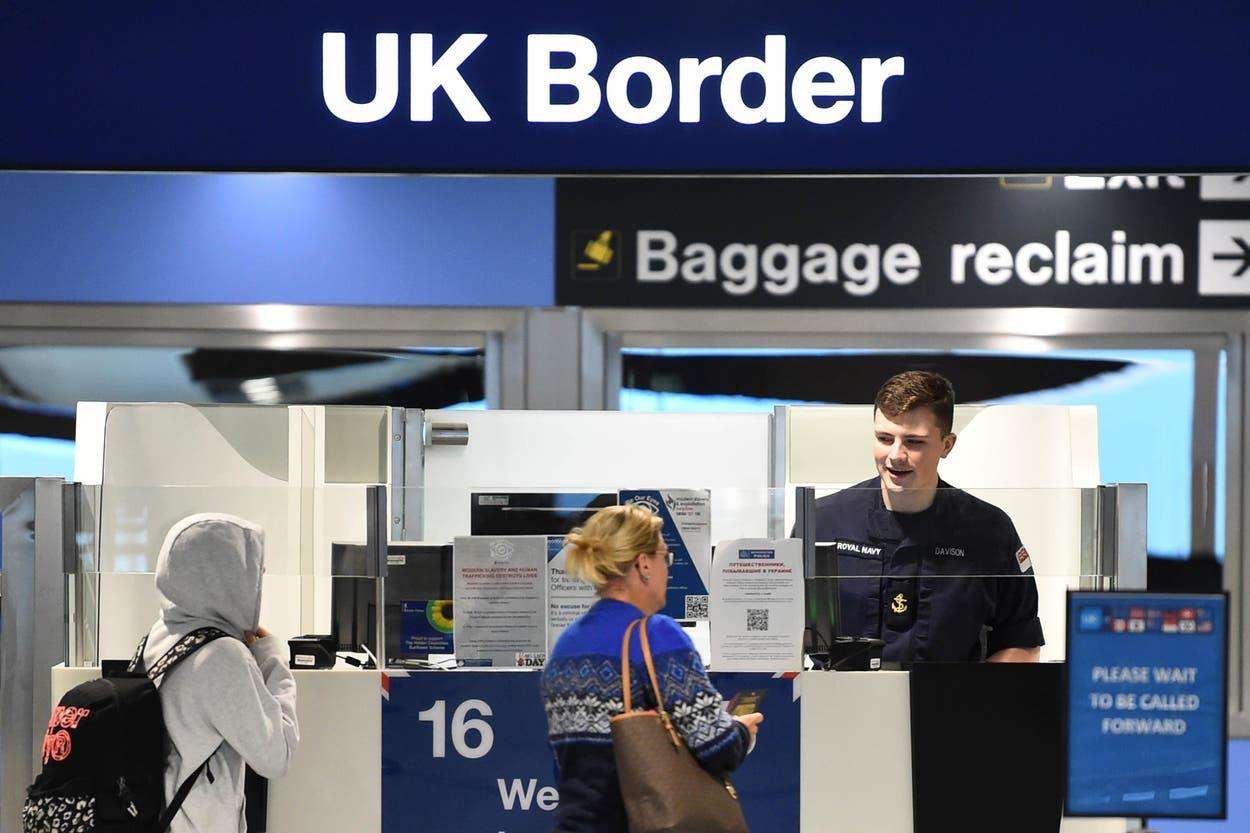
To compound this path to permanent residency, the government has announced a higher English language requirement for eventual settlement, which will officially rise from a B1 to a B2 level across major visa categories. This is coupled with strict new character requirements, mandating a refusal of status for anyone handed a suspended custodial sentence of 12 months or more. Concurrently, digital pre-departure checks have been fully weaponized at international borders; carriers are now legally required to refuse boarding if real-time Home Office data fails to verify a passenger's electronic status before takeoff.
Simultaneously, Anglo-French border arrangements have quietly evolved. A highly sensitive "one in, one out" pilot scheme targeting cross-Channel migration has been extended, confirming an operational policy where selected small-boat arrivals are returned to France in exact numerical exchange for individuals processed through regular pathways. This bilateral enforcement mechanism functions alongside a reduced 30-month "core protection" timeline for newly recognised refugees, down from the traditional five years, introducing regular reviews that prevent long-term stability.
As corporate legal departments and university boards scramble to adapt to these strict new realities, the message from the Home Office remains uncompromising. Settlement is no longer viewed as a natural progression of long-term residence, but rather a tightly controlled privilege reserved strictly for those meeting elevated economic, language, and compliance benchmarks.

.jpeg)