






.svg)
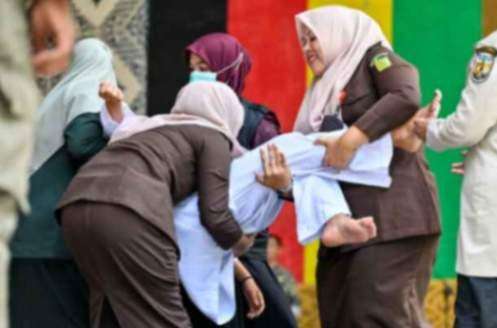
The application of extensive physical penalties, which recently saw an unnamed woman and her partner endure up to 140 lashes, has underscored the expanding jurisdiction of regional religious enforcement units operating independently of the federal judiciary. Legal experts and human rights monitors are increasingly questioning the long-term sustainability of this parallel legal system within a democratic state.
The legal framework governing these public punishments is rooted in the extensive legislative autonomy granted to the province in 2001. Designed originally as a political mechanism to resolve a decades-long separatist movement, this special status empowered local authorities to draft independent regional statutes, known locally as Qanuns.
Under these ordinances, certain private conducts between consenting adults—ranging from the consumption of alcohol to extramarital intimacy—are codified as severe public infractions. While the federal government in Jakarta maintains absolute authority over standard criminal law across the rest of the archipelago, it remains structurally restricted from intervening in the specialized regional codes enforced by the local Wilayatul Hisbah (Sharia police force).
A senior legal researcher tracking the intersection of Indonesian federal law and regional ordinances shared a professional assessment with journalists:
"The central government remains in a delicate position. The legal structures established during the peace process create an almost impenetrable barrier against federal judicial review, leaving local courts with virtually unvetted discretion over bodily punishments."
The operational methods of the local enforcement apparatus have drawn scrutiny from both domestic legal scholars and international observers. In recent administrative actions, local authorities have expanded enforcement parameters to include their own personnel in an attempt to signal internal accountability. Following a recent enforcement action, the head of the local religious police force, Muhammad Rizal, clarified institutional policy to journalists: As promised, we make no exceptions, especially not for our own members. This certainly tarnishes our name.
Despite claims of structural equity, independent monitors highlight the profound physiological and psychological toll exacted by public floggings using rattan canes. The severity of the sentences frequently causes targets to lose consciousness on the execution stage, requiring intervention from medical emergency teams on standby. Human rights organizations argue that regardless of the domestic legality within the province, the physical trauma inflicted breaches international treaties against degrading treatment to which the wider republic remains a signatory.
Sana Yousaf: The Price of Saying No
The fundamental friction between localized legislative freedom and national constitutional guarantees is expected to intensify. While localized legal updates indicate that certain elements within regional administrative circles have debated shifting these corporal punishments from highly visible public parks into enclosed correctional facilities to mitigate global condemnation, public implementation continues to serve as an assertive local political tool.
The core legal dilemma persists: as regional enforcement agencies broaden their scope, the federal apparatus faces an escalating challenge in balancing the preservation of regional peace treaties against its explicit obligations to uphold universal human rights standards across all domestic borders. This unfolding systemic friction is being closely analysed by observers at the Daily Dazzling Dawn, as the state navigates the delicate equilibrium between local legal tradition and the unified rule of law.