.jpg)


.svg)
The destiny of Jeremy Corbyn has always been defined by rebellion against the machine. But in a twist of political irony that played out in a drafty Liverpool conference hall on Sunday, the machine he built turned its gears against him.
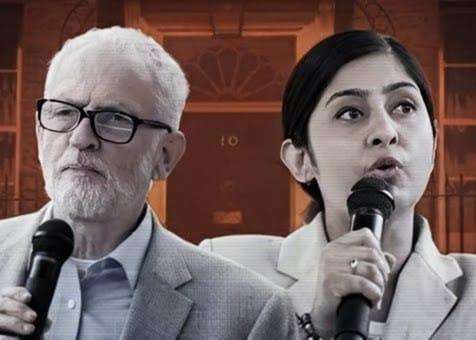
In what is being described as a "palace coup by ballot," the founding members of the provisional ‘Your Party’ voted to reject Corbyn’s preferred single-leader structure, opting instead for a "collective leadership" model. The vote, a razor-thin 51.6% to 48.6%, is a decisive victory for Zarah Sultana, the Coventry South MP who spent the weekend in open revolt against the very party she helped co-found.
For Corbyn, the MP for Islington North and the spiritual grandfather of the modern British left, this weekend was meant to be the crowning moment of his political winter—a chance to finally lead a pure socialist vehicle free from the shackles of Labour centrism. Instead, he watched his authority dissolve in real-time, handed over to a nameless "executive committee" by the very grassroots democracy he spent a lifetime championing.
The Boycott That Broke the Party
The seeds of this defeat were sown 24 hours earlier. The conference began in chaos on Saturday when Zarah Sultana, arguably the party’s most energetic asset, refused to enter the building.
Sultana boycotted the opening day in solidarity with delegates who had been expelled on the eve of the conference for alleged links to other proscribed left-wing groups, including the Socialist Workers Party (SWP). While Corbyn stood on stage pleading for unity and acknowledging "mistakes" in the party’s foundation, Sultana was outside, denouncing the expulsions as a "witch-hunt"—a charged phrase that deliberately echoed the factional warfare of the Labour years.
"We must build a party that welcomes all socialists," a spokesperson for Sultana said, framing the 76-year-old Corbyn not as a victim of purges, but as the enforcer of them.
A Victory for the 'Collective'
The Sunday vote on the party’s constitution was the final blow to Corbyn’s authority. Corbyn had explicitly warned against the collective model, telling journalists on Saturday, "It’s quite hard for the public to grasp things that there are sort of 10 people who run things."
His pragmatic plea fell on deaf ears. The membership, emboldened by Sultana’s stance, voted to strip the party of a traditional figurehead. Under the new rules:
- A member-led executive will manage strategy.
- Public leadership will be shared between a chair, a deputy chair, and a spokesperson.
- Crucially, members can now hold "dual membership" with other political groups—another policy win for Sultana that Corbyn had opposed.
This structure effectively leaves Corbyn as just one voice among many, neutralizing his ability to steer the ship he launched.
The Green Surge and the Independent Fracture
The timing of this internal collapse could not be worse. The political vacuum on the left is rapidly being filled by the Green Party, which has seen a surge in momentum under its new, populist-leaning leader, Zack Polanski.
Polanski has successfully courted the same disenfranchised youth vote that ‘Your Party’ relies on, presenting a disciplined, unified front that contrasts sharply with the infighting in Liverpool.
Furthermore, the "Independent Alliance" in Parliament is fraying. Two other key Independent MPs, Adnan Hussain and Iqbal Mohamed, had already withdrawn from the party’s founding process weeks ago, citing the toxic internal culture. With Corbyn now sidelined in his own organization and Sultana empowered but operating within a chaotic committee structure, the "socialist party of mass appeal" Corbyn promised looks increasingly like a fragmented debating society.
A Legacy Out of Reach?The tragedy of the weekend lies in the "destiny" angle of Corbyn’s career. For decades, he was the ultimate backbencher—the conscience of the party who never sought power. When he finally sought to formalize that conscience into a new political entity, he found that the movement had outgrown his need for control.
The party is expected to announce its permanent name later on Sunday—with options including Your Party, Our Party, Popular Alliance, and For The Many—but the name matters less than the reality. The party is no longer Jeremy Corbyn’s. It belongs to a collective that may be too unwieldy to govern, led ideologically by a protégé, Zarah Sultana, who proved she could outmaneuver the master.
As the delegates filed out of the hall, the mood was less about the birth of a new government-in-waiting, and more about the end of an era. Jeremy Corbyn wanted to give power to the people. In Liverpool, they finally took it—and used it to push him aside.