




.svg)
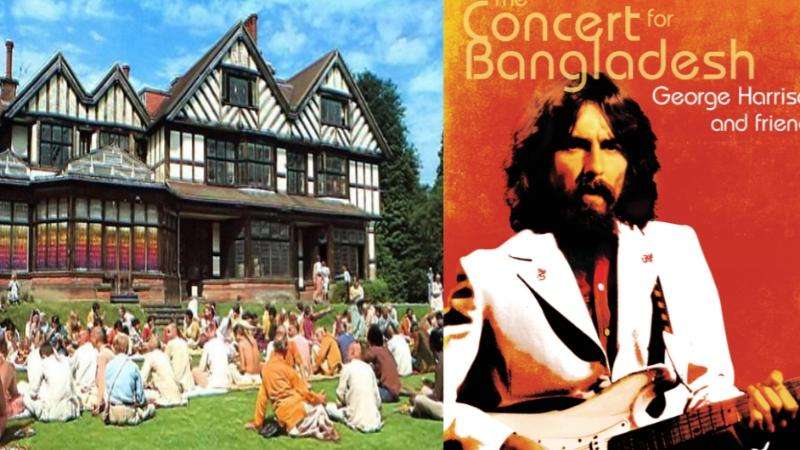
The tranquil Hertfordshire countryside is currently the battleground for a fierce dispute that strikes at the heart of one of music history's most enduring spiritual legacies. Bhaktivedanta Manor, the Mock Tudor estate gifted to the Hare Krishna movement by George Harrison in 1973, is facing a revolt from local residents who claim the sanctuary is being strategically transformed into a money-spinning "spiritual theme park."
To understand the magnitude of this conflict, one must look back to the era that birthed the donation. The early 1970s marked the zenith of George Harrison’s spiritual and humanitarian influence. Fresh from orchestrating the Concert for Bangladesh in 1971—the world's first major charity benefit concert which raised millions for refugees and brought global attention to the humanitarian crisis in East Pakistan—Harrison was deeply immersed in the teachings of A.C. Bhaktivedanta Swami Prabhupada, Daily Dazzling Dawn realized.
The "Quiet Beatle" used his immense platform to champion the Hare Krishna movement, weaving the "Hare Krishna" mantra into his 1970 chart-topping anthem My Sweet Lord. It was this same spirit of global altruism and devotion, solidified during the Bangladesh relief efforts, that compelled Harrison to purchase the 17-bedroom Piggotts Manor in Letchmore Heath. He donated it to the devotees to ensure they had a permanent sanctuary, saving them from homelessness in London.
However, over fifty years later, neighbors argue that the site has drifted far from the quiet, meditative refuge Harrison envisioned. The Letchmere Village Heritage Trust (LHVT) has accused the current custodians of pursuing an "unacceptable" level of development. The dispute centers on a series of retrospective planning applications and new proposals that include a restaurant, café, bakery, commercial kitchens, a gift shop, and a massive 10,000-square-foot glasshouse.
Critics argue these additions suggest a shift toward commercialism. The Radlett Society and Greenbelt Association have formally alleged a seeming intention by the Manor to evolve into a commercial operation rather than a strict religious community. This sentiment was echoed by long-time resident Mike Sullivan, who claimed the site is operating more like a theme park than a place of spiritual refuge, citing increasing noise and traffic that disrupts the village's peace.
The tension is exacerbated by the sheer volume of pilgrims the site attracts, a phenomenon directly linked to Harrison’s enduring stardom. Following his death from lung cancer in Los Angeles on November 29, 2001, at the age of 58, the Manor became a focal point for mourning fans. Harrison, whose ashes were scattered in the Ganges and Yamuna rivers in India in accordance with Hindu tradition, left a void that devotees and music lovers alike seek to fill by visiting the estate he loved.
This pilgrimage effect came to a head recently when a religious festival triggered ten-hour tailbacks on the M1 motorway. An estimated 70,000 people attempted to descend on the village, causing gridlock that locals described as a nightmare. The Manor attributed the chaos to an administrative error regarding ticket allocation, but for residents, it was symptomatic of a facility that has outgrown its infrastructure.
Further fueling the fire are allegations that the Manor is bypassing standard planning procedures. Documents reveal that substantial work on a Grade-II listed Stable Block—converting it to house retail and dining facilities—was well underway without full planning permission. The LHVT issued a blistering objection, stating that the nature and intensity of these developments go far beyond the limits of ancillary religious activity. They fear that the addition of new accommodation blocks and agricultural barns indicates a strategy to maximize revenue through tourism and retreats rather than serving a monastic community.
Malaysia Rejects Bangladesh Worker Quota Claim: Fraud Syndicate Behind False Announcement?
The Manor, home to a sacred herd of 63 cattle and a community of monks, vehemently denies the accusations of profiteering. A spokesperson for Bhaktivedanta Manor insisted that the estate remains a place of worship, spiritual reflection, and service, consistent with its fifty-year history. They emphasized that the charity does not operate for profit and that all new facilities are solely to support the resident monastic community and the growing congregation.
Yet, the skepticism among the villagers of Letchmore Heath remains palpable. Residents point to the purchase of four additional properties in the neighboring village by the movement between 2012 and 2022 as evidence of unchecked expansionism. They argue this contradicts the Manor’s own 2012 Supplementary Planning Document, which promised to regulate usage levels.
As tense meetings continue between the Manor’s leadership and local heritage groups, the legacy of George Harrison hangs in the balance. The man who sang of a world without borders and organized the Concert for Bangladesh to help the displaced is now the spiritual patron of an estate accused of displacing the peace of its own neighbors. Whether the Manor can find a way to honor its rock-and-roll benefactor's devotion while respecting the quiet English countryside he cherished remains the subject of a bitter, ongoing struggle.