

.svg)
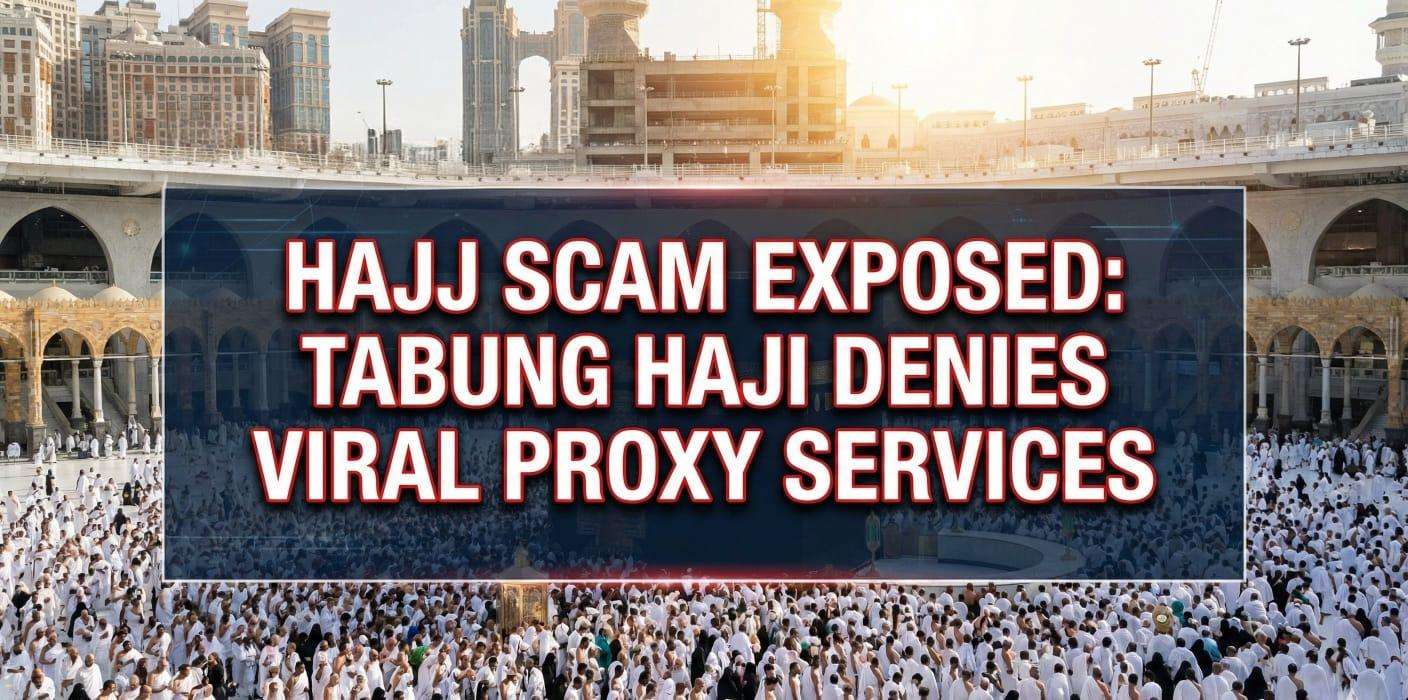
A wave of digital anxiety has swept through Muslim communities extending from Southeast Asia to the diaspora in the United Kingdom and the Indian subcontinent following the circulation of deceptive advertisements regarding pilgrimage services. Lembaga Tabung Haji, Malaysia’s premier pilgrims fund board, has issued a categorical denial regarding a viral image claiming the institution has authorized third parties to offer Badal Haji, or Hajj by proxy, services for a fee. This clarification serves as a critical warning not just for Malaysians, but for the wider Ummah in the UK, Bangladesh, India, and Pakistan who often look to reputable international bodies as benchmarks for safe pilgrimage arrangements.
The controversy centers on a widely shared social media advertisement that manipulates the trusted branding of Tabung Haji. The fraudulent image claims that proxy services are available for those wishing to perform the Umrah or Hajj next year on behalf of others, explicitly using the Tabung Haji logo to solicit funds. In a swift response issued earlier this week, the board dismantled these claims, stating unequivocally that they have never appointed individuals or external representatives to offer Badal Haji services to the public. The institution has urged the faithful to disregard these solicitations and to verify all pilgrimage-related offers strictly through official channels to avoid falling victim to financial exploitation.
This incident highlights a growing vulnerability for Muslim families in London, Dhaka, Karachi, and Mumbai, where the desire to fulfill religious obligations for deceased or incapacitated relatives remains strong. Scammers are increasingly sophisticated, leveraging the emotional weight of religious duty to siphon money from unsuspecting believers. For the diaspora in the UK and families across South Asia, the use of a reputable name like Tabung Haji lends an air of legitimacy to these scams, making the deception particularly dangerous. It serves as a reminder that official pilgrimage bodies do not operate through unverified viral social media posts or unauthorized third-party agents.
From an Islamic perspective, the gravity of this deception extends far beyond financial loss, touching upon the sanctity of worship and the severe prohibition of fraud. Badal Haji is a recognized and noble practice in Islam, grounded in authentic traditions. It is narrated in Sahih Al-Bukhari and Sahih Muslim that a woman from the tribe of Khath'am came to the Prophet Muhammad (peace be upon him) and asked if she could perform Hajj on behalf of her father, who was too old to ride a mount. The Prophet (peace be upon him) replied in the affirmative, validating the concept of performing Hajj on behalf of those physically unable or deceased. However, this validity relies heavily on the concept of Amanah, or trust.
The exploitation of this sacred act for illicit gain is a severe transgression in Islam. The Quran is explicit in its condemnation of those who deceive others in transactions. In Surah Al-Mutaffifin, verses 1-3, Allah warns woe to those who give less than due, a principle that scholars agree applies to those who promise services they do not intend to deliver or falsely represent their authority. Furthermore, the Prophet Muhammad (peace be upon him) is recorded in Sahih Muslim as saying that he who cheats is not of us. By fabricating an association with a trusted entity like Tabung Haji to sell a religious service, these perpetrators are committing a compound sin of theft, lying, and spiritual manipulation.
For Muslims in the United Kingdom, India, Pakistan, and Bangladesh, this event emphasizes the necessity of rigorous due diligence. The urge to perform Hajj for a passed loved one is a sign of piety, yet it must be channeled through verified, transparent avenues. Religious scholars and consumer rights advocates across these regions are advising the public to avoid transferring money to personal bank accounts based on Facebook or WhatsApp advertisements. Authentic organizations managing Hajj and Umrah services will always have verifiable physical offices, official accreditation from the Saudi Ministry of Hajj and Umrah, and a transparent digital footprint that does not rely on viral chain messages.
The message from Tabung Haji is clear and universal. There is no authorized "proxy" scheme currently being run through social media agents under their banner. As the 2025 Hajj season approaches, vigilance is the most effective tool against fraud. The faithful are reminded that the acceptance of their worship involves ensuring the means used to facilitate it are lawful and truthful. Protecting one’s wealth from scammers is also a form of stewardship, ensuring that resources are preserved for genuine acts of charity and worship rather than lining the pockets of opportunists preying on religious devotion.

.jpg)