





.svg)
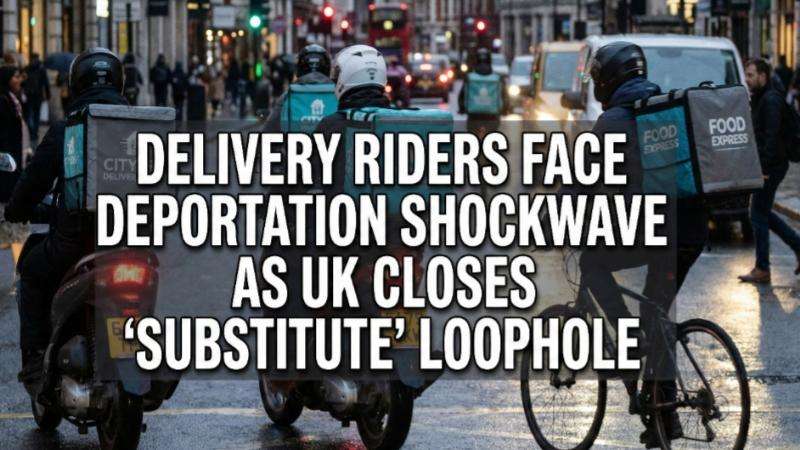
A stark realization is sweeping through the UK’s gig economy workforce this week as a targeted Home Office crackdown signals the end of the road for unchecked account sharing. For years, the "substitute" loophole has allowed legitimate account holders on platforms like Deliveroo, Just Eat, and Uber Eats to subcontract their shifts to others, often bypassing right-to-work checks. Following a week of intense raids and the passing of tough new legislation on Tuesday, that loophole has effectively been closed, leaving dozens of riders facing imminent deportation, Daily Dazzling Dawn realized.
The scale of the enforcement operation has sent shockwaves through the delivery sector. In a targeted blitz described by officials as part of the "most sweeping changes to illegal migration in modern times," Immigration Enforcement officers executed a series of intelligence-led raids across the country last month. The operation resulted in 171 arrests in just seven days, with 60 individuals immediately detained for removal from the UK.
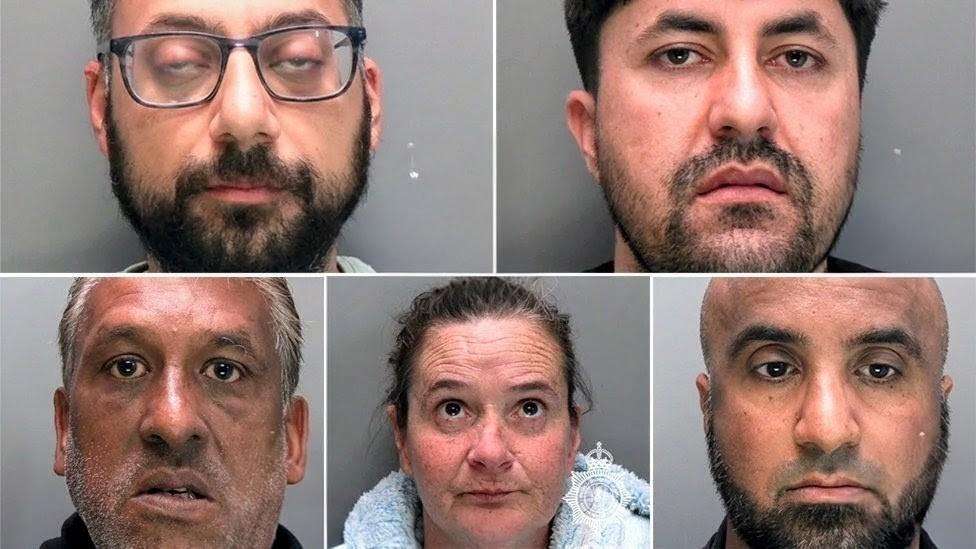
Ex-Labour candidate jailed: Who is British-Bangladeshi fraud Amran who wanted to become MP?
For delivery riders, who often congregate outside fast-food hubs waiting for orders, the visibility of these operations has been impossible to ignore. Video footage released by the Home Office shows officers intercepting cyclists on high streets and escorting individuals into enforcement vans. The raids were widespread, dismantling the notion that enforcement is limited to the capital. While Bangladeshi and Indian riders were detained in Newham, east London, officers also targeted locations as diverse as Solihull in the West Midlands—where Chinese nationals were arrested at a restaurant—and Norwich, Norfolk, where Indian delivery riders were taken into custody.
The crackdown coincides with a pivotal legal shift that fundamentally alters the liability of employers and platform operators. The Government’s new Border Security, Asylum and Immigration Act received Royal Assent on Tuesday, formally enshrining into law measures designed to eliminate the "hiding places" within the gig economy. The Act specifically targets the legislative grey area that allowed casual, temporary, or subcontracted workers to operate without proving their immigration status.
Under the new measures, the consequences for facilitating illegal work are severe. Employers and account holders found to be neglecting proper checks now face up to five years in prison. Financial penalties have also escalated drastically, with fines reaching £60,000 for each illegal worker employed, alongside the potential closure of businesses found to be non-compliant.
The major delivery platforms are actively collaborating with the government to enforce these stricter standards, further tightening the net. Deliveroo, Just Eat, and Uber Eats have ramped up their internal security measures, including the use of facial recognition technology to prevent unauthorized account sharing. In a move to identify potential hotspots of illegal working, the Home Office also agreed in July to share data on asylum hotel locations with these food delivery giants, allowing them to cross-reference rider activity with known accommodation for asylum seekers who typically do not have the right to work.
Home Secretary Shabana Mahmood, who attended a raid in Streatham, south London, emphasized that the government is closing every avenue used by criminal gangs and illegal workers. She noted that these reforms are designed to make the UK "less attractive" for illegal migration by dismantling the financial incentives that draw people to the country.
Border Security Minister Alex Norris reinforced this message, warning that the 171 recent arrests are just the beginning. He stated that the results send a clear message that working illegally in the UK will inevitably lead to arrest and removal. He added that alongside record levels of enforcement, the tightening of laws in the delivery sector is specifically aimed at rooting out criminality embedded in local communities.
The statistics reflect a sharply rising trend in enforcement activity. Home Office figures released this week show 8,232 arrests of illegal workers in the year leading up to September, a 63 percent increase compared to the previous year. As the new Border Security, Asylum and Immigration Act takes full effect, the window for operating under the radar has firmly shut, forcing the delivery sector to adapt to a new reality of rigorous compliance and immediate consequence.