




.svg)
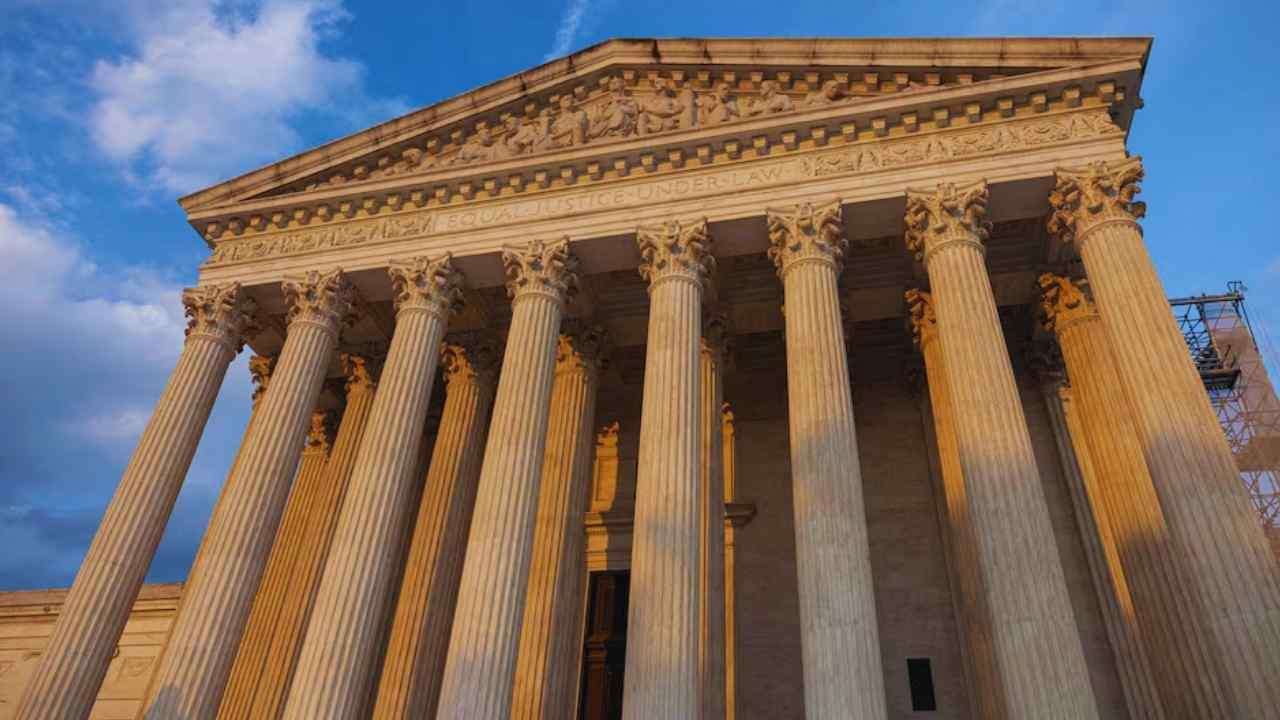
The U.S. Supreme Court agreed on Friday to review whether President Donald Trump’s directive limiting birthright citizenship is lawful — a move that could redefine a constitutional principle applied since the 19th century.
The justices accepted a Justice Department appeal after a lower court blocked Trump’s executive order, which instructed federal agencies to deny citizenship to children born in the United States if neither parent is a U.S. citizen nor a lawful permanent resident (green card holder). That court ruled the policy violated both the 14th Amendment and federal law guaranteeing birthright citizenship, siding with families whose children’s citizenship status was jeopardized.
The Supreme Court is expected to hear the case during its current term, with a decision anticipated by June, though a date for oral arguments has not yet been scheduled.
Trump issued the order on January 20, his first day back in office, as part of a broad set of measures aimed at tightening both legal and illegal immigration — an issue that has defined much of his presidency and attracted sharp criticism over claims of racial and religious bias.
Historically, the 14th Amendment has been understood to grant automatic citizenship to anyone born on U.S. soil. Trump’s administration argues, however, that this does not apply to children of undocumented immigrants or those temporarily in the country, such as students or visa workers.
White House spokesperson Abigail Jackson defended the policy, calling the case “critical to the security and integrity of American citizenship.”
Cecillia Wang of the ACLU, which represents the plaintiffs, countered that no president can override the Constitution’s guarantee of citizenship.
The administration claims the current interpretation encourages illegal immigration and fuels “birth tourism,” where foreign nationals travel to the U.S. specifically to obtain citizenship for their children.
Two lawsuits challenged the directive — one brought by the states of Washington, Arizona, Illinois, and Oregon, and another filed in New Hampshire on behalf of a nationwide class of impacted individuals. In July, the Ninth Circuit sided with the states, while a New Hampshire federal judge allowed the class action to proceed and blocked the policy nationwide. The Supreme Court will hear only the class action case.
By taking up the case before a federal appeals court could review it, the Supreme Court signaled the national importance and urgency of resolving the issue.
The Citizenship Clause of the 14th Amendment, ratified in 1868 after the Civil War, states that all persons born or naturalized in the U.S. are citizens. The administration argues the clause applies only to children of those whose “primary allegiance” is to the U.S., which they define as lawful permanent residents intending to stay.
Opponents cite the Supreme Court’s 1898 ruling in United States v. Wong Kim Ark, which has long been understood to guarantee citizenship to children born in the U.S. regardless of their parents’ immigration status. They also say Trump’s order contradicts federal immigration law, which since 1952 has codified the traditional interpretation of birthright citizenship.
The dispute already reached the Supreme Court earlier this year when Trump challenged the power of lower courts to issue nationwide injunctions. In June, the Court’s conservative majority limited such injunctions but did not rule on the directive’s constitutionality, leaving the door open for broad relief through class actions.
The Court has backed Trump in several immigration-related cases this year, allowing policies on deportations, humanitarian protections, and enforcement raids to proceed despite lower court concerns.



.jpg)