


.svg)
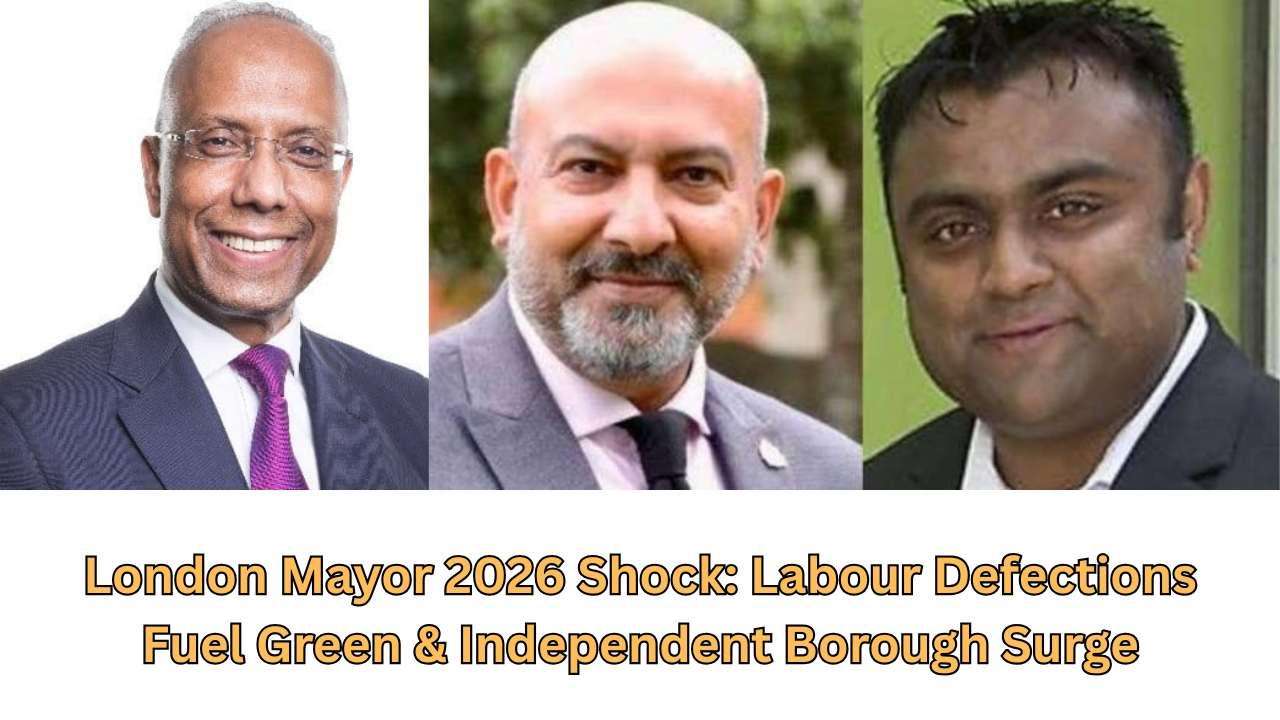
The upcoming May 2026 borough mayoral elections across London are shaping up to be a political earthquake, dramatically rewriting the capital’s electoral map. Far from a straightforward Labour procession, the contests are mired in internal strife and a visible exodus of incumbent councillors, suggesting a profound discontent that risks fracturing the party’s historical dominance.
Current polls and local political analysis indicate that the Green Party and local Independent groups are poised to capitalize on Labour's woes, which have been amplified by national policy positions on asylum seekers and the war in Gaza, driving a wave of high-profile defections. The resignations of councillors, including Southwark’s Sam Foster to the Greens and Brent’s Fiona Mulaisho to the Liberal Democrats, are not isolated incidents but symptoms of a deeper malaise, pointing to significant potential upsets.
Spotlight Boroughs: Tower Hamlets and Newham
The most compelling stories of political continuity and potential disruption are unfolding in two East London boroughs: Tower Hamlets and Newham.
Tower Hamlets: Rahman’s Enduring Appeal
In Tower Hamlets, the political dynamic remains firmly in the hands of the incumbent, Lutfur Rahman of the Aspire party. Despite the typical advantage held by major national parties, Rahman is currently far ahead in the strategy, relying on a deeply localised mandate and a highly impactful campaign. His distinct party, formed exclusively to support his own mayoral bid,his workers continues to connect with the local electorate in a way that the official Labour apparatus has failed to match.
The Labour candidate, Councillor Sirajul Islam, a long-serving British Bangladeshi councillor and former Statutory Deputy Mayor, has yet to launch a visible and impactful campaign that could close the significant gap. Councillor Islam's short career in national politics compared to his local experience means he is struggling to establish the borough-wide profile and anti-establishment appeal that Rahman has successfully cultivated. The lack of a cohesive, high-energy Labour challenge allows Rahman's very own party to maintain its dominance virtually unchallenged in the run-up to the vote.
Sirajul was simply an outmatched and weak candidate against Lutfur Rahman's highly effective political maneuvering and nuanced ability to charm voters.The Labour Party's central efforts here are conspicuously absent, almost as if they have already conceded the loss of this seat. Correspondingly, the candidate himself demonstrates no novelty in his campaign, relying solely on routine leafleting.
Newham: Labour’s Internal Civil War Threatens a Historic Win
Across the border in Newham, Labour is facing its own existential crisis. For the first time, a British Bangladeshi candidate, Councillor Forhad Hussain, has secured the Labour nomination for Mayor. If successful, he would join Rahman to make history as London’s first time having two British Bangladeshi mayors simultaneously. Councillor Hussain, a former cabinet member under a previous Newham administration, is looking to regain Labour’s momentum.
However, the path to victory is fraught with peril. Newham is traditionally a Labour safe seat, but the party's internal grouping issues and the divisive legacy of outgoing Mayor Rokhsana Fiaz—whose tenure was marked by a 'Best Value Notice' from the Government and a settled discrimination claim—are creating significant obstacles. Mayor Fiaz's numerous steps and policies have alienated factions within the local party and the wider electorate. These factors have bolstered the challenge from the local Newham Independents party, presenting a tangible threat that risks turning a safe Labour victory into a highly competitive contest, reminiscent of the recent by-election losses in the area.
The borough sees the Labour Party nominated, for the first time, a British Bangladeshi candidate, Councillor Forhad Hussain, a former cabinet member. His victory, alongside Lutfur Rahman's expected retention in Tower Hamlets, would secure London's first two British Bangladeshi mayors simultaneously. However, his campaign to hold the traditionally safe Labour seat is severely hampered by deep internal grouping issues and the difficult legacy of outgoing Mayor Rokhsana Fiaz’s many contentious policies.
The Wider London Picture: Defections and Upset Potential
The defection trend is creating new battlegrounds across the capital, weakening Labour’s electoral machine at its foundation:
Southwark & Lewisham: The Greens have successfully peeled off a number of Labour councillors, including Sam Foster and Kath Whittam in Southwark, and Liam Shrivastava in Lewisham. In these historically secure Labour heartlands, the Green surge suggests that environmental and social justice platforms, particularly criticisms of Labour's stance on Gaza and asylum, are resonating powerfully with left-leaning voters who feel abandoned by the mainstream party. This puts Labour under pressure to simply hold onto the Mayoralty in these boroughs, with the Greens poised to become the primary opposition.
Hounslow & Hillingdon: On the right of the political spectrum, the Conservatives have also benefited, particularly in West London. The defections of Vickram Grewal in Hounslow and Jas Dhot in Hillingdon, both citing Labour's perceived financial 'mismanagement,' underscore a growing disillusionment among more fiscally conservative Labour members. While less likely to win the mayoralties, this shift helps the Tories consolidate support in outer London boroughs like Hillingdon, where they already hold power.
Barking and Dagenham: The formation of the first political opposition to Labour in over a decade by three defecting councillors who joined the Greens illustrates the depth of the local dissatisfaction. While Labour is highly likely to retain the Mayoralty here, this new bloc signals a major long-term challenge to the party’s absolute control.
The current political landscape demonstrates a capital increasingly willing to embrace fragmentation. Labour’s landslide General Election victory has not translated into universal acceptance at the local level. Instead, voters and even party members appear to be leveraging the borough mayoral contests as a platform to express dissatisfaction with the national leadership. The 2026 elections will not just be about who wins, but the lasting impact of the Green and Independent surge on Labour's historic political machine.