




.svg)
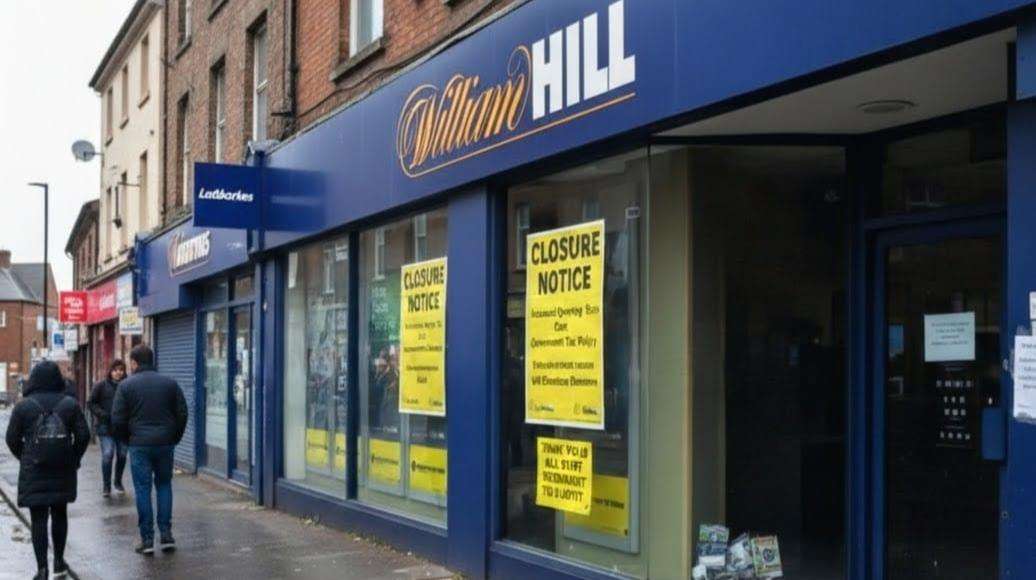
The fallout from the Chancellor Rachel Reeves' Autumn Budget is rapidly transforming from a corporate warning into a full-blown crisis for the British high street, as gambling behemoths threaten to abandon the retail sector entirely. Evoke, the parent company of William Hill, 888, and Mr Green, has initiated a formal strategic review, openly considering a sale or break-up of the debt-laden group after forecasting that the Budget’s tax increases—particularly the near-doubling of the Remote Gaming Duty (RGD) from 21% to 40%—will cost it a crippling £135 million annually from 2027.
Evoke’s dramatic review is not an isolated incident; it is the most visible sign of a sector-wide meltdown triggered by the new fiscal environment. Before the Budget, Evoke had already warned it might be forced to close up to 200 betting shops. Now, other major players are echoing this existential threat.
Other Companies Signal Catastrophe
Entain, the FTSE 100 owner of Ladbrokes and Coral, has warned that the tax hikes will result in an annualised additional cost of approximately £200 million to its UK&I Online business, with an estimated post-mitigation EBITDA impact of £100 million in 2026 and £150 million from 2027. Entain’s chief executive has indicated that higher taxes could similarly lead to shop closures and a diversion of investment to other countries.
The most dire warning, however, has come from Betfred, the third-largest UK operator. Its chairman, Fred Done, warned that the entire network of nearly 1,300 Betfred shops, employing around 7,500 people, could close down completely if the tax rate were to rise significantly, claiming that even a rise to 35% would make the retail business unprofitable. This is despite the fact that Betfred and its co-founder were ranked as the second-biggest UK taxpayer last year, contributing £273.4 million. Flutter Entertainment, owner of Paddy Power, has also indicated a significant earnings hit, anticipating an adjusted EBITDA reduction of approximately $320 million in 2026 before mitigation.
The Hidden Cost to the High Street Economy
Beyond the balance sheets of multinational corporations, the threat of mass betting shop closures points to a deeper, unaddressed crisis in the UK’s street-level economy. The gambling industry, through its network of local licensed betting offices (LBOs), currently supports an estimated 46,000 jobs across the country and contributes over £1 billion annually in direct tax and £60 million in business rates to local councils.
Critically, these LBOs act as a significant driver of footfall. Research commissioned by industry bodies suggests that nearly 90% of betting shop customers visit other local businesses during the same trip. In communities hit hardest by the decline of traditional retail, these shops represent one of the few remaining anchors of regular activity, often occupying large commercial premises and providing reliable local employment, particularly for younger people and part-time female workers.
The predicted closures of up to 200 Evoke shops, potentially over a thousand Betfred sites, and an unknown number of Entain’s Ladbrokes and Coral locations, would not just result in thousands of immediate job losses; it would accelerate the hollowing out of town centres. The consequent loss of business rates and the influx of thousands of empty commercial units would be a devastating blow to local authority finances and urban regeneration efforts, turning high street gambling tax-hikes into a tax on community vitality.
Unintended Consequences and Black Market Risk
The government's measure, intended to raise £1.1 billion annually by 2029 to help tackle issues like child poverty, faces severe headwinds. Industry analysts and the Betting and Gaming Council (BGC) argue the tax will prove counterproductive, driving consumers towards the unlicensed, unregulated black market. The Office for Budget Responsibility (OBR) itself has noted that the new tax structure could reduce the projected yield by around one-third, forecasting a loss of £500 million for 2029-30 due to consumer migration away from the regulated sector. The BGC warns that this shift could see over £6 billion in stakes diverted to illegal operators, where player protection is non-existent.
The market consensus is clear: the aggressive tax measures, which saw Evoke’s shares slump to record lows, have destabilised a crucial part of the UK’s leisure and retail infrastructure. As major operators like Evoke now look to divest or sell assets in the face of insurmountable domestic taxes, the future of the British betting shop—a working-class institution and key high street presence—is hanging precariously in the balance, illustrating how fiscal policy risks undermining the very communities it seeks to uplift.