






.svg)
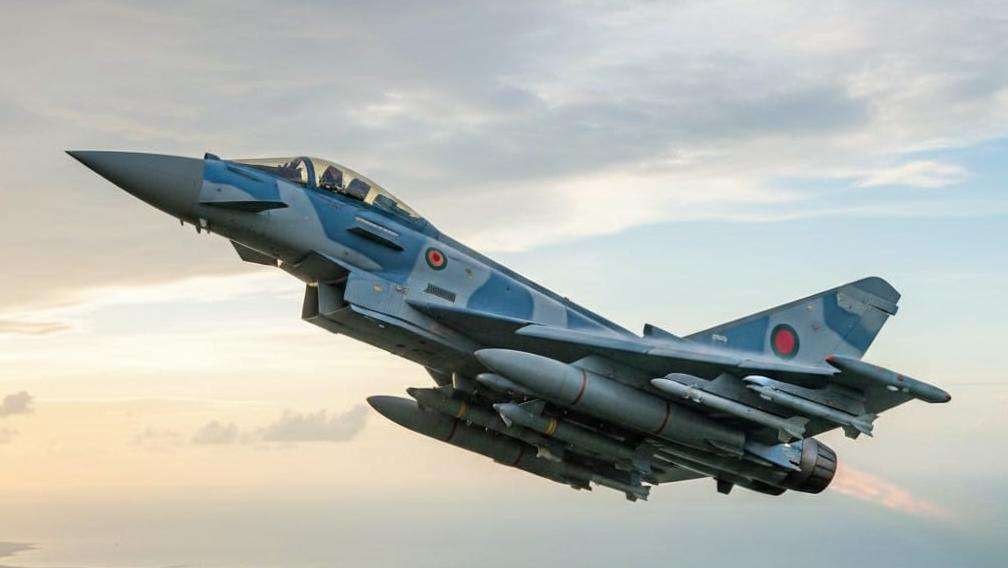
The Bangladesh Air Force (BAF) has formally signaled a monumental shift in its defense strategy, moving closer to integrating a high-end Western fighter jet into its arsenal. The recent signing of a Letter of Intent (LOI) with Italy’s Leonardo S.p.A. for the potential acquisition of Eurofighter Typhoon multi-role combat aircraft represents far more than a simple equipment upgrade; it signifies a strategic pivot with profound geopolitical and fiscal implications for the South Asian nation.
The Transformative Capability: A Strategic Imperative
For Bangladesh, the purchase of 12 to 16 Eurofighter Typhoons—the number indicated by local reports—would be a generational leap in military capability. The BAF has long relied on a mixed fleet predominantly composed of older, Soviet-era Mikoyan MiG-29s and numerous Chinese Chengdu F-7 variants, aircraft that are increasingly obsolete in the face of modern regional air power dynamics. The F-7s, in particular, are based on the dated MiG-21 design, and the MiG-29s, though once formidable, are aging, demanding significant maintenance and limiting the service's operational flexibility.
The Eurofighter, a sophisticated fourth-generation-plus fighter, is currently the backbone of several NATO air forces and would immediately place Bangladesh among a select group of nations operating one of the most advanced European combat platforms. This infusion of cutting-edge technology—covering superior air-to-air combat performance, advanced sensor fusion, and multi-role capacity for air-to-ground and maritime strike—would be critical for enhancing deterrence over the vital Bay of Bengal and aligning with the overarching vision of Forces Goal 2030 to create a modern, credible deterrent force. The acquisition sends a clear signal of strategic intent, diversifying Dhaka's defense sourcing away from an almost exclusive reliance on Russian and Chinese hardware, thereby safeguarding its geopolitical autonomy.
The Hidden Price Tag: A Deeper Fiscal Dive
However, the strategic benefits of the Eurofighter come tethered to a substantial and complex long-term cost burden that warrants intense scrutiny. The Eurofighter, which had its introduction date in 2003, is a mature platform, but its operational cost is notoriously high. Publicly available defense analyses suggest the cost per flight hour (CPFH) for the Eurofighter Typhoon is among the highest for modern fighters, reportedly reaching up to $60,000 in some configurations for its core operators, significantly eclipsing that of its contemporary rivals.
This is not merely the cost of fuel and a pilot; it includes the extensive through-life support costs, high-fidelity pilot training, specialized ground crew training, and the continuous requirement for complex system maintenance. For a nation like Bangladesh, which has no prior experience operating such an advanced, complex Western aircraft, the operationalization phase will be lengthy and expensive, requiring the establishment of an entirely new, sophisticated logistics and training ecosystem from the ground up.
Leonardo, as the lead consortium member for this sale, will supply the aircraft from the Italian supply line, guaranteeing the jets will likely be new production models or late-tranche variants, which are significantly upgraded and modernized. However, the true financial test lies in the long-term logistical tail. The Eurofighter is a multinational product managed by the four-nation consortium—the UK, Germany, Italy, and Spain. While this structure ensures robust long-term spare parts availability through major industrial players like Leonardo, BAE Systems, and Airbus, it also introduces bureaucratic complexity. Spare parts and critical maintenance are routed through the NATO Eurofighter and Tornado Management Agency (NETMA) system. This is a far cry from the comparatively simpler supply chains Bangladesh currently relies on for its Chinese and Russian fleets. The cost of long-term support contracts and the dependency on a multinational supply chain could become a substantial fiscal strain on Bangladesh's defense budget for decades to come.
Geopolitical Balancing Act and Competitive Procurement
The Eurofighter deal is inextricably linked to Dhaka’s broader geopolitical strategy. Notably, Bangladesh has also been linked with the potential purchase of the Chinese Chengdu J-10C, another fourth-generation fighter. The Eurofighter LOI, far from being a singular decision, can be viewed as an expert move in a delicate geopolitical balancing act. By pursuing the Eurofighter from Europe while concurrently negotiating for the J-10C from China, Bangladesh effectively leverages competition to potentially secure better terms, pricing, and technology transfer arrangements from both parties.
Choosing the Typhoon signals a deeper commitment to Western technology and a potential desire to strengthen defense ties with NATO-aligned nations like Italy. This diversification in military hardware suppliers acts as a diplomatic hedge, strengthening relationships beyond its traditional sources and enhancing its image as a strategically autonomous nation that refuses to be confined to a single power bloc's security orbit.
Ultimately, the successful execution of this deal will hinge on the contract’s transparency regarding life-cycle costs and the robustness of the technology transfer and maintenance training package Leonardo provides. If these critical factors are not meticulously managed, what promises to be a transformative capability leap could degrade into a crippling fiscal liability and a fleet with low operational readiness. The Eurofighter Typhoon LOI is a bold, high-stakes wager on the future of Bangladesh’s air power, a move that requires a disciplined commitment to long-term investment to truly deliver the strategic returns it promises.






.jpg)