
.jpg)





.svg)
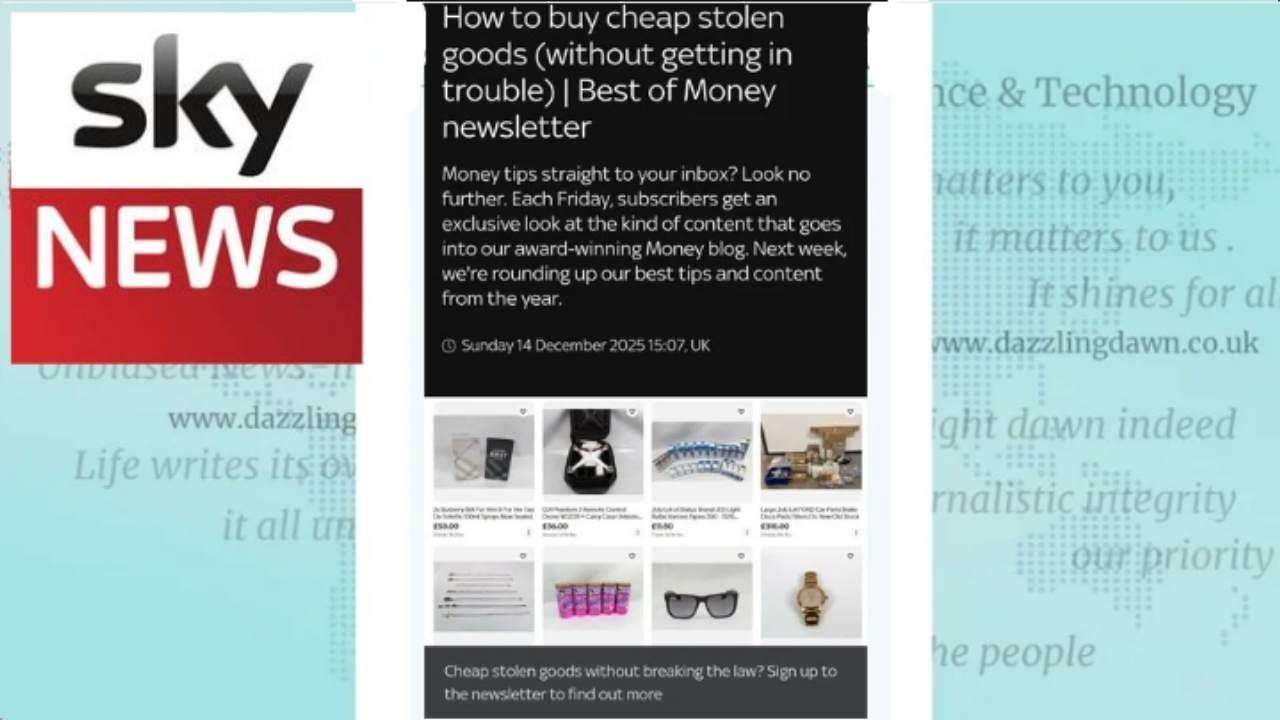
A major storm of criticism has engulfed Sky News following the promotion of a highly controversial feature within its 'Best of Money' newsletter, brazenly titled: "How to buy cheap stolen goods (without getting in trouble)." The promotional material, visible on the broadcaster’s website this past Sunday, 14 December 2025, has drawn immediate and widespread condemnation from media critics, legal experts, and the public alike, who are questioning the ethical boundaries and moral judgment of a prominent British news organisation, Daily Dazzling Dawn realized.
The item, designed to entice subscribers with a promise of "cheap stolen goods without breaking the law," was listed as one of the "best tips and content" from the newsletter's first six months. Specifically, it flagged the question: "Did you know there was a way to buy cheap stolen goods legally?"
The Outrage: Encouraging the Trade of Crime
The central point of the outcry is that, regardless of the article's eventual legal technicality—presumably focusing on police auctions, unclaimed property, or forfeited assets—the headline and promotional framing are fundamentally and dangerously misleading. Critics argue that by using the provocative phrase "cheap stolen goods," a reputable news source is effectively normalising the language of criminality and promoting the demand side of a devastating societal problem.
Every stolen item represents a victim of crime, a broken home, a business loss, and a cost to the wider community. To use this as clickbait in a personal finance newsletter, designed to encourage a consumerist hunt for "cheap" goods, is seen by many as an abject failure of journalistic responsibility.
Where is the Media Going?
This incident has amplified profound questions regarding the contemporary direction of the British media landscape. For an organisation like Sky News, which holds significant public trust and influence, to resort to such sensationalist and morally dubious tactics for newsletter subscriptions suggests a troubling prioritisation of engagement metrics over ethical duty.
"The job of a serious news organisation is not to flirt with the language of crime to boost readership," stated one leading media commentator. "It is to inform responsibly. This stunt signals a race to the bottom, where the moral compass is sacrificed on the altar of the algorithm. It shows a severe degradation in editorial judgment."
The focus on "award-winning" content rings hollow when the fundamental message being promoted is one that appears to benefit from the proceeds of crime, even if only in name.
An Insult to British Journalism-The condemnation is particularly sharp within the UK’s journalistic community, which prides itself on setting global standards for integrity and professionalism. The move is viewed as a deep insult to the hard-won reputation of British media.
"This is not savvy marketing; it is journalistic malpractice," argued a former Fleet Street editor. "British journalism has faced enough criticism over recent years without one of its main pillars publishing guides that, on their face, suggest profiting from the misery of victims. It betrays the public trust and undermines the integrity of the entire industry."
While the content may be tucked away in a subscriber-only newsletter, the high-profile promotion on Sky’s main news portal ensures the message gains widespread traction—and condemnation. The implication remains: a major British media outlet is actively, if peripherally, encouraging interest in acquiring stolen property. The ethical question remains: Is the potential for a few thousand newsletter sign-ups worth the cost of eroding public trust and ethical standing?
As the criticism mounts, Sky News faces increasing pressure to issue a comprehensive retraction and explanation for the headline choice, a decision that has inadvertently cast a negative light on the entire Money newsletter’s operation and raised serious concerns about the moral accountability of one of the nation’s most powerful broadcasters.





.jpeg)
