

.jpg)


.svg)
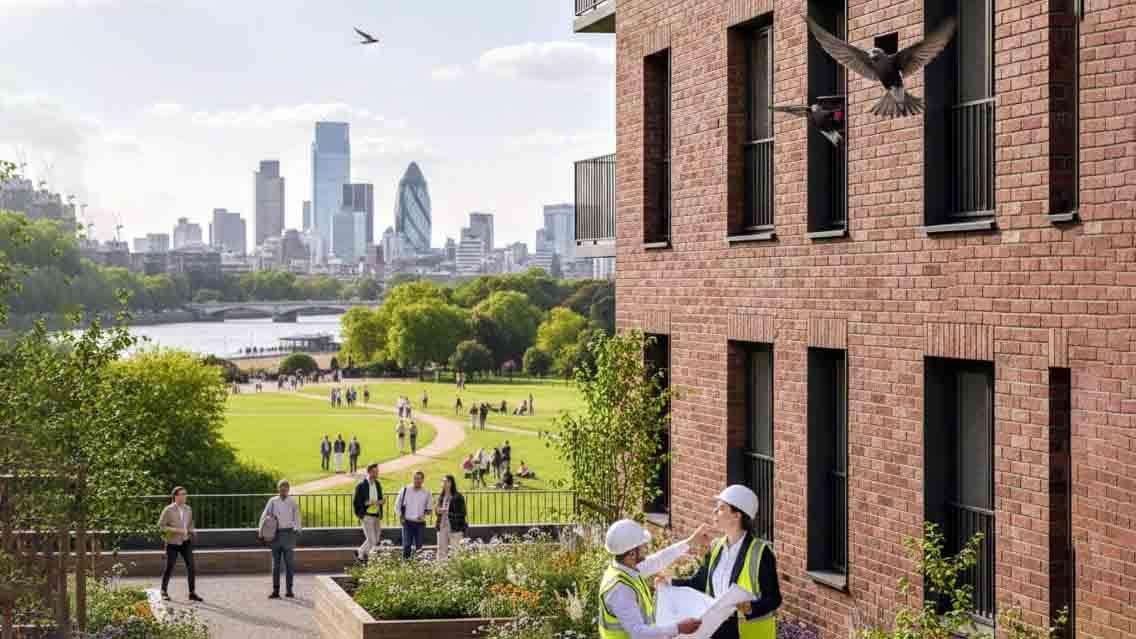
In a dramatic pivot that is setting the stage for a fundamental change in the relationship between development and nature, the Government has officially embedded an ambitious conservation measure within its flagship housing reform. Despite Chancellor Rachel Reeves's previous critique of "green tape" slowing down construction, the new overhaul of the National Planning Policy Framework (NPPF) will mandate the inclusion of “swift bricks”—hollow nesting units built directly into walls—in all new homes across England.
The decision is a significant victory for environmental campaigners and marks the first time a seemingly minor, low-cost architectural change has become a required national standard to address the biodiversity crisis. The government is pushing this as a “win-win” that adds little to building costs while moving towards its target of 1.5 million new homes.
Conservation Over Economic Rhetoric
The policy shift is particularly striking given the recent strong anti-regulation stance from the Treasury. Ms. Reeves had previously lamented "absolutely insane" environmental rules acting as a barrier to investment, even citing the controversial £100 million spent on a bat tunnel for the HS2 project as an example of excessive ecological costs.
However, the Housing Secretary Steve Reed has championed the new measures as vital to “fix the housing crisis,” arguing that the planning overhaul will “back the builders, not the blockers.” By streamlining the planning process—including giving a default ‘yes’ to developments around well-connected railway stations—the government aims to unlock up to 1.8 million homes, while simultaneously demonstrating a commitment to the Environment Act 2021's legal duty to halt the decline in species abundance by 2030. The swift brick policy is seen as a tangible, simple, and enforceable action to complement the broader, and sometimes controversial, Biodiversity Net Gain (BNG) rules.
The Fate of Old Houses and Bird Habitats
The swift, once a common summer sight, has been placed on the UK's red list for birds, with its population plummeting by over 66% since 1995. This decline is largely attributed to the loss of nesting sites. Historically, swifts would nest in the nooks, crannies, and exposed eaves of older buildings, but modern renovation and insulation methods are sealing off these traditional entry points.
The new swift bricks, costing just a few pounds and lasting the lifetime of the building, are specifically designed to replace these lost cavities in new constructions. Crucially, while this mandate focuses on new builds, it highlights the pressing issue for older houses. As older properties are modernised for energy efficiency, the original nesting spaces for swifts, house sparrows, and starlings are often inadvertently destroyed. The new policy does not legally protect existing nests in old buildings, but it establishes a national baseline, ensuring that every new community provides a secure, future-proof nesting habitat for these beloved cavity-nesting birds. Conservationists are now calling for complementary measures—such as retrofit swift boxes and a clear legal duty for property owners to check for and protect existing nests before renovation—to address the current decline caused by the modernisation of the existing housing stock.
A Win for Urban Nature and Climate Resilience
Beyond the swifts, this decision provides a clear pathway for nature and environment recovery in urban areas. The hollow bricks also offer refuge for other red-listed species like house sparrows and starlings. Furthermore, the mandatory inclusion of nature-friendly features aligns with a broader push for urban rewilding, a concept already embraced by figures like Mayor of London Sadiq Khan.
Mr. Khan has made significant commitments to green infrastructure, providing a tangible example of public spending on bird conservation and urban biodiversity. The Mayor has overseen over £2.5 million invested since 2021 through his Rewild London Fund, and more recently launched the £12 million Green Roots Fund to support community-led projects, including the creation of wildflower meadows and wetland restoration. Projects funded by the Mayor's office often include the installation of nest boxes and other integrated wildlife features as part of a larger strategy to make the capital more climate-resilient and ensure access to nature is a social justice issue. This demonstrates that investing in nature, whether through mandated bricks or dedicated funds, can coexist with major development goals.
The new NPPF, therefore, is not a victory for ‘green tape’ but a demonstration of how targeted, simple environmental mandates can be woven into the fabric of a massive infrastructure push, signalling a new era where housebuilding and species protection are viewed not as opposing forces, but as complementary goals.